




















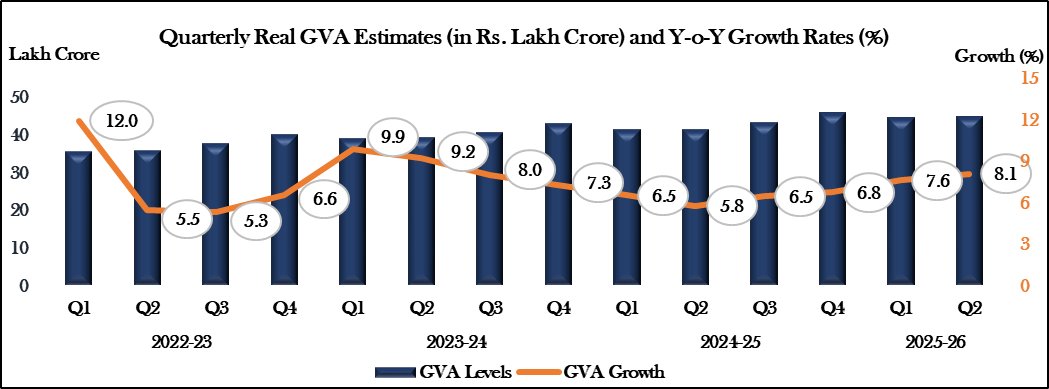
India has once again surprised global markets by recording an impressive GDP growth rate of 8.2 percent, a number that rose faster than most forecasts had predicted. This expansion comes at a time when the global economic climate has been turbulent and uncertain. The early impact of United States tariffs initiated under the Trump administration had created concerns that India’s external sector would face significant harm. Instead, India has demonstrated an unexpected resilience that many analysts attribute to the strength of domestic consumption and structural reforms at home.
The first major factor behind this exceptional growth of GDP is the surge in consumer spending. Private consumption has grown steadily over the past few quarters and has now emerged as the single largest protective shield for the Indian economy. While many countries depend heavily on global demand for continued expansion, India stands out for having an economy that is fundamentally driven by internal markets. The numbers show a clear trend: Indian households are spending more on services, manufactured goods, and daily essentials. This expanding consumption base has allowed the economy to shrug off early tariff-related pressures and sustain strong momentum.
The broader narrative surrounding the rupee’s depreciation reminds us how economic commentary often becomes trapped within ideological boundaries. Critics from the left continue to highlight the weakening rupee as a sign of stress. However, the real economic picture reveals something different. The fall in the rupee has not halted the economy’s progress. In fact, India’s GDP has grown even faster, revealing that currency fluctuations alone cannot define the strength or weakness of an economy. A country that relies on domestic consumption, rather than foreign borrowing or excessive export dependence, is naturally more resistant to external shocks.
The tariff war creates a similar split in perception. India is among the countries facing some of the steepest tariff barriers today. There were intense predictions that this would choke exports, suppress production and weaken business sentiment. Yet, the opposite has unfolded. Indian manufacturing has expanded, the services sector has recorded robust performance, and consumer oriented industries have continued posting healthy growth figures. One reason behind this unexpected outcome is the sheer size and diversity of India’s internal market. When global doors become harder to open, Indian companies simply turn inward and find equally strong demand at home. And GDP skyrockets.
Another important factor is the government’s reform agenda, especially the restructuring of the Goods and Services Tax. The GST system has steadily improved over the years and recent changes have made goods more affordable for consumers. Lower rates on essential and commonly used items have put more spending capacity into the hands of ordinary households. When taxes become simpler and prices fall, people naturally purchase more, and this stimulates production and investment. The cumulative impact of these reforms is now visible in the form of expanded consumption across both rural and urban India.
The growth story appears even more remarkable when considering the larger geopolitical backdrop. International campaigns and allegations targeting large Indian businesses, including groups like Adani, have not slowed down investment or confidence within the country. Instead of destabilizing business activity, these pressures have nudged many companies to deepen their engagement with domestic markets. The result is a business ecosystem that is more connected to internal consumers and less dependent on external narratives.
The security environment has also been tense in the region, especially with the heightened friction involving Pakistan. India’s ability to maintain economic momentum even amid strategic operations and border tensions reveals a mature and well-balanced economic structure. Historically, such tensions tended to disrupt markets and capital flows. Today, the Indian economy seems far more insulated from these disruptions because its primary engine is not external trade but its own citizens.
This resurgence of consumer strength underscores the philosophical shift underway in India’s economic thinking. For decades, the global trend was to view exports as the ultimate driver of national prosperity. While exports remain important, India has demonstrated that a large, young, and upwardly mobile population can drive growth more reliably than external markets. Consumers today are not merely spending for survival. They are engaging in aspirational consumption, investing in better lifestyles, expanding digital participation, and pushing industries to grow. This energy from within has become India’s most dependable economic force leading the GDP both challenge and enviable to the developed world.
Moreover, the service sector continues to shine as India’s most consistent pillar of growth. Financial services, technology, digital payments, consultancy, and real estate have all recorded substantial expansions. With rising incomes and improved financial inclusion, the services sector is feeding into the cycle of higher consumption and investment. Manufacturing too has shown new strength, supported by schemes encouraging production and reduced tax burdens on industries.
Although the numbers inspire confidence, it is important to remain aware of future challenges. External shocks, uncertain global commodity prices, and geopolitical tensions could continue to test India’s economic resilience. Yet the current data suggests that India’s foundation is strong. A growth model centred on domestic demand, internal consumption, continuous reform and policy predictability provides a strong buffer against global storms.
India’s 8.2 percent GDP growth is not just an economic statistic. It is a statement that the country’s core strength lies in its people. When domestic consumers are confident, policies are streamlined and businesses adapt to internal demand, external pressures lose their power. India today stands as one of the few major economies that can continue climbing even when the global environment tries to pull it down.





