




















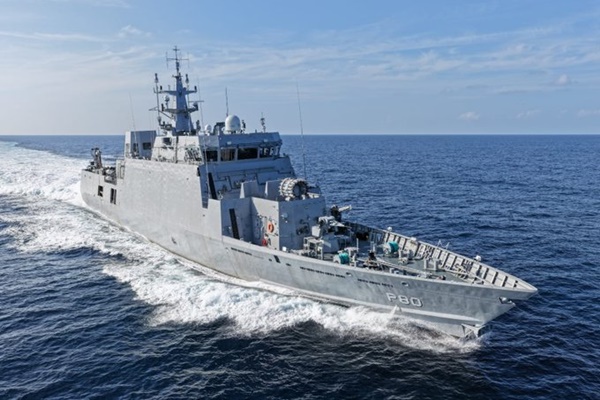
India’s march toward maritime self-reliance is set to reach a defining moment with the commissioning of INS Mahe, the first vessel of the Mahe-class Anti-Submarine Warfare Shallow Water Craft (ASW-SWC). Scheduled to be inducted at the Naval Dockyard in Mumbai on November 24, the warship stands as a powerful symbol of Aatmanirbhar Bharat and India’s emerging dominance in indigenous naval engineering. Built by Cochin Shipyard Limited (CSL), the ship represents a refined blend of modern design, compact lethality, and highly specialised shallow-water combat capability an area increasingly crucial to India’s maritime security architecture.
With the Navy rapidly modernising and preparing for future threats, INS Mahe marks a decisive step toward strengthening coastal defence, enhancing underwater surveillance, and ensuring constant vigilance across India’s critical maritime gateways.
INS Mahe has been entirely designed and constructed within India, reflecting the Navy’s growing mastery in naval architecture, engineering integration, and homegrown combat systems. Compact yet formidable, the vessel is optimised for operations in shallow waters, where speed, stealth, and manoeuvrability are essential.
At approximately 78 metres in length and displacing around 1,100 tons, the vessel hosts advanced sonar suites, coastal surveillance radars, and integrated combat systems. These enable high-precision detection of hostile submarines operating near the coastline a threat that has taken centre stage as global submarine deployments increase in frequency and sophistication.
Firepower and Technology for ASW Missions
Delivered to the Indian Navy on October 23, 2025, INS Mahe arrives with a powerful mix of weaponry tailored for anti-submarine warfare and area denial. The platform integrates torpedo systems, multifunctional anti-submarine rockets, and sophisticated underwater sensors, giving it the capability to hunt, track, and neutralise enemy submarines well before they approach India’s maritime infrastructure.
The ship is also equipped for coastal patrols, mine-laying missions, and a range of low-intensity maritime operations (LIMO). Its blend of firepower, endurance, and cutting-edge technology ensures 24/7 readiness in turbulent littoral environments where larger naval platforms may face operational constraints.
With more than 80 percent indigenous content, the Mahe-class represents one of the strongest demonstrations of India’s shipbuilding independence. CSL’s engineering capabilities, coupled with the Navy’s stringent design specifications, have resulted in a vessel that is both modern and closely aligned with India’s strategic needs.
INS Mahe’s crest depicts the Urumi, the famed flexible sword of Kalarippayattu, symbolising agility, reach, and lethal elegance—three qualities that define its operational personality. Named after the historic coastal enclave of Mahe on the Malabar Coast, the vessel carries forward a legacy rooted in India’s maritime heritage.
INS Mahe is only the first of eight ships planned under this class, each designed to bolster the Navy’s capability to secure coastal waters and deter underwater threats. As subsequent vessels roll out, India’s near-shore defence grid will become significantly stronger, closing gaps exploited by hostile submarines and enhancing the Navy’s surveillance footprint.
INS Mahe is more than a new addition to the fleet—it is a benchmark for India’s indigenous shipbuilding capability. With its advanced combat systems, shallow-water precision, and India-crafted engineering, the vessel represents the arrival of a new generation of sleek, swift, and resolutely Indian shallow-water combatants. As the first of its class, it sets the foundation for a fleet that will redefine coastal defence and strengthen India’s maritime posture for years to come.