




















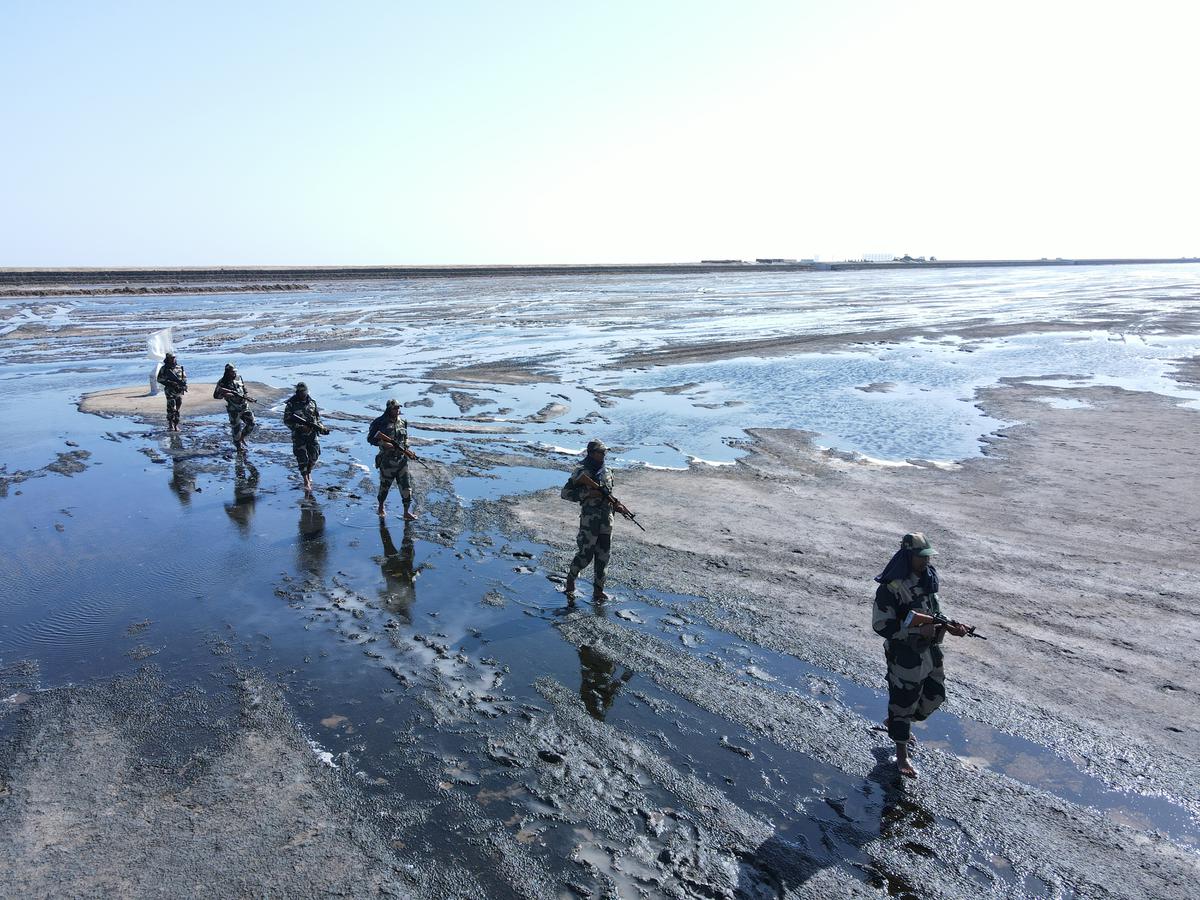
The 96-km tidal estuary of Sir Creek, cutting through the marshlands of the Rann of Kutch along the India-Pakistan border, has emerged as one of the most strategically sensitive zones for the Indian Armed Forces. Its shifting geography, hostile terrain, and proximity to Pakistan-controlled areas demand highly agile platforms for surveillance and rapid response. It is in this context that the Indian Army, following the massive tri-service Exercise Trishul held last month along the western border, has initiated major modernisation plans to enhance its riverine and coastal warfare capabilities. As part of this push, the Army has now advanced procurement plans for fast patrol boats and Landing Craft Assaults (LCAs), designed specifically for deployment in Sir Creek, the Brahmaputra river basin, the Sunderban Delta, and selective water bodies in Eastern Ladakh. More than a year after projecting operational needs for these assets, the service has floated two detailed Requests for Proposals (RFPs), inviting domestic shipbuilders to supply platforms tailored to India’s littoral combat requirements.
New Amphibious Platforms for High-Threat Zones
According to the latest RFP, the Army is seeking eight LCAs capable of high-speed movement across shallow creek systems, narrow waterways, and open-sea conditions. These vessels are being designed to transport up to 35 fully equipped troops or a Tata Storme-class light vehicle, along with ammunition and equipment. A five-member crew will operate the craft, which must be capable of maintaining 20 knots even at full load.
The RFP also mandates 60% indigenous content, echoing the Army’s commitment to the Make in India initiative. The LCAs will support a wide spectrum of operations troop mobility, random boat patrols, logistics support, and limited search-and-rescue missions in creek and high-altitude water bodies.
An earlier RFP issued last month covers six fast patrol boats, intended for rapid insertion of small teams for reconnaissance, surveillance, and intervention in conflict-prone waters. These boats must sustain 25–30 knots for six continuous hours, carry a crew of eight, and handle a payload of up to 1,000 kg.
Why Sir Creek Continues to Demand Specialised Assets
Sir Creek’s importance stems from its complex geography shifting tidal channels, marshy stretches, and an unstable, disputed boundary that has long been a flashpoint between India and Pakistan. Traditional mobility is severely restricted in this terrain, making specialised amphibious platforms integral to maintaining border domination.
Recent military and political developments have amplified the region’s relevance. Exercise Trishul, which saw the Army, Navy, and Air Force jointly operate in the desert and creek sectors, highlighted evolving operational needs. Additionally, Defence Minister Rajnath Singh underscored Sir Creek’s sensitivity during his recent visit to Gujarat, warning Pakistan that any misadventure would invite a response capable of “changing both history and geography”.
The procurement of LCAs and patrol boats is therefore aligned with India’s larger strategy of asserting secure, effective, and rapid manoeuvrability in contested littoral zones.
While Sir Creek remains the most politically charged sector, similar operational demands exist in other regions. The vast Brahmaputra river basin is characterised by broad, fast-changing channels that hamper troop movement and surveillance. In Eastern Ladakh, certain lake sectors especially around high-altitude water bodies require swift, reliable platforms to facilitate reconnaissance and tactical movement.
The Army’s expansion of amphibious capabilities will ensure seamless mobility across these diverse environments. LCAs and fast patrol boats will support not just routine patrolling but also intervention operations, logistics runs, casualty evacuation, and search-and-rescue in extreme conditions.
The Army plans to acquire eight LCAs and six fast patrol boats under the current procurement cycle. As per the RFP, four LCAs will be based at the Inland Water Transport unit in Lakhpat, Gujarat, while four will be stationed in Guwahati to support north-eastern riverine operations.
These composite-hull vessels will be equipped with bullet-resistant wheelhouses, bow ramps for vehicle offloading, stern-drive propulsion, twin diesel engines, and an integrated navigation suite featuring radar, GPS chart display, and VHF communication systems. Deliveries are expected in staggered batches over a period of 24 months after the final contract is signed.
The Indian Army’s move to procure new amphibious platforms marks a decisive shift in how it approaches riverine and coastal warfare. With Sir Creek remaining a sensitive theatre of operations, and with complex water systems in the Brahmaputra and Eastern Ladakh demanding enhanced mobility, these vessels will fill critical operational gaps. By embracing indigenous manufacturing and acquiring vessels tailored for high-threat environments, the Army is not merely upgrading hardware it is reshaping its operational doctrine to stay ahead in littoral, creek, and riverine combat scenarios