




















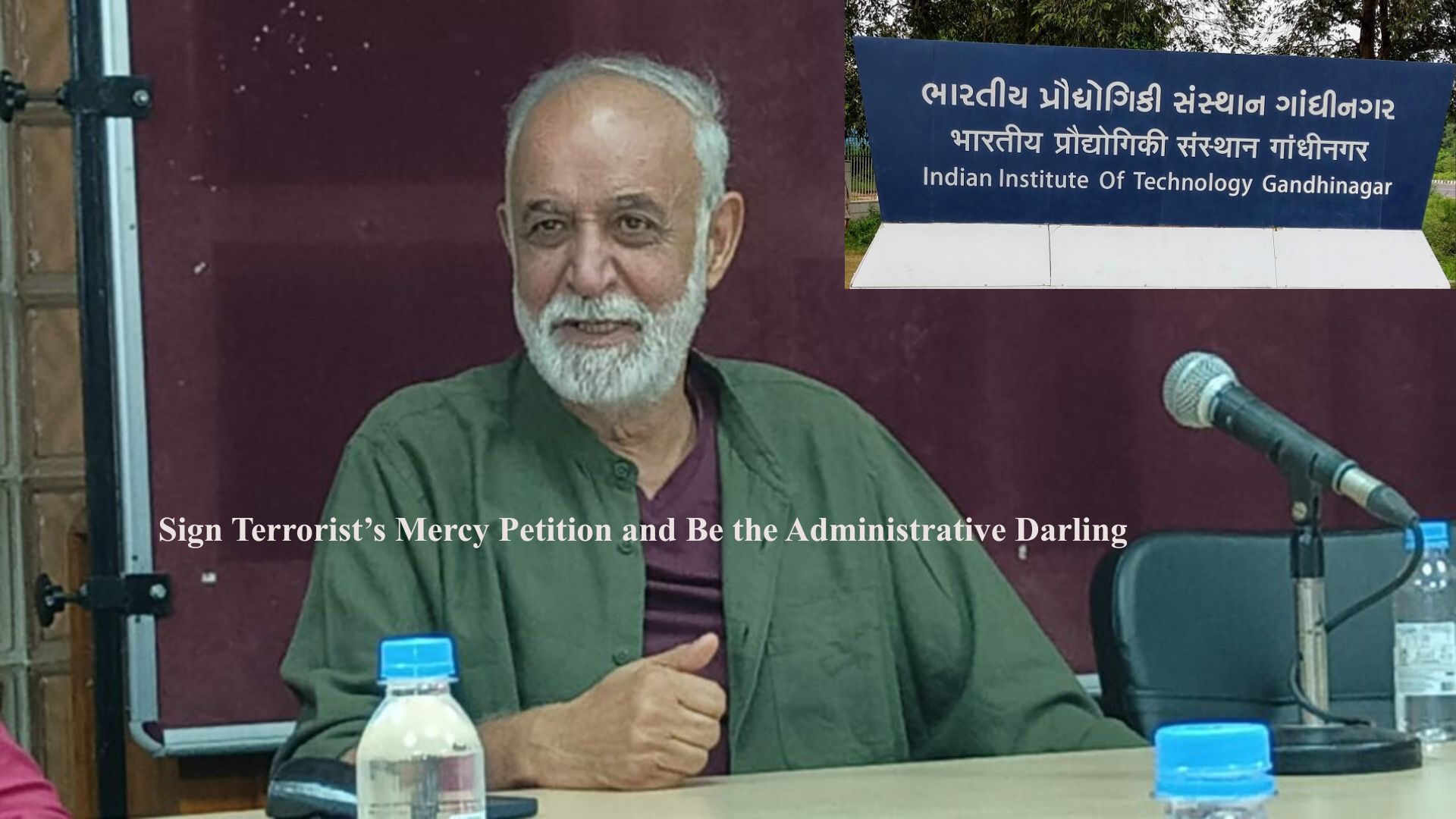
The recent controversy surrounding IIT Gandhinagar has triggered a heated national debate on the moral compass guiding appointments in premier educational institutions funded by public money. At the heart of the outrage lies the reported appointment of theatre personality MK Raina—one of the signatories to a 2015 mercy petition seeking clemency for Yakub Memon, the convicted mastermind behind the 1993 Mumbai bomb blasts that killed over 250 people and injured hundreds more.
While it is important to differentiate between political dissent and direct complicity in wrongdoing, critics argue that appointing someone who publicly supported clemency for a terror convict to a prestigious government institution sends the wrong message—one that undermines the moral legitimacy of national institutions and disrespects victims of terrorism.
Why This Appointment Has Sparked Public Outcry
Social media users and commentators have pointed out that alleged appointment of MK Raina was neither announced nor listed on IIT Gandhinagar’s official website. This lack of transparency has only amplified suspicions. The issue is not merely whether one individual signed a petition—it is what such an action represents, especially when the individual is being placed in an institution expected to shape young minds.
The 2015 petition signed by over 300 personalities including MK Raina had described the death penalty as excessive for Yakub Memon. However, for many citizens, the matter is not one of legal philosophy but of memory and justice. The Mumbai blasts were one of the darkest moments in independent India’s history. Supporting clemency for the man held responsible has, for many, crossed an ethical line.
Thus, the concern is not ideological difference. The concern is credibility, trust, and alignment with national interest.
Previous Anti-Government Remarks Add Fuel to the Fire
The controversy has deepened because MK Raina has been publicly critical of the present government in the past. Statements claiming that the government wants citizens to be “brain-dead” have resurfaced. While criticism of government is a protected democratic right, critics argue that holding strong adversarial political leanings should not influence academic selection—especially when combined with actions viewed as sympathetic to someone convicted of terrorism.
The question being raised is not whether dissent is allowed—because it certainly is. The question is whether individuals associated with positions that appear to validate violent anti-state acts should represent institutions that are state-funded and central to nation-building.
Concerns About Recruitment Transparency in IITs
This is not the first time concerns have been raised over hiring practices in elite institutions. Critics argue that cultural and ideological networks may hold disproportionate influence in certain academic spaces, enabling appointments that do not reflect merit alone.
If the appointment of MK Raina is legitimate and earned through proper selection processes, the institute could easily quell the controversy by publishing details. However, silence only erodes trust further.
Fresh Tensions Over Reported Objection to ‘Vande Mataram’
Parallel to this, another reported controversy involving a faculty member objecting to singing Vande Mataram adds to public discomfort. Whether these reports are accurate or misinterpreted, their timing intensifies the perception that certain academic spaces have become detached from national sentiment.
There is a difference between intellectual debate and eroding shared national identity. Institutions must be careful not to cross that line.
Public Institutions Must Uphold Public Trust
The core issue is this:
Should individuals who publicly supported clemency for a convicted terror plotter be placed in influential academic positions funded by Indian taxpayers?
A premier government-run institution is not just a space for technical learning—it is a symbol of national aspiration. Those in positions of influence there must be held to the highest ethical expectations, especially in a country scarred repeatedly by terrorism.
The government and IIT Gandhinagar owe the public a clear explanation. Silence is not neutrality—it is negligence. Can we expect a sensible and also responsible statement from the nationalist perspective at the helm of affairs in Delhi over this appointment of MK Raina?





