

















A silent storm is rising across Pakistan-occupied Jammu Kashmir (PoK). What began as small demonstrations by students over educational reforms has transformed into a generational rebellion against Pakistan’s decades of control, exploitation, and deceit. The young men and women leading these protests many from Gen Z are not just angry; they are awakened. Inspired by recent youth-led uprisings in Nepal, Bangladesh, and Sri Lanka, these digital-age rebels are questioning Islamabad’s authority over their lives and land. What Pakistan long dismissed as isolated discontent has now grown into a full-fledged political awakening, a “Nepal moment” for PoK one that could reshape the region’s future and Pakistan’s internal stability.
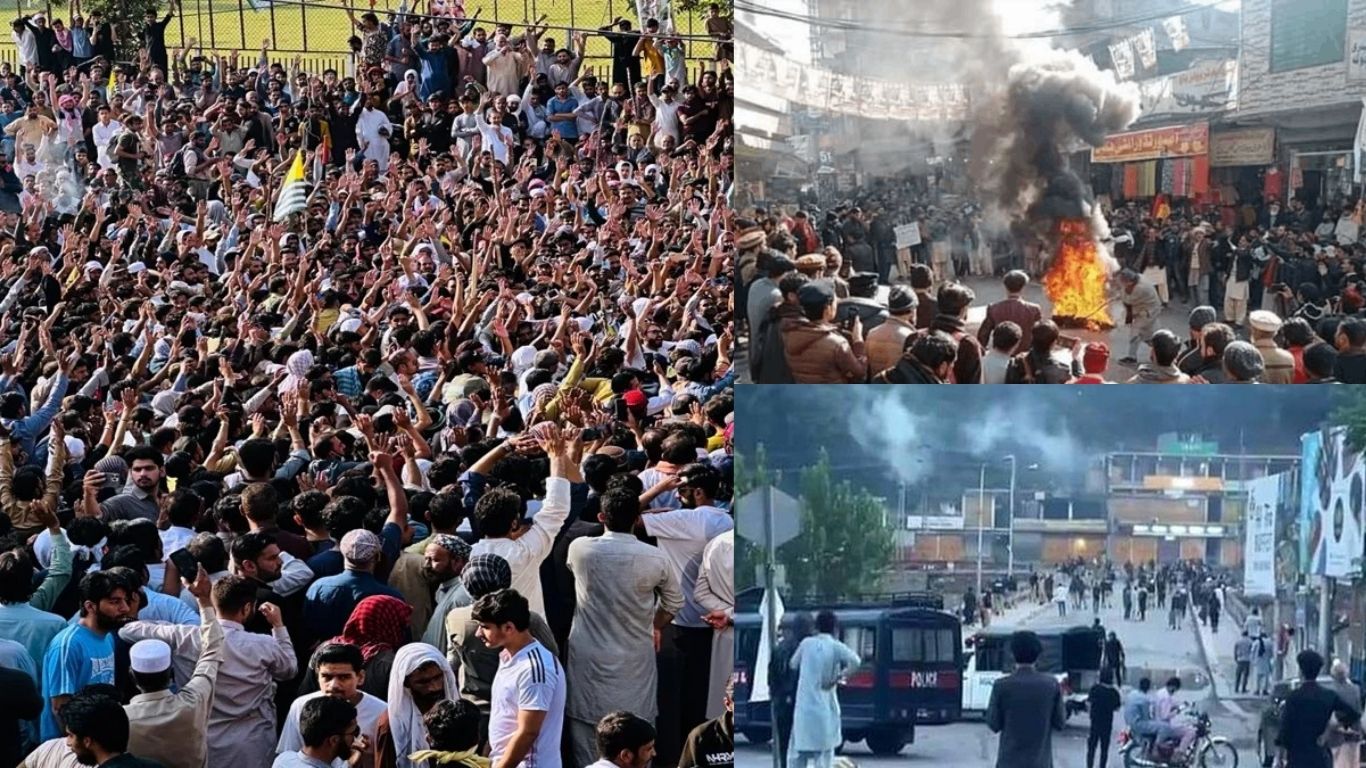
Over the past month, towns like Muzaffarabad and Mirpur have been simmering with anger. Student demonstrations, initially aimed at protesting the newly introduced e-marking or digital evaluation system, quickly spiraled into a political confrontation with the Shehbaz Sharif-led government. The youth allege that the new system has been deliberately designed to fail students and control the education sector. Reports of students receiving marks in papers they didn’t even attend or failing in subjects they excelled in only added to the outrage.
The flashpoint came when a gunman opened fire on peaceful student protesters in Muzaffarabad, injuring one. The shooter’s identity remains unknown, but witnesses allege that the firing happened in the presence of police officers. Videos of the incident have gone viral across social media, amplifying public anger. For many, this protest became the last straw. “They shoot us for asking for justice how different are we from the people in Nepal who were silenced before their revolution?” a protester told local media.
The movement’s energy mirrors the youth uprisings in Kathmandu earlier this year, where student-led protests against alleged corruption and internet bans eventually toppled the KP Sharma Oli government. Similarly, PoK’s youth are now linking their personal grievances with broader political and economic injustices, turning local unrest into a nationwide challenge for Pakistan’s establishment.
Decades of Exploitation Behind the Revolt
The current unrest in PoK cannot be seen in isolation. For decades, Islamabad has treated the region as a colony a military buffer zone rather than a homeland. Political rights have been systematically denied, local assemblies remain powerless, and land ownership laws favour outsiders linked to Pakistan’s political elite. Resources from the Indus River and mountain regions are diverted to mainland Pakistan, leaving locals impoverished and alienated.
The abuse of the Indus Waters Treaty has become a potent symbol of this exploitation. While Pakistan accuses India of “water weaponisation,” it continues to siphon off PoK’s natural water reserves for its own use, depriving local communities of clean water and irrigation. At the same time, joblessness, poor education, and rising inflation have left an entire generation disillusioned.
The previous wave of protests in September which saw at least 12 civilians killed stemmed from a 30-point charter of demands, including tax relief, flour and electricity subsidies, and the completion of basic development projects. When the army opened fire on the protesters, the agitation escalated into a full-fledged anti-government movement against both Prime Minister Shehbaz Sharif and Army Chief Asim Munir. Islamabad eventually had to concede several demands, an embarrassing climbdown that exposed the cracks in its control.
Now, with students joining the protests, the discontent has entered a new phase one that combines social, economic, and political frustration into a single generational cry for freedom.
Gen Z’s Digital Rebellion: Social Media as the New Battlefield
This new wave of dissent in PoK is unlike anything Pakistan has seen before. Unlike earlier protests led by political parties or separatist leaders, this movement is being driven by digitally empowered youth who know how to bypass censorship. Platforms like TikTok, Instagram, and Telegram have become their virtual frontlines. Using hashtags such as #ExposePoK, #GenZStandUp, and #NepalMoment, they are sharing videos, testimonies, and images of oppression directly with international audiences.
Their approach echoes the Nepal and Bangladesh uprisings decentralised, youth-led, and sustained through social media mobilisation. “We don’t need guns; our phones are enough to show the world the truth,” said a student activist. Encrypted chats are being used to coordinate flash protests, while influencers and diaspora voices amplify their stories globally.
This online mobilisation has deeply unsettled Islamabad. Authorities have responded by intensifying surveillance, blocking certain websites, and monitoring student movements. Yet, as history has shown, digital censorship rarely kills an idea once it takes root. The Pakistani establishment, already battling economic collapse and diplomatic isolation, now faces a new threat a generation it cannot control through propaganda or fear.
For decades, Pakistan’s military and political establishment have built their legitimacy on the Kashmir narrative portraying themselves as the protectors of it’s identity while demonising India. But today, that narrative is collapsing from within. The very youth of PoK, whom Islamabad claims to defend, are openly accusing Pakistan of being the real occupier.
Their slogans “Our land, our rights, our future” expose Pakistan’s hypocrisy to the world. Videos of protesters burning Pakistani flags or defacing images of national leaders are spreading rapidly online, challenging the state’s control over the region’s narrative. What was once a “Kashmir issue” projected internationally has now become a “Pakistan problem” a rebellion against its internal colonialism.
The timing couldn’t be worse for Islamabad. As its economy crumbles under IMF pressure, inflation soars, and international investors flee, the army’s iron grip over national politics is increasingly being questioned. The Gen Z uprising in PoK may well be the tipping point that forces Pakistan to confront the contradictions at its core a state that cries for self-determination abroad while denying it at home.
The parallels with Nepal, Bangladesh, and Sri Lanka are too stark to ignore. In each case, it was the youth frustrated, jobless, digitally connected who brought entrenched systems of power to their knees. PoK’s Gen Z now stands at a similar crossroads. Whether their movement grows into a full-blown revolution or is brutally suppressed will depend on how far Islamabad is willing to go to protect its façade of control.
But one thing is already clear, the fear barrier has been broken. Pakistan’s young citizens in its occupied territories are no longer content with rhetoric or empty promises. They are demanding accountability, autonomy, and justice. The “Nepal moment” in PoK isn’t just about students or exams it is about a generation that refuses to inherit oppression.