
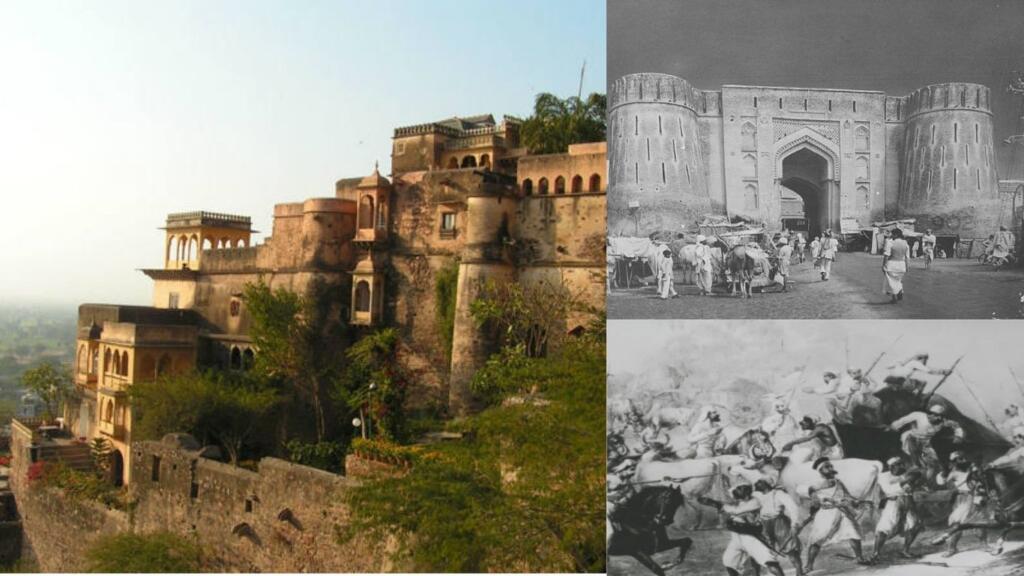
Haryana the land where India’s soul was first shaped stands as a timeless witness to the dawn of civilization, the rise of empires, and the battles that defined Indian history. According to ancient legends, creation itself began here through the divine boon of Lord Brahma. The word “Hariana” found in a 1328 AD Sanskrit inscription preserved in the Delhi Museum described this region as “Heaven on Earth.”
Situated along the banks of the lost River Sarasvati, Haryana was the cradle of the Vedic civilization. It was here that sages composed the Vedas, the world’s oldest scriptures, and where humanity’s earliest philosophical ideas took root. The Kurus India’s first legendary dynasty ruled from this sacred soil. It was here that Lord Krishna delivered the Bhagavad Gita to Arjuna, on the battlefield of Kurukshetra, forever transforming the course of dharma and destiny.
Excavations at sites such as Rakhigarhi (Jind), Banawali (Sirsa), Kunal (Fatehabad), and Agroha (Hisar) have unearthed relics of the pre-Harappan and Harappan cultures, confirming Haryana’s 5,000-year-old continuity of civilization. Pottery, seals, ornaments, and sculptures from Tilpat, Kurukshetra, and Panipat link the material world to the mythic past, giving archaeological weight to the epic of the Mahabharata.
Haryana’s geography lying at the crossroads of North India made it the “Gateway of Invasions.” Every empire that aspired to rule India fought on its soil. From the battle of ten kings in the Sarasvati Valley to the epic Mahabharata war, the fields of Kurukshetra have always been arenas of destiny.
In the centuries that followed, Huns, Turks, Afghans, and Mughals marched through Haryana. After the fall of the Gupta Empire, the region saw the rise of King Harshavardhan, who ruled from Thanesar (near Kurukshetra) in 606 AD, uniting much of North India under his enlightened administration.
Haryana’s military significance became even more pronounced during the medieval period. The three Battles of Panipat were fought here, each altering India’s political fate
These fields soaked in blood and courage tell the story of India’s rise, fall, and rebirth.
When the First War of Independence erupted in 1857, Haryana once again stood at the heart of India’s destiny. The uprising began in Meerut on May 10, 1857, and the rebel sepoys marched straight to Delhi, proclaiming Bahadur Shah Zafar as the Emperor of Hindustan. Delhi became the symbol of resistance and Haryana, lying between Delhi and Punjab, became both a bridge and a battleground.
In 1857, Haryana was not a single province but a mosaic of princely states and jagirs. Some rulers chose rebellion; others, fearing loss of power, sided with the British. It became a microcosm of India’s divided loyalties where the princes sought preservation, but the peasants fought for freedom.
Several Haryana rulers chose the side of the East India Company, helping them regain control of Delhi:
-
Maharaja Narinder Singh of Patiala (1845–1862) was among the first to pledge military support. His soldiers and supplies helped suppress uprisings and secure Delhi. In return, the British rewarded him with land and honours.
-
Raja Randhir Singh of Jind sent contingents to guard British convoys and control rebel routes.
-
Raja Devinder Singh of Nabha offered logistics and manpower, allowing British forces to advance safely toward Delhi.
These rulers of the Cis-Sutlej States (modern southern Haryana and Punjab) became the British Empire’s strategic partners, transforming Haryana into a secure passage between Punjab and Delhi.
The Grand Trunk Road stretching from Ambala to Delhi became the British lifeline. Troops, artillery, and food moved swiftly across Haryana’s plains. Small garrisons in Panipat, Karnal, and Sonipat kept the route secure. Villages that supported the rebels were brutally punished, with entire settlements burnt to the ground.
But while some kings bowed, Haryana’s commoners rose in defiance. The south and west Rewari, Jhajjar, Bahadurgarh, and Narnaul turned into strongholds of rebellion.
Leading them was Rao Tula Ram of Rewari, one of the most valiant patriots of 1857. With his cousin Rao Gopal Dev, he organized troops, collected arms, and led daring attacks on British positions. His forces fought the historic Battle of Narnaul (16 November 1857), where they inflicted heavy losses on the British before being overwhelmed by reinforcements from Ambala and Karnal.
The Nawabs of Jhajjar and Bahadurgarh also declared allegiance to Bahadur Shah Zafar, openly defying the British. But their rebellion was short-lived both were captured and executed after the fall of Delhi.
By June 1857, British troops supported by the loyal Cis-Sutlej states had surrounded Delhi from the north. Haryana’s plains served as their main supply corridor. Generals like John Nicholson and Archdale Wilson established camps along the route from Ambala to Sonipat, ensuring a steady flow of reinforcements.
The Siege of Delhi lasted from June to September 1857. Despite fierce resistance from the sepoys, the British broke through the city’s defences. On 20 September 1857, Delhi fell.
Bahadur Shah Zafar, the last Mughal emperor, was captured and tried at the Red Fort. His sons were executed near Khooni Darwaza by Major William Hodson, ending the 300-year Mughal lineage.
The British then turned to vengeance. Villages that had supported the rebels were razed. Lands of the rebel chiefs were confiscated. But the rulers who had stayed loyal especially Patiala, Jind, and Nabha were handsomely rewarded with titles and territories.
Haryana, thus, became the stage where the Mughal Empire breathed its last and the British Raj rose in its full might.
From the hymns of the Vedas to the cannons of Panipat, Haryana’s soil has absorbed every era of India’s journey. It has seen creation and destruction, rebellion and loyalty, triumph and tragedy.
The betrayal of some rulers during the 1857 Revolt helped the British crush India’s first war of independence, but the courage of heroes like Rao Tula Ram ensured that the spirit of resistance would live on. The people of Haryana carried this legacy into the modern era serving bravely in the Indian Army and contributing to India’s sovereignty and unity.
Today, Haryana is known as the “Green Land of India” a state that feeds the nation, fuels its economy, and stands tall in sports, industry, and defence. From Kurukshetra’s sacred soil to Panipat’s legendary fields, from Rao Tula Ram’s rebellion to Harshavardhan’s empire, Haryana’s history is not just the story of a region it is the chronicle of India itself. This Haryana Day, as we salute its glorious past, we also honour the unbroken spirit of a land that has forever shaped India’s destiny.