














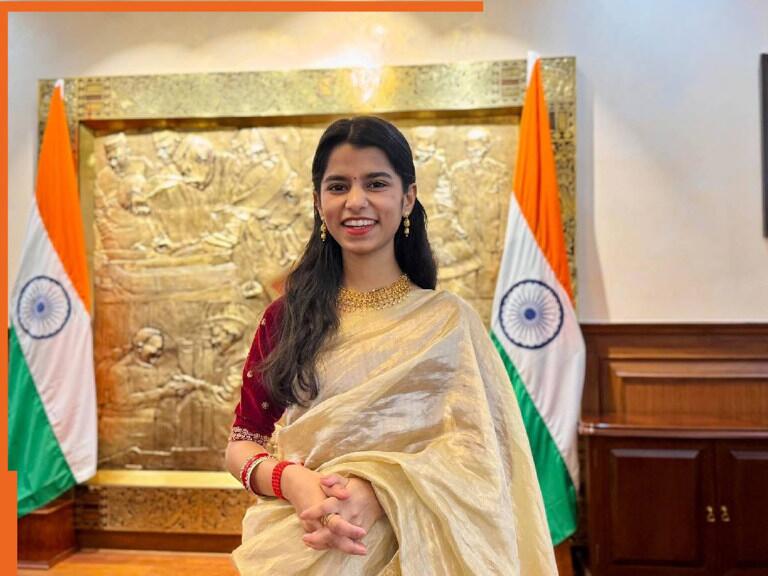
The recent wave of criticism aimed at Maithili Thakur—an artist celebrated for her classical grounding, cultural devotion, and rootedness in Indian folk traditions—has sparked an unexpected debate. At the surface, the backlash seems like a typical social-media storm, the kind that routinely targets public figures for perceived ideological deviations. But to many observers, this episode appears emblematic of a deeper fault line within sections of contemporary activism: a view that certain feminist spaces have aligned themselves with a broader left-progressive framework that selectively targets figures associated with cultural conservatism or traditional identity.
This argument is not new. For years, cultural commentators have suggested that a segment of modern online feminism has drifted far from its foundational principles of gender justice, autonomy, and women’s rights. Instead, it has become entangled—at least in the eyes of critics—in a political nexus involving leftist ideological movements and, at times, narratives sympathetic to Islamist positions on global issues. The controversy surrounding Maithili Thakur is now being cited by these critics as yet another data point illustrating this perceived ideological drift.
Why Maithili Thakur Became a Target
Maithili Thakur’s public persona is rooted in tradition. From ancient folk music to devotional compositions, from narratives of Indian heritage to depictions of cultural pride, her artistic identity does not neatly align with the aesthetics of progressive counterculture. As a result, she becomes a symbolic figure: traditional, rooted, unapologetically Indian.
This symbolism is what makes her, in some circles, an object of ideological suspicion. The argument goes like this: if a woman’s success is tied to expressions of heritage or Hindu identity, certain online feminist groups treat her with less empathy or even outright hostility. Critics contend that these spaces tend to reserve solidarity primarily for women who conform to a narrow ideological mold—typically one that aligns with global progressive rhetoric, identity politics, or left-wing activism.
Hence, when Maithili voices views perceived as “traditionalist” or aligned with majority cultural values, a portion of feminist activism online responds not with engagement but with denunciation.
The Charge of the “Islamist-Leftist Alliance”
The term “Islamist-Leftist alliance” has been used by commentators for years to describe a peculiar ideological partnership: sections of the global left partnering with or defending Islamist political narratives under the banner of anti-imperialism, minority defense, or decolonial theory. Critics argue that this alliance is inconsistent—feminism typically opposes patriarchal structures, yet Islamist political frameworks often enforce gender norms that contradict feminist principles.
In the Indian digital space, this alleged alliance manifests not necessarily through formal partnerships but through patterns of selective activism. When an artist like Maithili Thakur celebrates Indian civilization, or when she rejects Westernized feminist narratives, she becomes an ideological “other.” Her rootedness is interpreted as conservatism; her cultural pride as nationalism. And anything that resembles nationalism is, in some activist circles, automatically coded as patriarchal, oppressive, or even majoritarian.
Thus, critics argue that online feminist spaces, influenced by global leftist discourse, react sharply to figures like Maithili because she represents an identity they have been ideologically conditioned to resist.
Is This a Dangerous Drift—or an Overreaction?
It would be simplistic to claim that “feminism” as a whole has veered dangerously into a geopolitical coalition. Feminism is not a monolith; it includes liberal feminists, social feminists, radical feminists, cultural feminists, and countless other strands across the ideological spectrum. Many feminists support women irrespective of political orientation and celebrate diversity in thought, tradition, and identity.
However, what critics highlight is not the entire feminist movement but the dominant online narrative. On social platforms, where algorithms reward outrage, the loudest voices often become the most visible. In such spaces, ideological rigidity thrives. A form of activism emerges that threatens to punish deviation rather than encourage dialogue.
When these online factions appear to amplify selective solidarity—quick to condemn traditional women, but eager to defend conservatism in other cultural contexts—they feed the narrative that feminism has been politically hijacked.
The Maithili Thakur Moment as a Mirror
The backlash against Maithili Thakur is more than a flashpoint—it is a mirror reflecting deeper anxieties about modern activism. Many Indians feel that certain progressive spaces have become increasingly hostile to cultural identity, particularly when that identity is linked to majority traditions. This perception, in turn, generates suspicion that ideological motivations are overshadowing genuine commitment to gender equality.
Critics argue that this ideological entanglement—this fusion of selective feminism with leftist and global Islamist narratives—has created a version of activism that is less about women’s rights and more about political signaling. Whether or not one accepts this critique, the conversation it has sparked is important.
A Path Forward: Reclaiming Balance and Nuance
If feminism is to remain a meaningful force, it must remain open, introspective, and ideologically diverse. It must recognize the agency of women who choose tradition just as much as those who choose rebellion. It must engage rather than attack, understand rather than dismiss.
Maithili Thakur’s critics may believe they are defending progressive values, but the intensity of the backlash suggests something else: a discomfort with identities that challenge ideological orthodoxy. This discomfort—if unaddressed—risks fragmenting feminism into polarized factions incapable of engaging with India’s diverse cultural reality.
In that sense, the Maithili Thakur episode is a timely reminder: movements lose their moral authority when they become echo chambers. And feminism, at its best, has always been far more expansive than that.