
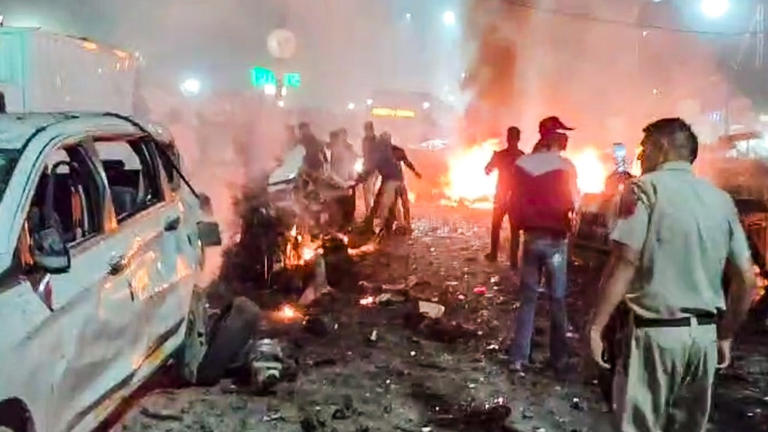
India is grappling with the shockwaves of a major terror incident in Delhi—an explosion near the Red Fort that killed at least 13 people and injured several more. This attack, carried out by Kashmiri doctor Dr Mohammad Umar un Nabi, allegedly in a panic after a Jaish-e-Mohammed (JeM) module was uncovered, has triggered not only a massive security investigation but also an intense debate over how certain media outlets choose to portray accused individuals involved in terror networks. As opined by ‘The Wire‘ they are humans still!
A Dangerous Network Unveiled
Over recent weeks, Indian security agencies exposed a multi-state JeM module, recovering nearly 2900 kilograms of explosive materials, automatic weapons and other ammunition. Several individuals—primarily medical professionals—were apprehended as part of the crackdown. Among them were Kashmiri doctors Adeel Ahmed Bhat, Muzammil Shakeel (Ganie), Mohammad Arif, and Dr Shaheen Saeed of Lucknow, said to be linked to the women’s wing of JeM, the Jamaat-ul-Mominaat, allegedly overseen by Sadia Azhar, sister of JeM chief Masood Azhar.
According to investigators, Umar Nabi, who served as an assistant professor at Al Falah University in Faridabad, detonated his Hyundai i20 near the Red Fort after their network was exposed. DNA evidence reportedly confirmed his identity.
A Media Narrative Sparks Outrage
Following these events, intense criticism erupted when The Wire published a feature on November 13 titled “We Are Doomed, What More Can Be Said: Families of Kashmiri Doctors Linked to ‘Terror Module’ Case.” Critics argue that the article created a sympathetic portrait of the accused, framing them as victims while casting doubt on official findings.
The core of the backlash centres on the belief that the portrayal risked humanising individuals linked to a terror conspiracy, especially in the immediate aftermath of a deadly attack.
The Controversy Over Humanising a Perpetrator
Article published in ‘The Wire’ included interviews with Umar Nabi’s father and relatives, emphasising his academic excellence, economic struggles and the family’s difficult circumstances. The text recounted how the young doctor rose from poverty, topped NEET-PG examinations, and supported his family, all while wearing worn-out clothes and flip-flops—details critics view as emotional framing intended to evoke sympathy.
The article reportedly suggested that some details of Umar Nabi’s involvement remained “unconfirmed,” even though authorities had cited strong forensic and intelligence evidence. Critics argue that such framing risks overshadowing the gravity of his alleged actions—particularly the devastating explosion that claimed multiple innocent lives.
The Debate on Education and Radicalisation
Another major point raised by commentators is that portrayal of The Wire attempted to link the accused men’s intelligence, education and medical training to an argument of inherent innocence. Yet, the very case—of doctors turning to violent radicalisation—is being highlighted by security experts as proof that education does not automatically act as a shield against extremist ideology.
The involvement of multiple well-qualified medical professionals, including Dr Shaheen Saeed and doctors from Al Falah University, has raised alarm about the vulnerability of even elite sections to indoctrination. Critics maintain that the article’s focus on personal hardships ignored this larger systemic and ideological concern.
Extending Sympathy to Others in the Module
The Wire article also discussed the families of other arrested doctors, including Dr Adeel Ahmad Bhat and Dr Muzammil Shakeel Ganie, detailing their childhoods, educational struggles, family finances and religious devotion. Critics argue that emphasising their personal backgrounds, the postponement of a sister’s wedding, and the disruption caused by police searches dwelled excessively on the distress of families while sidelining the grave implications of the terror plot.
These portrayals, critics believe, inadvertently minimise the suffering of victims and the significance of the foiled terror attack, shifting focus instead to emotional narratives.
The Question of Media Responsibility
The wider debate triggered by the article involves a crucial question: How should media ethically report on individuals accused of terrorism? While it is important to acknowledge families’ perspectives and ensure due process, critics insist that reporting must not dilute or overshadow verified evidence, nor create narratives that could be interpreted as justification or sanitisation of extremist violence.
In this context, commentators argue that portraying Umar Nabi by The Wire as a misunderstood youth who attended college in tattered clothes obscures the fact that he allegedly chose to align with a terror organisation despite his education and opportunities.
The Broader Accusations Against The Wire
Critics also frame this incident as part of a pattern in which they believe The Wire has historically presented sympathetic portrayals of individuals accused of extremist or violent activities. Past controversies involving the outlet—such as its stance on certain protests, slogans, or charged cases—are cited by detractors to argue that this latest article represents a continuation of a questionable editorial trend.
The Wire, on the other hand, maintains that its reportage aims to highlight human stories and question official narratives where necessary—a core responsibility of journalism in a democratic society.
Why Accuracy Matters in a Climate of Terror
The Delhi blast and the unmasking of the JeM module have reminded the country that terror threats can emerge from unexpected quarters—including highly educated professionals. At such a time, security experts stress that public messaging must be clear, factual and vigilant, avoiding any dilution of the severity of the threat.
For families of the victims who lost loved ones in the Red Fort explosion, any narrative that risks softening public perception of the accused can feel deeply painful and unjust. Critics argue that journalism must balance compassion with responsibility—especially when dealing with matters of national security.
Conclusion
The tragedy near the Red Fort, followed by the exposure of a medically-trained terror module, has shaken India. The subsequent controversy over media representation underscores a wider clash between journalistic freedom and public expectations for sensitivity, accuracy and national interest. Even if as per The Wire families of the accused may express disbelief or grief, and while human stories matter, the crux of the issue remains: no narrative must overshadow the brutality of terrorism or the suffering of its victims.