






















Food does not immediately come to mind when discussing China’s influence in Africa. Ports, loans, and infrastructure dominate headlines. Yet across East Africa, Beijing is quietly shaping another realm of strategic importance, the continent’s agricultural and food supply chains.
This influence, while less visible than military cooperation or port construction, carries long-term leverage over national policy and economic stability.
China’s involvement in Africa’s agriculture is not new. Since the early 2000s, Chinese state firms have leased farmland, built irrigation canals, and partnered with local governments on hybrid seed programmes.
But in recent years, this footprint has expanded from fields to the entire supply chain—fertiliser plants in Ethiopia, cold storage facilities in Kenya, and fish-processing units along Somalia’s coast.
This is more than economic activity. It represents influence over the most basic national need: food security. In regions that rely heavily on imported fertiliser or storage infrastructure, whoever controls these assets holds a quiet but powerful form of leverage.
Chinese fertiliser firms now supply significant volumes to East African markets. For governments struggling with inflation and erratic weather patterns, affordable fertiliser is politically significant.
Beijing understands this. Its companies offer discounts, seasonal credit, and bundled supply agreements that deepen reliance on Chinese inputs.
Once dependency is established, alternative suppliers struggle to compete, locking African agriculture into Chinese chemical cycles.
Along the coastline, China’s footprint is equally prominent. Somalia, Kenya, and Djibouti all host Chinese-backed fisheries infrastructure. Much of this development is tied to China’s growing appetite for seafood, which has intensified industrial fishing in African waters.
FAO and Global Fishing Watch data show Chinese trawlers operating across the Western Indian Ocean, often enabled by local agreements that grant access in exchange for infrastructure.
These activities reshape local economies. Small fishing communities struggle to compete with industrial fleets. Local processors face price pressure. Coastal states become dependent on Chinese export channels and refrigeration facilities.
In the process, Beijing gains leverage over coastal political actors who rely on Chinese investment to maintain livelihoods.
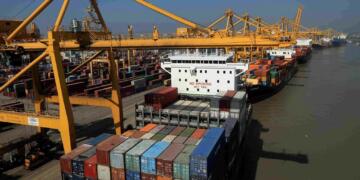
China’s control is strengthened by logistics. Cold storage hubs, warehouse chains, and inland transport routes built under BRI projects tie perishable goods into Chinese-built networks.
If a country’s agricultural exports depend on Chinese infrastructure, Beijing gains informal influence over the terms of trade and, by extension, national economic planning.
This is where the strategic dimension becomes clear. When food supply chains depend on one foreign partner, political flexibility narrows. Governments become cautious not to alienate the provider of essential agricultural input, storage, or export capacity.
China’s food-related footprint thus serves the same purpose as its port projects or digital systems: it creates long-term structural reliance.
African governments are increasingly aware of this tension. Many welcome Chinese investment but remain wary of the imbalance it creates. Alternatives exist—Indian agri-tech partnerships, European food safety programmes, and Japanese cold-chain systems—but they must scale to keep pace with China’s pace.
For India, food corridor cooperation offers a new area of engagement. Shared training programmes, fertiliser innovation, and maritime fisheries monitoring can all strengthen African capacity without creating dependency. Africa’s food sector needs partners, not patrons.
China’s influence over Africa’s food chain may not attract the same attention as port deals or naval deployments, but its strategic value is undeniable. Whoever controls food corridors controls political stability. In the Indian Ocean region, Beijing is moving steadily to secure both.
Ashu Mann is an Associate Fellow at the Centre for Land Warfare Studies. He was awarded the Vice Chief of the Army Staff Commendation card on Army Day 2025. He is pursuing a PhD from Amity University, Noida, in Defence and Strategic Studies. His research focuses include the India-China territorial dispute, great power rivalry, and Chinese foreign policy.