

















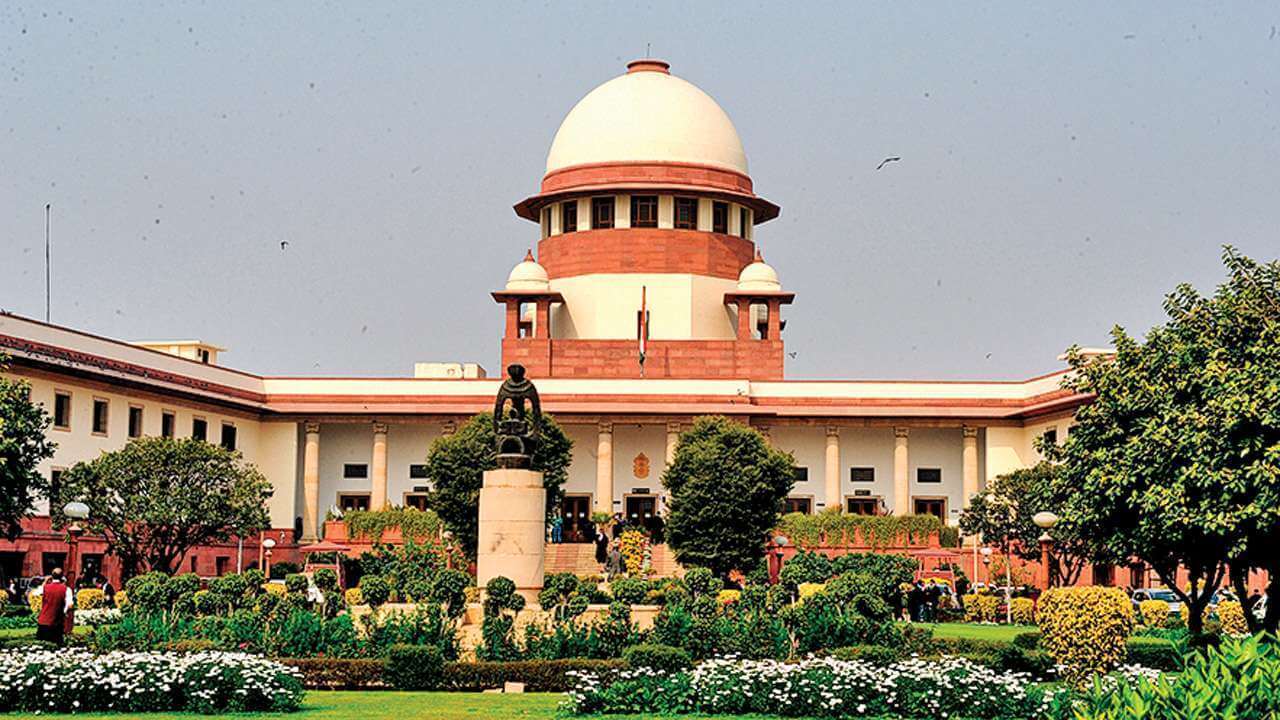
Reinforcing the Armed Forces’ uncompromising commitment to discipline and unit cohesion, the Supreme Court on Monday upheld the dismissal of Lieutenant Samuel Kamalesan, a Christian officer who was removed from service after refusing to enter a place of worship during a regimental parade.
A bench led by Chief Justice of India Surya Kant and Justice Joymalya Bagchi refused to interfere with the Delhi High Court’s ruling that had affirmed the Army’s decision.
The Court held that personal religious rigidity cannot be permitted to undermine the collective discipline essential to a fighting force, and that the officer’s conduct amounted to “gross indiscipline.”
Senior Advocate Gopal Sankaranarayanan, appearing for Kamalesan, argued that the officer had only declined to enter the sanctum sanctorum of a temple during a regimental event, asserting that his Christian beliefs prohibited such participation.
He maintained that Kamalesan otherwise engaged respectfully in multi-faith settings and had never resisted collective activities.
The bench, however, took a stringent view of the refusal, observing that an officer is expected to lead by example, not defy lawful commands based on individual interpretations of faith.
“Is this kind of cantankerous behaviour permissible in a disciplined force?” Chief Justice Kant asked, adding that the conduct alone “deserved dismissal.”
Justice Bagchi underlined that Article 25 protects only essential religious practices—not subjective personal views.
He noted that even a local Christian pastor had clarified that merely entering another faith’s place of worship would not violate Christian doctrine, weakening the petitioner’s claim that he was being compelled into a prohibited religious act.
Rejecting the argument that Kamalesan was forced to perform Hindu rituals, the Court pointed out that the officer was only required to lead his troops during a parade, not participate in any ritualistic activity.
“Leaders have to lead by example. You are insulting your troops,” the Chief Justice remarked.
Background placed on record showed that Kamalesan, serving in the 3rd Cavalry Regiment comprised of Sikh, Jat and Rajput squadrons, repeatedly ignored counselling from senior officers and prioritised his personal interpretation of faith over unit cohesion, ultimately affecting morale.
Firmly declining even a plea for reduced punishment, the Supreme Court emphasised that secularism in the Army is upheld through respectful participation, not withdrawal.
“This will send a strong message,” Chief Justice Kant said, while dismissing the petition in full.