
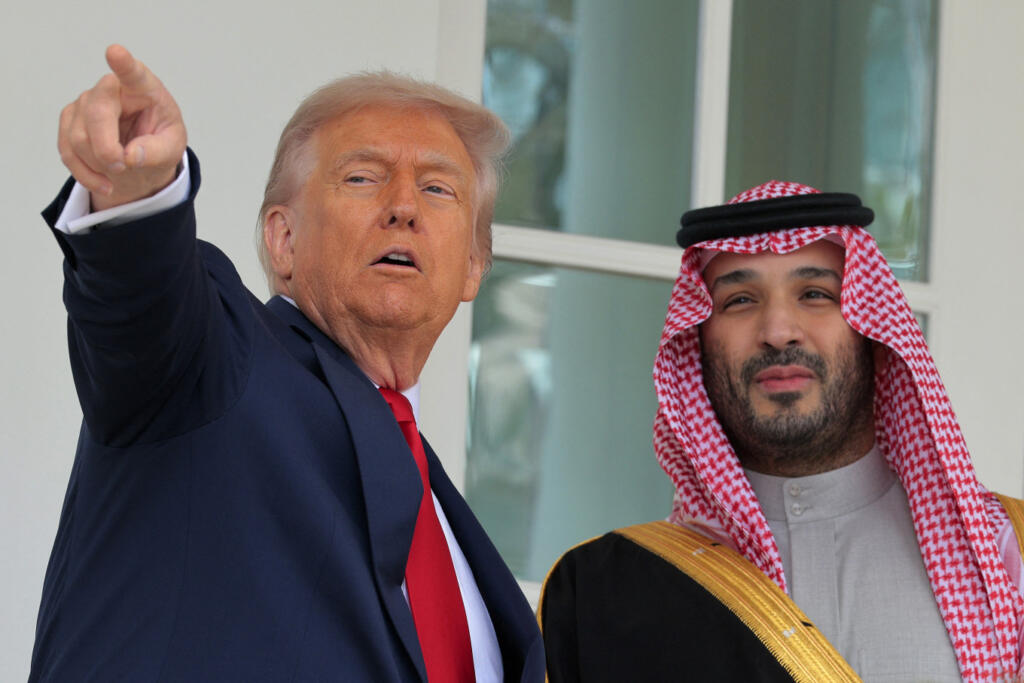
The murder of Saudi journalist Jamal Khashoggi inside the Saudi consulate in Istanbul in October 2018 remains one of the most chilling episodes in modern geopolitical history. It was an act that drew global outrage, triggered diplomatic crises, and forced a reckoning with the often-overlooked human-rights implications of international alliances. But equally significant was the response of then-U.S. President Donald Trump, who repeatedly defended Saudi Crown Prince Mohammed bin Salman (MBS) despite assessments by American intelligence agencies that implicated the Saudi leadership. Trump’s stance not only shaped the diplomatic fallout at the time but continues to illustrate the troubling fragility of moral accountability in global politics.
This article examines that moment — what Trump said, why he defended MBS, and what his position revealed about the shifting priorities of American foreign policy.
A Murder That Shocked the World
Jamal Khashoggi, a Washington Post columnist and longtime critic of Saudi leadership, entered the Saudi consulate in Istanbul on October 2, 2018, expecting to retrieve paperwork needed for his upcoming marriage. He never emerged. Turkish authorities soon revealed that Khashoggi was murdered and dismembered inside the consulate by a Saudi hit squad.
International condemnation was swift. Evidence—including audio recordings and intelligence assessments—indicated the operation was carefully coordinated at high levels of the Saudi government. The CIA later concluded with high confidence that Mohammed bin Salman (MBS) approved the operation.
Many expected the United States, a self-declared champion of democratic values and press freedom, to take a firm stand. Instead, Trump broke sharply from America’s traditional posture.
Trump’s Public Defense of MBS
Rather than emphasize human rights or press freedom, Trump repeatedly framed the Khashoggi murder through a transactional lens. His central arguments were consistent:
1. Denial of Definitive Proof
Trump publicly emphasized that the U.S. intelligence community had not conclusively proven the crown prince’s involvement.
He stated variations of:
-
“Maybe he did, maybe he didn’t.”
-
“We may never know all the facts.”
By creating ambiguity, he shifted focus away from holding a leader accountable and toward questioning the reliability of his own intelligence agencies.
2. Protection of U.S.–Saudi Economic Interests
Trump frequently pointed to lucrative arms deals and trade partnerships, arguing that punishing MBS risked jeopardizing billions of dollars in investments and jobs for Americans.
He emphasized:
-
The Saudis serve as a major buyer of U.S. defense equipment.
-
Economic losses would outweigh punitive actions.
3. Strategic Priorities Over Moral Accountability
Trump placed strong emphasis on countering Iran, describing Saudi Arabia as a vital partner in regional stability and U.S. security ambitions.
In essence, he argued that geopolitical benefits outweighed human-rights concerns.
Moral Leadership Compromised
Trump’s defense of MBS marked a significant departure from traditional American messaging, where human rights — at least rhetorically — were considered an essential pillar of foreign policy.
Three key problems emerged from this approach:
1. Undermining U.S. Credibility on Human Rights
When the leader of a democratic superpower downplays the murder of a journalist, it signals to the world that violations of press freedom are negotiable. This erodes America’s moral leverage in calling out abuses elsewhere.
2. Discrediting U.S. Intelligence Agencies
Trump’s repeated dismissal of the CIA’s assessment weakened public trust in American intelligence and created unnecessary discord within the national security establishment.
3. Empowering Authoritarian Behavior
When autocratic leaders observe a lack of consequences for extreme acts of repression, the threshold for acceptable behavior shifts. Critics warned that Trump’s stance inadvertently gave authoritarian governments permission to silence dissent through violent means.
The Larger Geopolitical Context
Trump’s defense of MBS didn’t occur in a vacuum. It aligned with a broader foreign-policy posture built around:
-
Transactional diplomacy — evaluating allies primarily by financial or strategic utility.
-
Personal relationships — Trump often emphasized his rapport with strongman leaders.
-
Reduction of moral rhetoric — seeing it as either insincere or counterproductive.
In this model, allies such as Saudi Arabia were too strategically important to face serious consequences, regardless of the gravity of their actions.
Khashoggi’s Legacy and the Continuing Debate
Years later, the Khashoggi case remains unresolved in the moral sense. Though U.S. intelligence under subsequent administrations reaffirmed MBS’s involvement, no punitive measures targeted the crown prince personally. Saudi Arabia continues to assert its global influence, and MBS has rebranded himself as a modernizing reformer.
But the deeper question endures:
What does it mean when the leader of a major democracy defends another leader implicated in the murder of a journalist?
The answer carries implications far beyond U.S.–Saudi relations. It affects global press freedom, the safety of exiled dissidents, and the willingness of governments to respect international norms.
It’s A Defining Moment for American Values
Trump’s defense of Mohammed bin Salman (MBS) over the murder of Jamal Khashoggi was more than political calculation—it was a reflection of shifting priorities in American foreign policy. By minimizing a brutal killing to preserve strategic alliances and economic deals, the United States risked eroding its reputation as a guardian of democratic values and human rights.
The incident stands as a stark reminder that moral leadership is not just declared — it is demonstrated, especially in moments when economic and political incentives tempt nations to look away.