

Looking to transform static images into studio-quality visuals without a full photo shoot? A deepfake maker photo lets you blend identities, styles, and expressions with uncanny realism—perfect for storyboards, campaign mockups, and creative experiments. In this guide, we’ll show you how Deepfake Maker streamlines the entire process, from sourcing clean references to fine-tuning masks, lighting, and textures for a natural finish. You’ll learn what makes a convincing deepfake maker photo, how to avoid common artifacts, and the responsible practices that keep your work ethical and compliant. Whether you’re a marketer testing concepts, a creator polishing thumbnails, or a designer prototyping looks at scale, this step-by-step playbook will help you generate a professional, consistent deepfake maker photo—fast.
Table Of Contents
- What Is Deepfake Maker Photo?
- Why Choose Deepfake Maker For Deepfake Maker Photo In 2025
- How To Use Deepfake Maker To Generate Deepfake Maker Photo Step-By-Step
- What Makes A Deepfake Maker Photo “Good”?
- Core Features Of Deepfake Maker For Deepfake Maker Photo
- Legitimate, High-Value Use Cases (That You Can Feel Good About)
- Quality Tips For A More Convincing Deepfake Maker Photo
- Ethics, Law, And Platform Policies (Read This Before Publishing)
- Troubleshooting & Optimization For Deepfake Maker Photo
- Deepfake Maker vs. Alternatives: What To Consider
- FAQs About Deepfake Maker Photo
- Conclusion
What Is Deepfake Maker Photo?
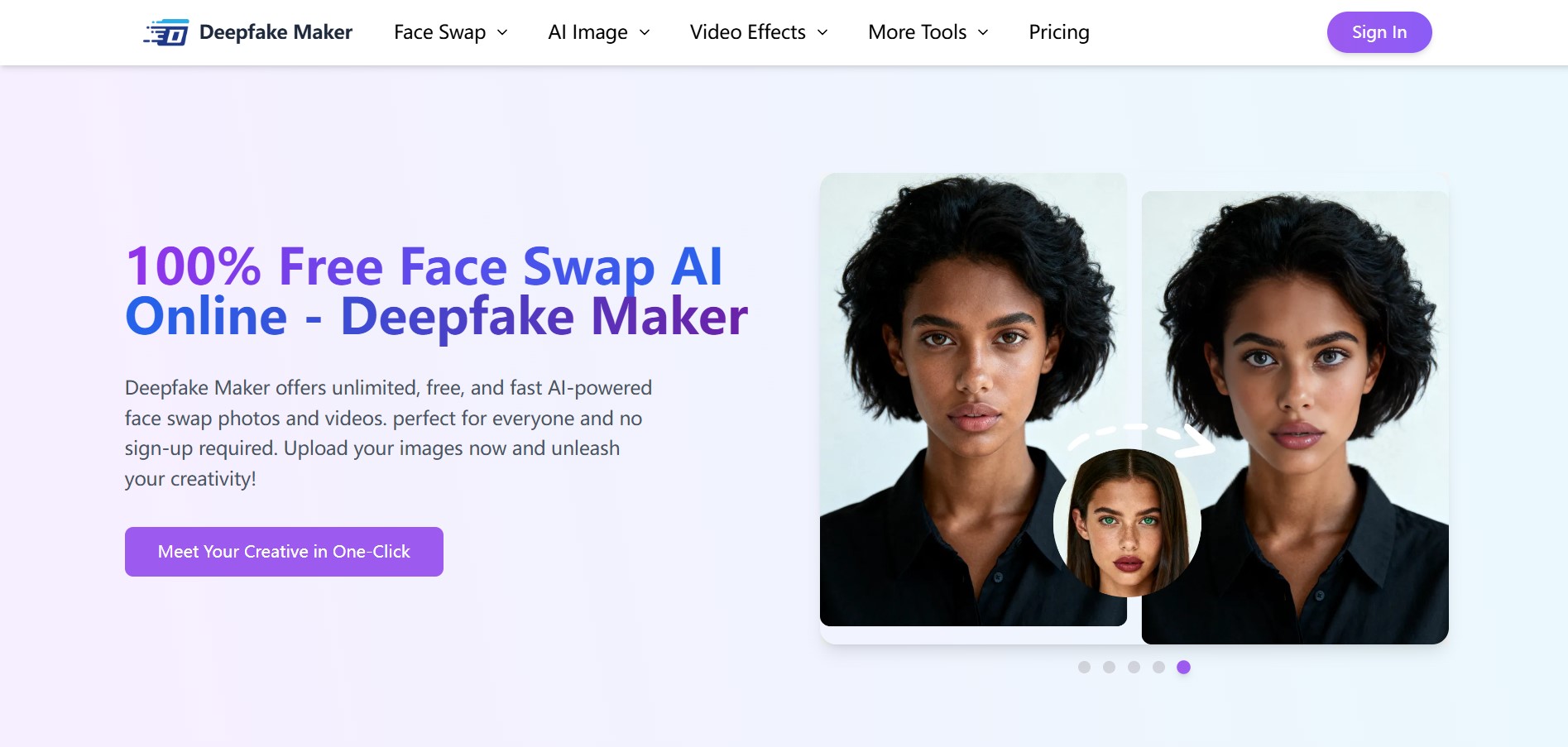
A deepfake maker photo is a still image produced with AI that convincingly blends or transforms visual identities, expressions, and styles. In practice, a deepfake maker photo may involve face replacement, facial reenactment, or style-consistent edits that look natural under varied lighting, angles, and resolutions.
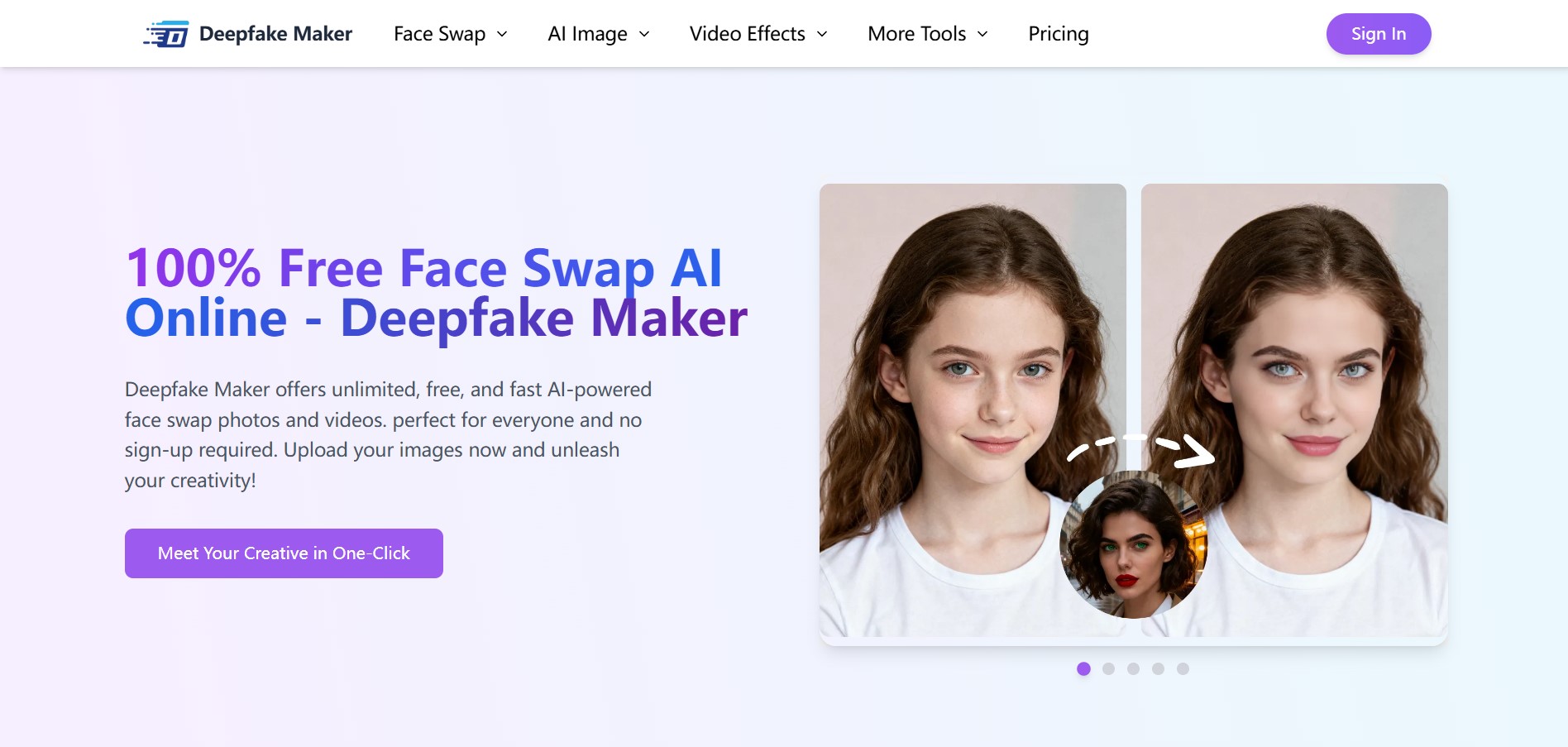

Deepfake Maker is a modern toolset focused on fast, accessible creation of high-quality images and videos. When people say they want to “make a deepfake maker photo,” they usually mean: “Use Deepfake Maker to output a realistic, edited image that preserves structure (pose, lighting, depth) while swapping or enhancing faces and styles.” Because a deepfake maker photo compresses many visual tasks into a single pipeline—face detection, alignment, identity embedding, compositing, and post-processing—the result can look remarkably real, even at modest input quality.
Why does this matter in 2025? Visual storytelling, prototyping, advertising mockups, and entertainment are increasingly AI-assisted. A deepfake maker photo lets creators ideate faster, test concepts, and iterate without costly reshoots—especially when the brand or project requires multiple versions of the same scene. Used responsibly, Deepfake Maker helps you deliver consistent, professional outputs across campaigns, thumbnails, pitch decks, and social content.
Why Choose Deepfake Maker For Deepfake Maker Photo In 2025
There are dozens of AI editors and face-swap tools. Here’s why teams repeatedly choose Deepfake Maker to generate a deepfake maker photo:
Speed With Consistency
- Rapid processing while maintaining identity consistency across a series. If you need 20 variations, a deepfake maker photo workflow in Deepfake Maker scales cleanly.
Quality At Practical Resolutions
- Sharp facial regions, believable skin texture, and hairline treatment—common failure points—are handled well, reducing “AI sheen.”
Multi-Mode Support
- Many workflows (image-to-image, pose-guided, reference-guided) are supported, so your deepfake maker photo process can adapt to different source materials.
Creator-Friendly Controls
- Clear strength sliders, masking tools, and side-by-side previews let you nudge a deepfake maker photo into that “just right” zone quickly.
Responsible Guardrails
- Features and guidance that help avoid misuse. A deepfake maker photo should never be used to deceive, defame, or infringe rights.
Bottom line: if your 2025 content pipeline needs repeatable quality, Deepfake Maker is built to deliver a deepfake maker photo result that looks realistic without drowning you in knobs and nodes.
How To Use Deepfake Maker To Generate Deepfake Maker Photo Step-By-Step
The following is a general, ethical workflow for creating a deepfake maker photo with Deepfake Maker. Always ensure you have all required rights and permissions for any faces or assets you use.
Step 1: Prepare Source & Target Images
- Choose a high-resolution source face with frontal or three-quarter view and good lighting.
- Select a target image where the deepfake maker photo will be composited (the background/scene).
- Ensure both are clear, in-focus, and free of motion blur.
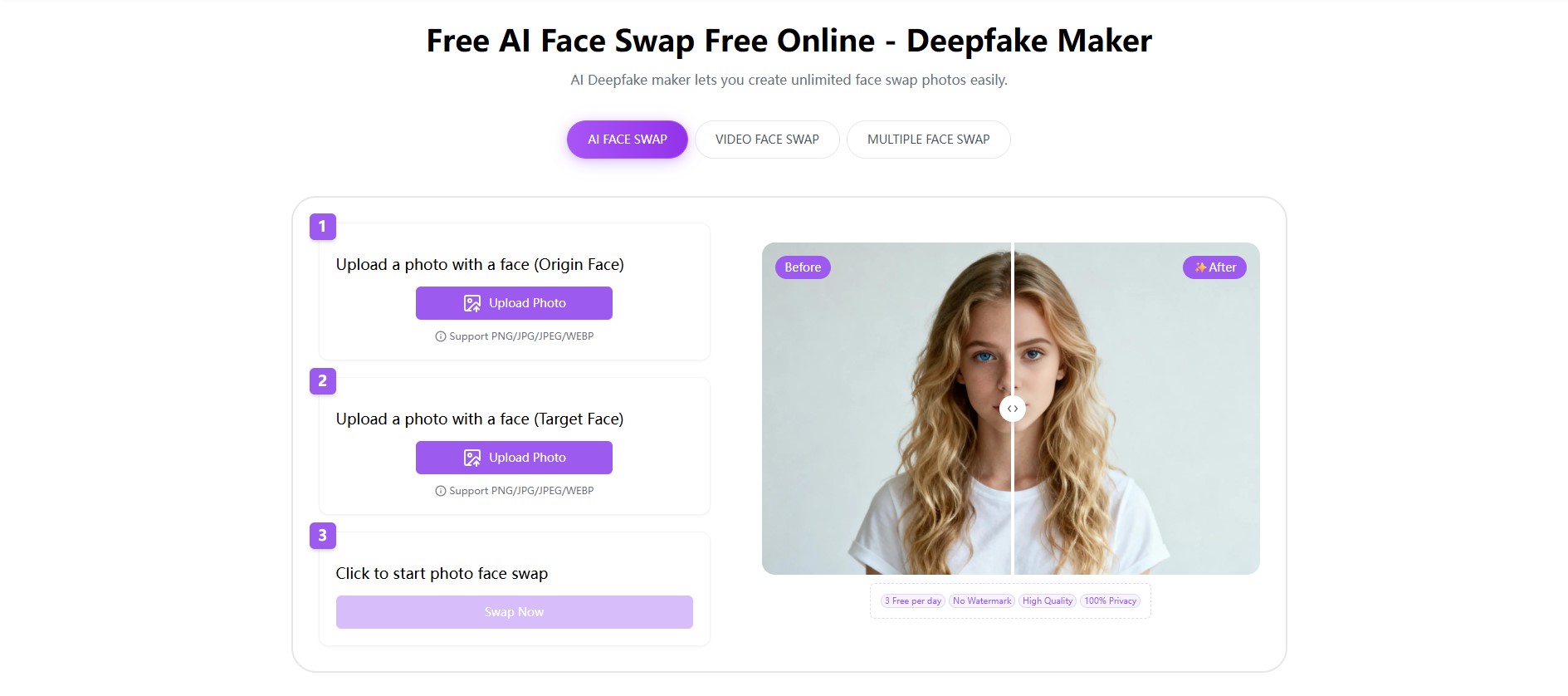
Step 2: Import Into Deepfake Maker
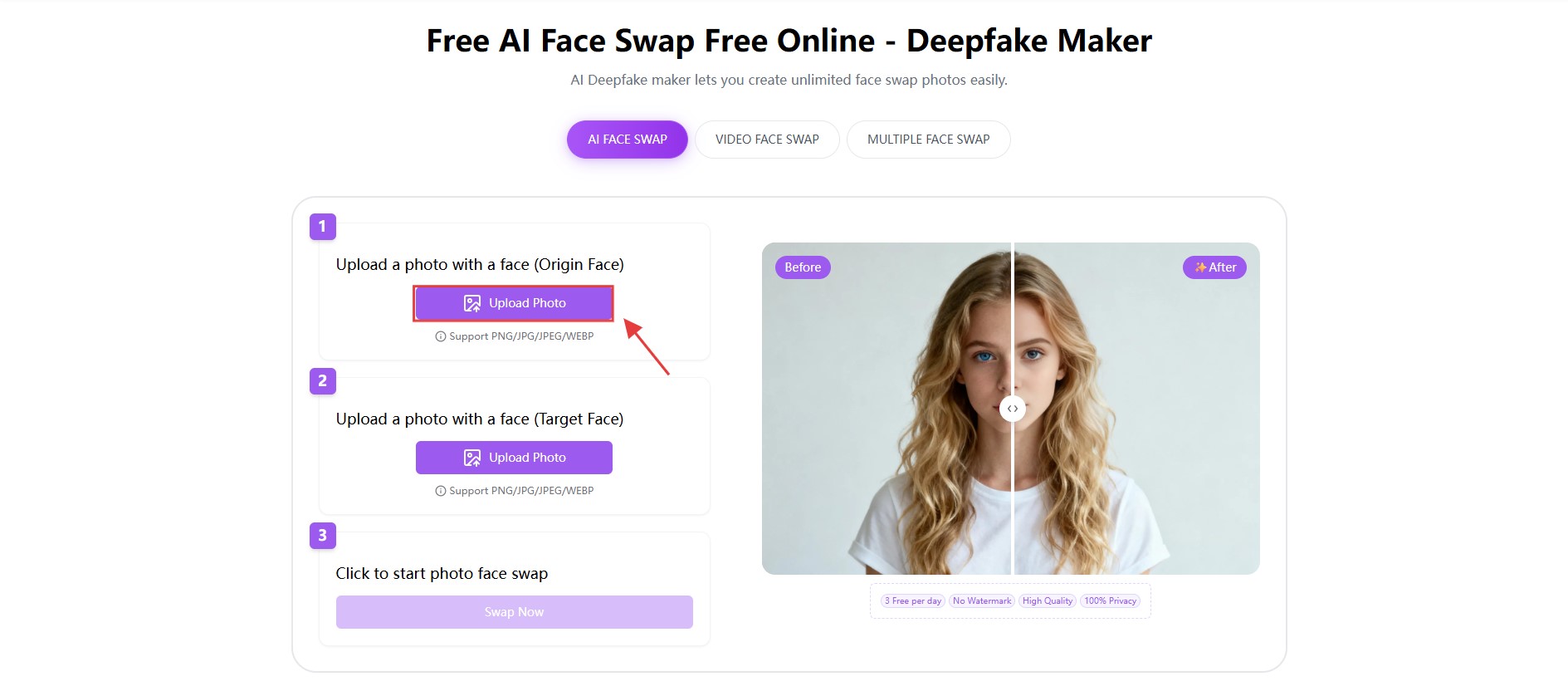
- Upload the source face and the target scene.
- If available, provide multiple reference angles for the source identity; this boosts consistency in the final deepfake maker photo.

- Use auto-alignment to match facial landmarks.
- Adjust the face mask boundary to include realistic hairlines and exclude areas you don’t want altered. Good masking is critical for a convincing deepfake maker photo.
Step 4: Set Strength & Blending
- Start with moderate swap strength.
- Increase or decrease until identity is captured without over-smoothing.
- Tweak blending to inherit target scene lighting, contrast, and color temperature—essentials for a seamless deepfake maker photo.
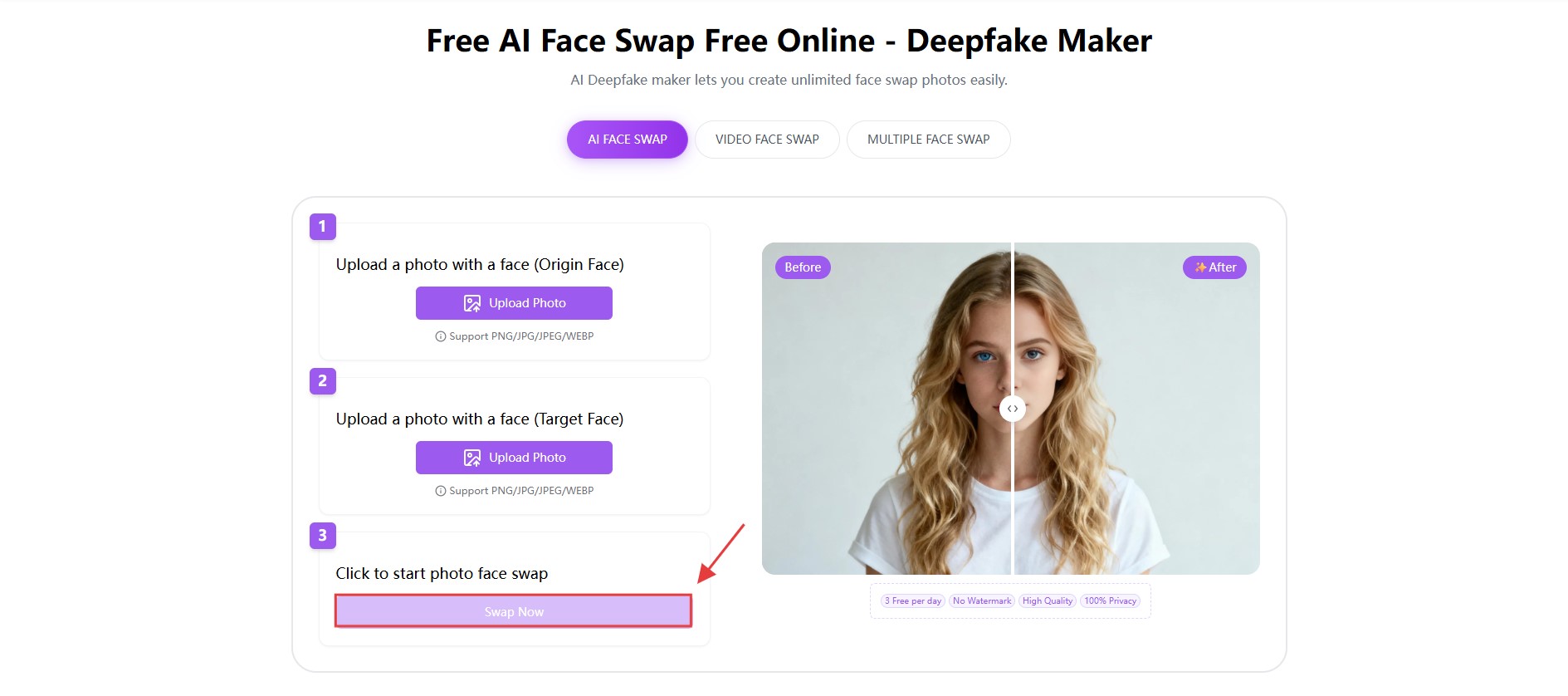
Step 5: Preview & Iterate
- Generate a preview.
- Look for edge artifacts at the jawline, ears, and hair.
- If needed, refine the mask, adjust strength, or try another frame from the source set to improve your deepfake maker photo.
Step 6: Upscale & Sharpen (Optional)
- If you plan to publish, consider upscaling for crisp detail.
- Apply gentle sharpening; avoid “crunchy” pixels that betray a deepfake maker photo as edited.
Step 7: Export
- Export in a lossless or high-quality format for archival.
- Create a web-optimized copy for fast loading on landing pages and social.
Step 8: Label & Store Ethically
- Organize your output with clear filenames and usage notes.
- If used publicly, disclose that the deepfake maker photo is AI-generated where appropriate.

What Makes A Deepfake Maker Photo “Good”? (Core Criteria)
To judge the quality of any deepfake maker photo, evaluate:
Identity Fidelity
- Does the output truly resemble the intended person? Are signature features (eyes, nose bridge, chin line) preserved?
Lighting & Color Match
- The swapped face should harmonize with the target scene’s light direction, intensity, and white balance. A realistic deepfake maker photo never looks “pasted on.”
Texture & Detail
- Pores, hair strands, and micro-shadows matter. Over-smoothing kills realism. Deepfake Maker helps maintain life-like texture.
Geometry Alignment
- Jawlines, ears, and head tilt should fit. Misaligned geometry is the fastest way to break a deepfake maker photo.
Edge Cleanliness
- Check for halos or mismatched compression around the hairline and neck. Clean edges separate great outputs from average ones.
Context Fit
- Expressions and gaze direction must match the scene narrative. The best deepfake maker photo feels like a candid shot, not a collage.
Core Features Of Deepfake Maker For Deepfake Maker Photo
High-Accuracy Face Detection & Alignment
- Robust landmark tracking creates stable baselines for a deepfake maker photo across varied angles.
Reference-Guided Identity Embedding
- Feed multiple references to lock identity features. This is vital when producing a whole set of deepfake maker photo outputs.
Adaptive Blending & Color Transfer
- Controls to harmonize shadows, highlights, and skin tones—key to a convincing deepfake maker photo.
Flexible Masking Tools
- Include or exclude forehead, hairlines, and accessories for cleaner integration.
Non-Destructive Previews
- Iterate quickly, compare versions, and roll back changes while dialing in the deepfake maker photo you want.
Optional Upscale & Enhancement
- Improve resolution and crispness for print or hero images.
Batch & Series Consistency
- When your campaign needs 10–50 images, a consistent deepfake maker photo pipeline saves hours.
Legitimate, High-Value Use Cases (That You Can Feel Good About)
A deepfake maker photo is a tool. Like any tool, value comes from how you use it. Ethical, beneficial examples include:
Creative Direction & Pre-Viz
- Rapidly test character looks, lighting ideas, and storyboards before a costly shoot.
Education & Training
- Build illustrative materials (with consent) that demonstrate expressions, safety procedures, or medical simulations.
Marketing Mockups
- Produce “what-if” visuals, product placements, or regionalized campaign variants with consented models.
Entertainment & Satire (Disclosed)
- Create fictional characters or parody visuals as part of a disclosed, clearly labeled creative work.
Personal Projects With Consent
- Family photo restorations, cosplay concept art, or fan posters featuring only people who have agreed.
Each use should respect consent, copyright, privacy, and platform rules. A good deepfake maker photo enhances storytelling without misleading or harming anyone.
Quality Tips For A More Convincing Deepfake Maker Photo
Start With Clean Inputs
- A noisy or low-light source face degrades identity fidelity. The better the inputs, the better the deepfake maker photo.
Match Camera Angles
- Align source and target angles closely; you’ll need less warping and get fewer artifacts.
Mind The Hairline
- Hair is notoriously tough. Use precise masks and test a few mask falloffs to keep your deepfake maker photo believable.
Check Skin Tone Continuity
- Use blending to match tones across forehead, cheeks, and neck.
Avoid Over-Sharpening
- Tiny amounts are fine. Too much reveals halos that scream “edited.”
Iterate In Small Dials
- Small strength changes can have big impacts. Generate quick previews until your deepfake maker photo clicks.
View On Multiple Screens
- Check on mobile and desktop. Compression can hide or reveal artifacts.
Keep An Audit Trail
- Save settings and references. When you land on a perfect deepfake maker photo, you’ll want to reproduce it later.
Ethics, Law, And Platform Policies (Read This Before Publishing)
The rise of AI imagery means expectations—and responsibilities—are higher than ever. Before you share a deepfake maker photo, verify:
Consent & Rights
- You have explicit permission from anyone depicted. If you don’t, don’t publish. Never impersonate or mislead.
Copyright Compliance
- Use only assets you own or are licensed to use. Respect trademarks and publicity rights.
Disclosures
- When appropriate, disclose that your deepfake maker photo is AI-generated. Transparency builds trust.
No Harm
- Avoid defamatory, harassing, or adult content, and never manipulate imagery for fraud or political deception.
Platform Rules
- Social networks and app stores have policies about manipulated media. Non-compliance may result in removal or bans.
Ethical creators treat a deepfake maker photo as a creative enhancement — not a tool for deception. Deepfake Maker is designed with responsible use in mind and encourages clear, respectful workflows.
Troubleshooting & Optimization For Deepfake Maker Photo
Problem: The Face Looks “Sticker-Like.”
- Reduce swap strength slightly.
- Improve the blend radius and color transfer.
- Try a reference set with similar lighting to the target for a more natural deepfake maker photo.
Problem: Identity Doesn’t Read Correctly.
- Add 2–3 more reference images of the same person from different angles.
- Ensure the source references are sharp and unfiltered.
- Increase identity-locking settings, then regenerate the deepfake maker photo.
Problem: Hairline Artifacts Or Ear Mismatch.
- Expand or contract the mask to include/exclude tricky regions.
- Use a target image with a cleaner background and better edge contrast.
Problem: Skin Tone Doesn’t Match The Neck.
- Nudge color transfer toward the target.
- Adjust white balance and reduce saturation if needed.
Problem: Over-Smooth Plastic Skin.
- Lower denoise/strength slightly.
- Add a light grain pass after export to reintroduce texture to your deepfake maker photo.
Problem: Loss Of Detail After Export.
- Export in PNG or high-quality JPG.
- Avoid multiple compressions.
- Keep a master copy and generate web-optimized versions from that.
Deepfake Maker vs. Alternatives: What To Consider
When comparing Deepfake Maker to other tools for producing a deepfake maker photo, keep an eye on:
Identity Fidelity Across Angles
- Does the identity remain stable if you change pose or lighting? Consistency matters more than one perfect frame.
Edge Handling & Hair
- Tools vary widely. Hairline realism often separates “wow” from “hmm.”
Speed To First Good Result
- A practical deepfake maker photo pipeline minimizes trial-and-error.
Batch Workflow
- Can you replicate settings across a set for campaign consistency?
Guardrails & Guidance
- The best tools help you avoid problematic use by design and documentation.
Total Cost Of Output
- Consider time saved and error reduction, not just subscription price.
If your priority is repeatable, ethical delivery of a deepfake maker photo at scale, Deepfake Maker strikes a strong balance of usability, quality, and control.
FAQs About Deepfake Maker Photo
Q1: What’s the ideal input resolution for a deepfake maker photo?
Aim for at least 1024px on the short edge for both source and target. Higher is better, but only if the images are sharp.
Q2: Can I generate a deepfake maker photo from a single selfie?
Yes, but multiple references (front, slight left/right) typically improve identity fidelity and reduce artifacts.
Q3: How do I keep results consistent across a series?
Use the same reference set, mask strategy, and blend settings. Save presets inside Deepfake Maker and apply them to each deepfake maker photo in your series.
Q4: Is it legal to publish a deepfake maker photo?
It depends on consent, rights, and jurisdiction. Only publish images you have permission to use, and disclose AI use where appropriate.
Q5: Can I use a celebrity image?
Only with the appropriate rights and approvals. Without them, don’t. Respect publicity and privacy rights.
Q6: How can I reduce the “AI look”?
Lower strength slightly, improve color matching, and reintroduce natural texture. Small tweaks can make a deepfake maker photo feel organic.
Q7: Does Deepfake Maker support batch processing?
Yes—design your pipeline once, then apply it across multiple targets to produce a consistent deepfake maker photo set.
Q8: What export format should I use?
PNG for archival quality; high-quality JPG for web. Keep a master and generate derivatives for each platform.
Q9: How do I credit or disclose a deepfake maker photo?
Use captions like “AI-generated image created with Deepfake Maker.” When in doubt, disclose.
Q10: Can I use a deepfake maker photo in ads?
Yes—if you have all permissions and follow platform policies. Double-check usage rights before launch.
Conclusion
A deepfake maker photo can supercharge your visual workflow — if you use it responsibly. With Deepfake Maker, you get a creator-friendly toolkit that balances speed, control, and realism. From identity fidelity and color matching to masking and post-processing, the platform streamlines everything you need to produce a convincing deepfake maker photo for campaigns, storyboards, and experimental art.
The secret is disciplined inputs and small, smart iterations. Start with clean sources, match angles and lighting, refine masks, and lean on preview comparisons. Maintain an ethical checklist—consent, rights, and transparency—so your deepfake maker photo work builds trust rather than undermining it.
If you’re ready to scale content without sacrificing quality, Deepfake Maker provides a clear, repeatable path from idea to polished deepfake maker photo output—fast, flexible, and focused on responsible creativity.