
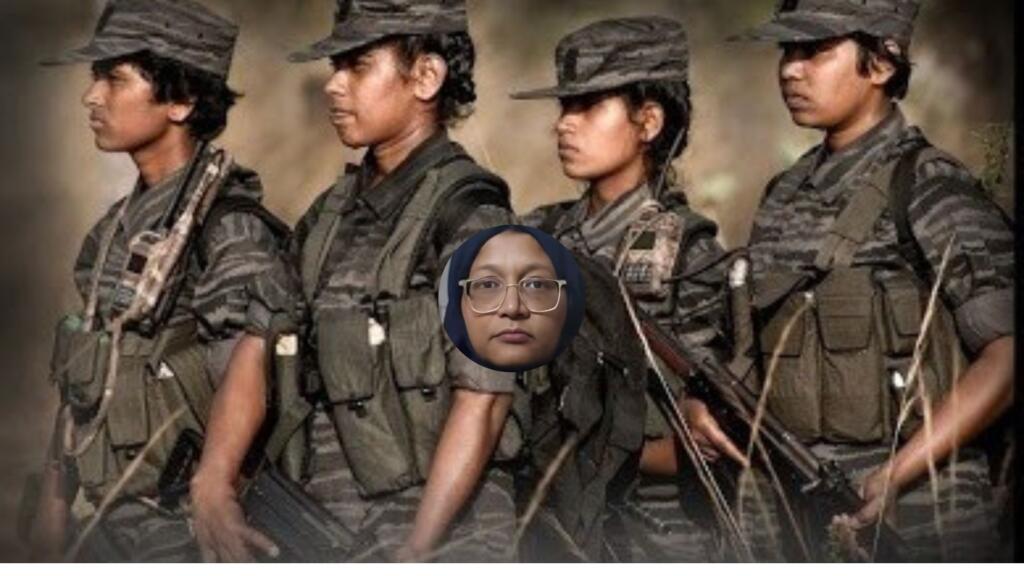
Evidence emerging in the investigation of the Red Fort blast suggests a chilling new evolution in extremist tactics: the adoption of trained, all-female suicide squads drawing inspiration from female suicide squads of the Liberation Tigers of Tamil Eelam (LTTE). According to security officials, the Pakistan-based militant group Jaish e Mohammed (JeM) is believed to be scripting a copy-cat of the LTTE’s infamous “Black Tiger” female cadre that assassinated former Prime Minister Rajiv Gandhi in 1991.
If true, this marks a serious escalation in the threat horizon for India—one that demands urgent recalibration of counter-terror strategy.
The Origin Story & Why It Matters
The assassination of Rajiv Gandhi on 21 May 1991 was carried out by a female LTTE suicide bomber, signalling the lethal potential of gender-blind female suicide squads. The LTTE’s all-female “Black Tiger” units were rare in South Asia then, but their symbolic and operational value was undeniable. Wikipedia+1
Now, investigators believe JeM is attempting to replicate this model: covert recruitment of women, radicalisation through proxy networks, weaponisation of gender stereotypes, and deployment in high-value targets. This reveals a shift in threat architecture: the threat is no longer just male fighters crossing borders, but women operatives using societal blind spots to strike from within.
What the Red Fort Blast Investigation Reveals
While full details are still classified, intelligence sources indicate:
-
A cell linked to JeM may have planned the attack.
-
The cell’s profile and vehicle movement suggest sophistication consistent with trans-border training and logistics.
-
A parallel “female squad” blueprint is reportedly in the works, mirroring the LTTE model of female cadres trained in explosives and infiltration.
This is not mere mimicry. The LTTE method was hardened over decades, combining martyrdom ideology of female suicide squads with operational stealth. If replicated, it would provide JeM (and allied groups) an asymmetric option: using self-sacrifice missions by women who may draw less scrutiny, embed more easily, and achieve higher symbolic impact.
Why India Should Be Alarmed
-
Security vulnerabilities from gender bias: Many security protocols remain male-centric, making female suicide squads harder to detect.
-
Symbolic impact: A female suicide attack in a high-visibility area delivers a psychological shock beyond the physical damage.
-
Cross-border facilitation: The templates used by LTTE benefited from transnational networks. If JeM replicates this, border zones become even more porous.
-
Radical narrative evolution: The gender-inclusion of suicide squads signals an ideological shift—anyone can become an attacker. This widens the recruitment base and complicates deradicalisation efforts.
What Needs to Be Done
**Refine Intelligence & Surveillance **: Intelligence agencies must recalibrate: female recruitment, cross-border overdrafts, and diaspora mapping now demand parity in scrutiny.
Upgrade Checkpoints & Physical Security: High-security sites (e.g., the Red Fort, sensitive installations) must build gender-sensitive but inclusive screening—mechanisms that catch female operatives carrying hidden explosives.
Community Engagement & Counter-Narrative: Since radicalisation targeting women, forming female suicide squads especially may rely on emotional, ideological, or social hooks, outreach programmes must be tailored to detect and defuse such vectors.
Regional Cooperation: As the LTTE model was cross-national (Sri Lanka to India), India must enhance coordination with neighbours and monitor not just male fighters but recruited women moving across borders.
Rethink Deradicalisation & Exit Paths: Extant programmes mostly centre on male militants; now women must be included, with gender-specific support models.
A Danger That Is Both Structural and Imminent
The unfolding situation suggests India is facing both a structural threat—an evolution in extremist method and an imminent tactical risk: female suicide squads poised for action. The structural dimension is clear: adversaries are adapting the LTTE’s blueprint of trained female operatives. The tactical urgency is underlined by the Red Fort incident’s timing and pattern, pointing to a tested precursor.
If unaddressed, this could open a new front in India’s counter-terror challenge: one where traditional profiling, male-centric threat models and compartmentalised security frameworks fail to detect a woman bomber whose gender grants him or her closer access, less suspicion, and greater surprise.
The Crux for India
India cannot afford to view women operatives as a marginal threat. The blueprint is no longer speculative—it’s been validated by past history (LTTE) and may be in early real-time deployment. The lesson for policymakers, security agencies and society at large: gender cannot dictate threat perception. As extremists evolve, so must India’s vigilance. The danger on the horizon may be unseen, but its impact could be as devastating as it is symbolic.
In short: India’s security architecture must recognise that the next high-impact attack could come from a direction least suspected—one shaped not by traditional male militants, but by female suicide squads or operatives trained in sacrifice, secrecy and symbol.