
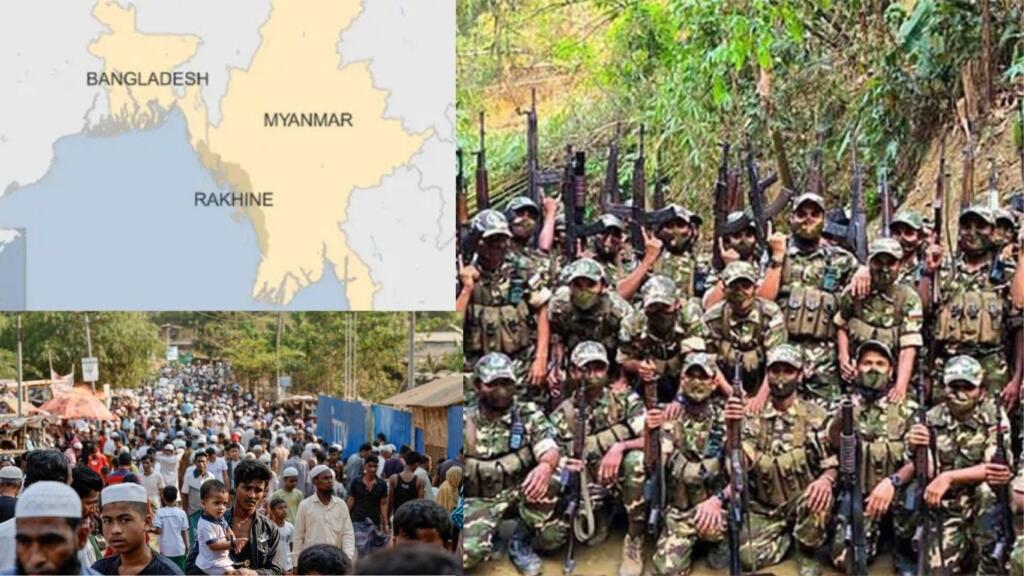
The Inter-Services Intelligence (ISI) of Pakistan is reportedly deepening its nexus with the Arakan Rohingya Salvation Army (ARSA) and other Rohingya insurgent groups in Bangladesh. This alliance often described as the Four Brothers’ Alliance and said to include ARSA, the Rohingya Solidarity Organisation (RSO), Islami Mahaz and the Arakan National Defence Force (ANDF) appears to be coordinating with ISI support to consolidate forces, signalling an intent to destabilise the region with Bangladesh as a critical operational base. Cox’s Bazar, home to a large Rohingya refugee population, has reportedly become a hub for militant activity allegedly backed by the ISI, which aims to foment unrest in the Chhattogram Hill Tracts and in India’s Northeast. ISI’s approach reportedly involves converting refugee camps and adjacent areas into terror hubs, drawing on local jihadist elements and exploiting porous borders to facilitate infiltration and establish sleeper cells in India’s Northeast. If accurate, this coordinated effort poses a serious threat to regional security by seeking to destabilise border areas and foment insurgency or unrest in both Bangladesh and India.
Militarisation and State Repression of CHT
The crisis in Chhattogram particularly in the Chittagong Hill Tracts (CHT) has deep roots in ethnic tensions, unresolved land disputes and protracted insurgency. The government’s partial or uneven implementation of the 1997 Peace Accord, which was intended to protect indigenous rights and autonomy, has exacerbated mistrust. Instead of reconciliation, intensifying militarisation and law-enforcement abuses including allegations of extrajudicial killings, enforced disappearances and sexual violence against indigenous communities have aggravated local grievances. Security forces have been criticised for failing to shield indigenous populations from violent incidents involving Bengali settlers and alleged coordinated assaults. Efforts to suppress dissent and restrictions on access that hinder independent monitoring have further alienated local communities. This mixture of state failure, military dominance and ethnic conflict has rendered Chhattogram vulnerable to insurgent activity and instability.
ISI Nexus with ARSA and Rohingya Groups
Pakistan’s ISI has reportedly stepped up covert engagement with Rohingya insurgent outfits such as ARSA and the RSO, using Cox’s Bazar as an operational hub. Intelligence assessments suggest that ISI, in concert with extremist networks including Lashkar-e-Taiba (LeT) and Ansarullah Bangla Team (ABT), has supplied financial resources, weapons training and logistical support to Rohingya militants. The intent appears to be to exploit the volatile refugee environment to accelerate radicalisation and to destabilise Bangladesh’s southeastern frontier and India’s Northeast. Regional security appraisals note that more than one million Rohingya refugees in Cox’s Bazar present fertile ground for recruitment and cross-border infiltration, constituting a significant security concern for South Asia.
ISI-Backed Militancy Fuels Terror in Chittagong Hill Tracts
Reports indicate that ISI-backed groups such as ARSA and the so-called Rohingya Army are intensifying efforts to turn the Chittagong Hill Tracts into a terrorist hotspot. Since 2023, intelligence sources allege more than 150 attacks by these groups against security forces and local communities in the region. ARSA’s infiltration routes exploit porous border corridors with Myanmar and tap into local ethnic tensions to recruit fighters. The objective, according to assessments, is to displace indigenous communities including the Chakma, Marma and Tripura tribes and to wrest control from longstanding insurgent organisations such as the PCJSS, UNDF and KCNF, which have historically represented tribal interests. Intimidation tactics have reportedly compelled an estimated 10,000 tribal inhabitants to abandon ancestral lands as of 2024. Such destabilisation forms part of a broader strategy to establish a territorial stronghold, erode government authority and undermine peace accords, threatening to reverse fragile regional stability and imperil the rights of local populations.
Destabilising Bangladesh and India’s Northeast
The ISI’s reported strategy leverages Bangladesh as a staging ground, using porous borders and the Rohingya refugee influx to smuggle operatives into India’s Northeast and cultivate sleeper cells. The Chhattogram Hill Tracts, a sensitive area with complex ethnic dynamics, is facing mounting insurgency threats associated with this nexus. Indian security agencies have uncovered multiple terror modules involving Bangladeshi nationals allegedly trained and supported by these networks, underscoring severe cross-border security risks. The collaboration not only advances militant Rohingya objectives but also aims at a wider destabilisation of both Bangladesh and India, particularly the Northeastern states. By stoking ethnic unrest, undermining governmental control and exploiting local grievances alongside geopolitical tensions, these ISI-aligned groups seek to create sustained insecurity along a strategically sensitive frontier a substantial challenge to peace and security in South Asia.
The ISI’s expanding nexus with ARSA and related Rohingya insurgent groups appears to be a deliberate effort to destabilise Bangladesh and India’s Northeast by exploiting regional vulnerabilities. This alliance has reportedly transformed refugee zones such as Cox’s Bazar into recruitment and operational hubs and has intensified militancy in the Chittagong Hill Tracts. The Bangladesh government’s incomplete implementation of the Peace Accord, coupled with militarisation and ethnic marginalisation, has created conditions that insurgents can exploit. India and Bangladesh now confront growing cross-border security challenges infiltration, radicalisation and territorial encroachments that threaten regional order. Absent decisive policy coordination, enhanced intelligence cooperation, and socio-political reforms that address root grievances, the region risks sliding further into instability, where humanitarian crises, insurgency and external interference converge to erode South Asia’s fragile peace and long-term security.
(Shashwat Gupta Ray is a multiple award-winning defence and strategic affairs journalist with over 20 years of experience in print and digital media. Previously Deputy Editor at Herald Group of Publications and Resident Editor at Gomantak Times, he has extensively covered major events, including the 26/11 Mumbai terror attacks and Maoist insurgencies. He is also the creator of the award-winning YouTube channel Uncovering India, which focuses on impactful social and developmental documentaries.)