















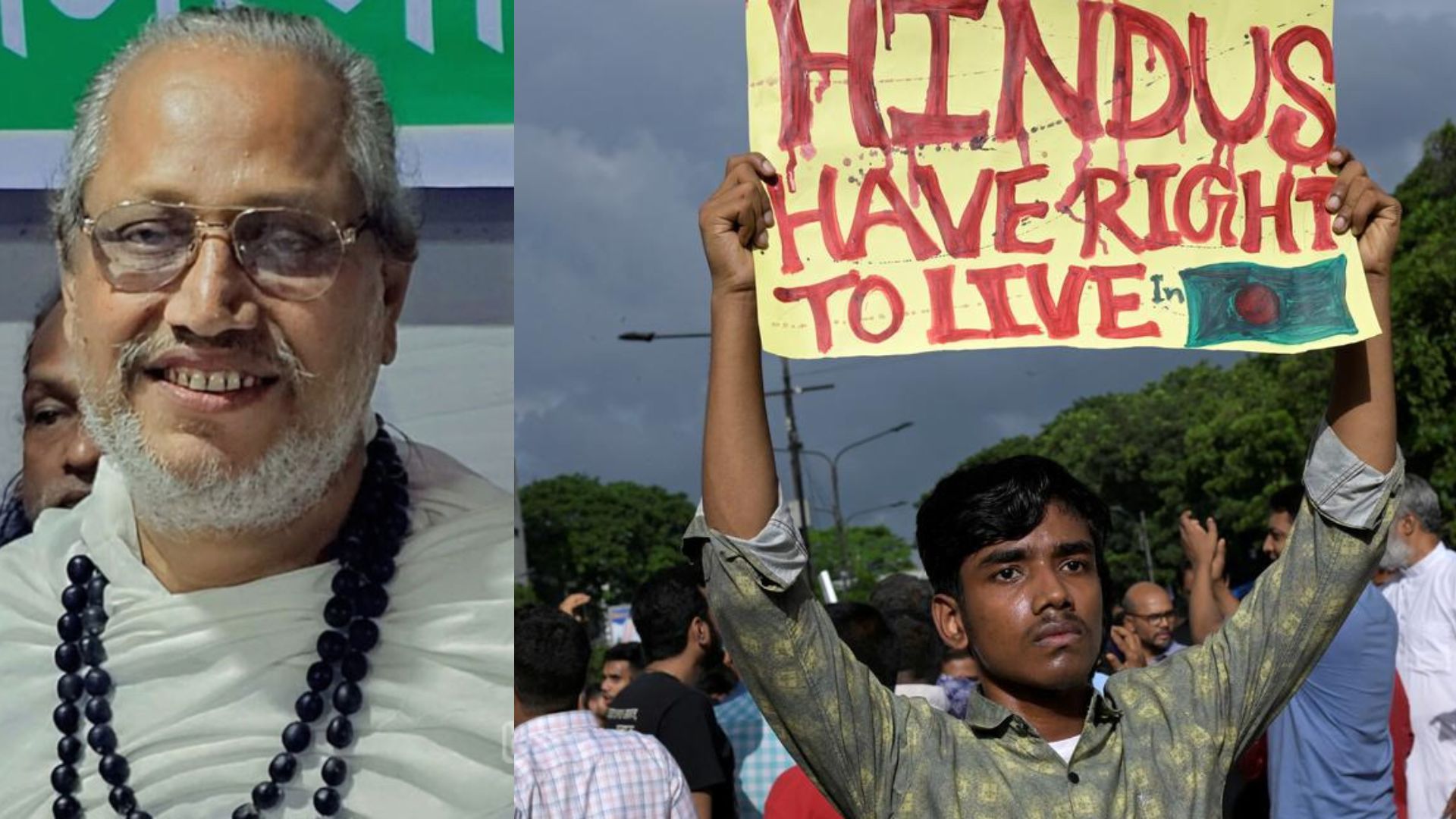
The recent arrest of Baul singer Abul Sarkar in Bangladesh under allegations of “blasphemy” exposes a deeper national crisis—one that transcends a single incident and touches the very foundations of democracy, liberalism and secularism in the country. Bangladesh, once envisioned as a secular republic rooted in cultural pluralism, is increasingly embracing an illiberal trajectory where religious majoritarianism dictates public life and the safety of minorities hangs by a thread. The treatment of Bauls, the targeting of dissenting voices, and the recurring cycles of violence against Hindus reflect a systematic erosion of civic freedoms and the consolidation of an intolerant Islamic nationalism.
The arrest of Abul Sarkar on 19 November under the Muhammad Yunus–led interim regime is a telling example. Sarkar, a respected Baul folk singer belonging to one of Bangladesh’s oldest syncretic cultural traditions, was charged with “derogatory remarks” and blasphemy against Islam and Allah during a performance. The complaint, filed by Mufti Mohammed Abdullah, accused him of disturbing communal harmony and committing blasphemy—charges that have frequently been invoked to suppress not just artistic expression but also broader cultural identities that deviate from Islamist orthodoxy.
The troubling pattern begins with the nature of the allegation itself. According to Sarkar’s assistant, Raju Sarkar, extremist groups clipped and distorted footage from the performance to portray the singer as prototype of blasphemy, anti-Islam. In reality, Sarkar had been critiquing religious fundamentalism in conversation with another Baul—a dialogue very much in line with Baul philosophy, which historically challenges dogmatism while promoting a profound spiritual humanism. Yet, in the current climate, nuance has no space. What matters is not the truth but the political utility of a blasphemy accusation.
Soon after the arrest, mobs aligned with groups such as Tawhidi Janata and Alems-Ulama besieged the court premises, baying for Sarkar’s punishment. The mob pressure surrounding such cases has become a predictable feature in Bangladesh; accusations of blasphemy trigger public outrage—often orchestrated—making fair trials nearly impossible. In Sarkar’s case, the threat escalated further on 23 November when violent crowds attacked his supporters in Manikganj with sticks and bricks. Videos show mobs chanting threats to “slaughter Bauls,” turning a cultural dispute into a chilling spectacle of violent extremism.
The Bauls, known for their music, mysticism, and rejection of rigid orthodoxy, have historically represented the pluralistic soul of Bengal. Their persecution signals not just an attack on artistic freedom but an assault on Bangladesh’s own cultural heritage. Under the Yunus regime, Bauls and other minority communities report living in fear, as blasphemy accusations are increasingly weaponized to intimidate, silence, and socially erase dissenting identities.
This phenomenon cannot be viewed in isolation. For decades, Bangladesh’s Hindu community has borne the brunt of religiously motivated violence. From systematic land grabs under the Vested Property Act to periodic pogroms sparked by rumours or fabricated social-media posts, Hindus have faced recurring waves of charges of blasphemy, displacement, destruction of temples, and mob attacks. Each episode reinforces a pattern: the state’s inability—or unwillingness—to protect minorities from Islamist vigilantism. The blasphemy-driven violence against Bauls now appears to mirror that same ecosystem of impunity.
The rise of such extremism poses a direct challenge to Bangladesh’s democratic and secular commitments. Secularism, once enshrined in the 1972 Constitution, has been diluted over the decades through amendments and political compromises that privileged Islamic identity. As a result, the boundary between state authority and religious pressure has blurred. Laws that should protect citizens are instead employed selectively, frequently under pressure from clerical groups that wield significant political influence. When mobs can dictate arrests and also definiton of ‘blasphemy’, when artists are criminalized for cultural performance, and when minority communities live under constant threat, democracy becomes hollow.
Equally endangered is liberalism—the belief in freedom of expression, individual conscience, and equal rights. The weaponization of blasphemy laws (or quasi-blasphemy accusations) is fundamentally incompatible with liberal principles. It creates a culture of fear where citizens censor themselves and where any perceived deviation from orthodoxy becomes a punishable offence. It is no coincidence that Bangladesh has also witnessed campaigns to ban music deemed “haram,” restrict cultural events, and police social behavior. A society in which creativity itself is a crime cannot sustain a liberal order.
The crisis is compounded by the political vacuum and uncertainty surrounding the Yunus-led interim government. Weak transitional regimes often invite extremist groups to assert power, and Bangladesh is no exception. The more the state capitulates to pressure from reactionary clerical factions, the more entrenched these groups become, further shrinking civic space.
Yet, despite the grim scenario, resistance persists. Supporters of Abul Sarkar, denying charges of blasphemy, organized peaceful protests demanding his release—only to be met with mob violence. Their courage underscores the fact that Bangladesh still harbors liberal and secular voices, even if they are increasingly marginalized. The struggle for the soul of Bangladesh is far from over.
The arrest of Abul Sarkar is therefore not merely a cultural dispute, nor an isolated case of injustice. It is emblematic of a broader transformation: the erosion of democratic safeguards, the suffocation of secular and liberal values, and the persistent vulnerability of minorities, particularly Hindus, who face both direct violence and structural marginalization. If Bangladesh continues down this path, the cumulative effect will be nothing short of a civilizational loss—the rise of blasphemy culture and death of the pluralistic, syncretic, culturally rich Bengal that once stood as a beacon of tolerance in South Asia.
Only meaningful legal reform, strong political leadership, and a reaffirmation of secular principles can halt this descent. The alternative is a society where blasphemy is rule of law, artists are jailed, minorities live in fear, and mob justice replaces the rule of law—a society that has abandoned the democratic promise upon which Bangladesh was founded.