













A chilling development in South Asia’s security landscape has emerged: Lashkar-e-Taiba (LeT), under the ideological influence of Hafiz Saeed, is reportedly planning to open a new front against India — not from Pakistan’s traditional western flanks, but from Bangladesh, long ignored as a terror staging ground, now the second front. This unsettling intelligence, recently revealed via a public video by LeT commander Saifullah Saif, suggests that Saeed’s network is expanding eastward in a deliberate and strategic fashion.
A Disturbing Revelation from Saif’s Video
At a rally held on October 30 in Khairpur Tamewali (Pakistan), LeT commander Saifullah Saif declared quite brazenly that Hafiz Saeed “is not sitting idle”, but is preparing to target India through Bangladesh. According to him, LeT operatives are already present in “East Pakistan” (a term some extremists continue to use for Bangladesh), as a second front ready to “answer India … for Operation Sindoor.” The video reportedly shows children among the crowd — a chilling signal that youth indoctrination is part of the strategy.
Moreover, Saif claims that Saeed has dispatched a close aide to Bangladesh to radicalize local youth under the guise of jihad, giving them not just ideological training but also terror training. In his speech, Saif also makes geopolitically loaded statements: “Now, America is with us, and Bangladesh is also getting closer to Pakistan again.”
The Strategic Risk: An Eastern Terror Theater
If verified, this intelligence underscores Bangladesh as a dangerously underestimated theater for cross-border terrorism aimed at India. Traditionally, most of India’s terror concern has focused on Pakistan’s western borders, especially Kashmir. But LeT’s reported attempt to establish deep roots in Bangladesh marks a shift to a multi-front strategy. Security agencies in India are now reportedly intensifying surveillance along the India-Bangladesh border.
Experts are warning of a “new axis” emerging: militant networks in Pakistan reaching into Bangladesh, aligning with local extremist groups, and potentially building a corridor for terror operations against India’s eastern flank. This could turn Bangladesh into more than just a springboard: not a mere second front even, it could become a semi-permanent training and radicalization hub.
The Bigger Picture: Ideological and Geopolitical Underpinnings
There are disturbing ideological undertones in LeT’s stated ambitions. In his speech, Saifullah Saif references Operation Sindoor, India’s counter-terror action, framing LeT’s efforts not merely as revenge but as a divinely ordained mission.The fact that children were visibly present at the rally suggests an attempt to cultivate a new generation committed to LeT’s global jihadist vision.
Furthermore, Saif’s reference to shifting international alignments — “America is with us” — is provocative and potentially manipulative, aimed at rallying support and legitimacy for LeT’s renewed push. Whether these claims are grounded in reality or are rhetorical posturing, they reflect LeT’s ambition to expand not just its operations, but its political narrative.
Meanwhile, according to intelligence cited by media, LeT has dispatched key operatives to Dhaka specifically to radicalize Islamist groups. Moneycontrol reports that LeT’s front organization, Jamaat-ud-Dawa (JuD), may be quietly expanding its terror network as a second front in Bangladesh under the surface of religious networks and madrasa funding.
Dhaka’s Response: Denial and Diplomatic Friction
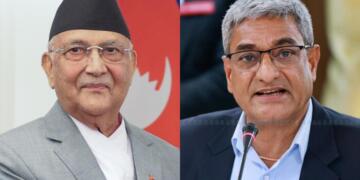
Unsurprisingly, Bangladesh’s official response has been one of strong denial. Dhaka’s foreign ministry adviser, Touhid Hossain, called the Indian media’s allegations “unbelievable,” questioning the credibility of the reports. He stated bluntly that “no sensible person can believe this,” rejecting the narrative that Bangladesh is complicit in or home to LeT’s terror operations.
This diplomatic friction intensifies the challenge for Indian security agencies. On one hand, intelligence points to a serious threat; on the other, Bangladesh’s denial complicates matters, making coordinated counter-terror action diplomatically sensitive.
Why It Matters: A Looming Strategic Threat
Operational Diversity for LeT: By establishing a presence in Bangladesh, LeT diversifies its operational risk. India’s western border is heavily guarded and monitored, but the second front at eastern border via Bangladesh could offer new vulnerabilities.
Radicalization Pipeline: The reported training and indoctrination of Bangladeshi youth — including children — represents not just a tactical threat, but a long-term ideological investment. This could yield a self-sustaining pool of extremists aligned with LeT’s goals.
Cross-Border Complexity: If LeT is indeed embedding operatives in Bangladesh, this raises questions of state complicity, intelligence failures, and regional cooperation. Countering such a threat cannot be purely military; it would require diplomatic, intelligence, and development strategies.
Geopolitical Realignment: Saif’s comments about international realignment — particularly involving the U.S. and a “closer” Bangladesh-Pakistan — may be part of a broader propaganda effort, but even as rhetoric, it reflects LeT’s ambitions to reshape its image and alliances.
Conclusion
The emergence of Bangladesh as a potential “second front” in LeT’s anti-India agenda is deeply worrying. What was once largely a western theater — rooted in Pakistan and focused on Kashmir — now appears to be evolving into a broader, more insidious threat. If the intelligence is accurate, Hafiz Saeed and his network are not just planning attacks; they are building a long-term, cross-border infrastructure in Bangladesh, targeting youth, radicalizing communities, and laying the foundation for a sustained campaign.
India, therefore, faces not just a security challenge but a geopolitically sensitive one. Strengthening border vigilance is necessary, but will not be sufficient. The threat requires strategic, multi-layered action — combining intelligence, diplomacy, and engagement — to ensure that Bangladesh does not become a permanent breeding ground for extremist networks bent on launching terror from the East, let alone a second front of terror.