
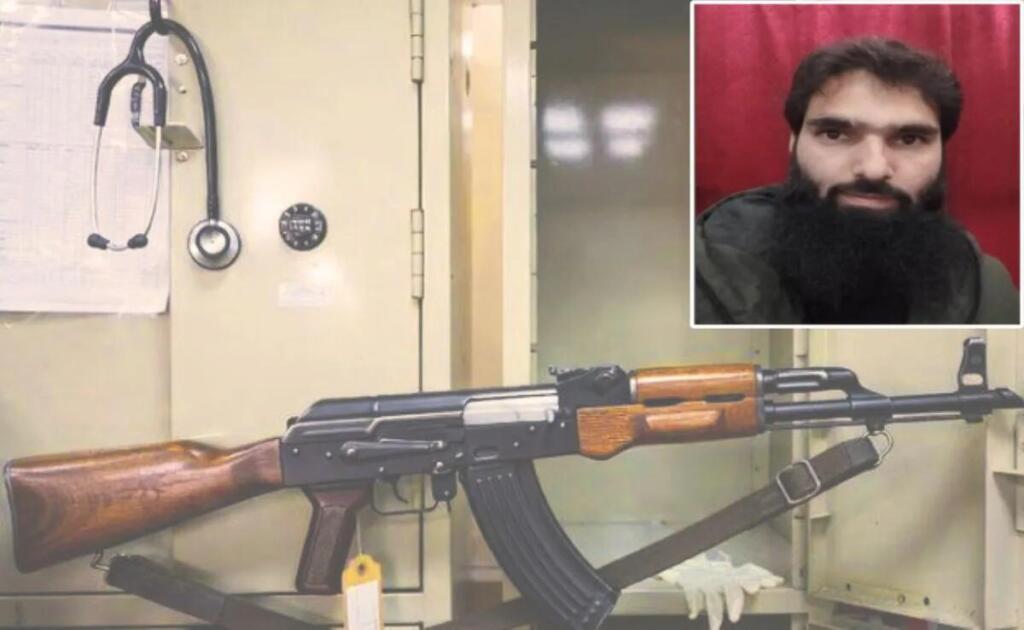
Jammu and Kashmir Police have recovered two AK-47 rifles and 350 kilograms of explosives from Faridabad, Haryana, following disclosures made by the second doctor arrested in an ongoing terror investigation. The operation, carried out with the assistance of Haryana Police, marks a significant breakthrough in what officials describe as a potential Jaish-e-Mohammed (JeM) terror plot under development.
Police recovered one assault rifle with three magazines, a pistol with eight live rounds, around 360 kg of explosives in eight suitcases, along with timers and bomb-making materials.
Faridabad Police Commissioner Satendra Kumar Gupta clarified that the 350 kilograms of explosive material recovered during a joint operation was ammonium nitrate, not RDX as initially reported. The explosives were seized along with 20 timers, weapons, and an assault rifle following a 15-day joint operation involving Jammu and Kashmir and Haryana Police. Gupta confirmed that the accused, Dr. Muzamil, who had been teaching at a university, is under investigation for his alleged involvement in the case. The police said operations are still underway to uncover the full network behind the cache and its possible terror links.
The investigation began after posters supporting the proscribed militant outfit Jaish-e-Mohammed surfaced in Srinagar on October 27. CCTV footage later revealed Dr. Adeel pasting the posters in public areas. The following week, on November 6, the Srinagar Police arrested him from a hospital in Saharanpur, Uttar Pradesh, where he was working as a medicine specialist.
Dr. Adeel, a resident of Qazigund in south Kashmir, had been employed at GMC Anantnag until October 2024 as a senior resident. A subsequent raid at his workplace led to the discovery of an AK-47 rifle in his locker, a revelation that expanded the scope of the probe beyond Jammu and Kashmir.
Explosives found in Faridabad
Building on leads from Dr Adeel’s interrogation, police traced connections to Dr Mufazil Shakeel, who had been living in a rented flat in Faridabad, Haryana. A raid at the premises uncovered another AK-47 rifle and approximately 300 kilograms of explosives.
Sources said the explosives and weapons were likely intended for large-scale subversive activities, though investigators are still determining the exact targets and network involved. Officials confirmed that all recoveries were made under the supervision of senior officers from the Jammu and Kashmir and Haryana Police.
The series of arrests and recoveries has exposed what authorities describe as an emerging nexus of radicalised individuals within professional sectors, including the medical community. The investigation is now focusing on possible cross-border links, terror financing routes, and arms trafficking operations spanning multiple states