












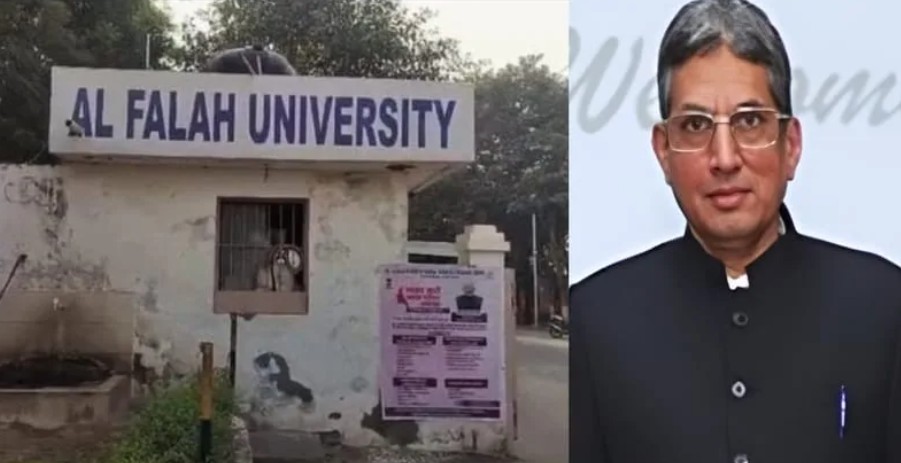
For years, Al-Falah University stood as a symbol of aspiration, a place where young minds dreamed of success, prosperity, and well-being. After all, “Al-Falah” in Arabic means just that.
Founded in 2019, the Al-Falah School of Medical Sciences in Faridabad quickly grew into a thriving institution with hundreds of students, teachers, and staff.
However, the deadly Delhi blast of November 10 has changed everything. What was once a respectable university is now under the National Investigation Agency’s (NIA) microscope.
The founder, Jawad Ahmad Siddiqui, now faces serious questions about his past and the shadowy allegations surrounding his empire.
The Man Behind the Institution
Siddiqui, the man behind the institution, now 61, was born on November 15, 1964, in Mhow, Madhya Pradesh — the birthplace of BR Ambedkar.
According to his (now inactive) LinkedIn profile, Siddiqui earned a BTech in Industrial and Product Design from Devi Ahilya Vishwavidyalaya, Indore, before relocating to Delhi with his family.
A former colleague recalls that Siddiqui became a Mechanical Engineering lecturer at Jamia Millia Islamia in 1993. But teaching, it seems, was never his end goal.
“While at Jamia, he experimented with business ventures, launching several small companies alongside his brother Saood. One of these, Al-Falah Investments, would ultimately land both brothers in Tihar Jail for three years,” the source said.
From Jamia to Jail
The story of Al-Falah’s founder is far from spotless as sourced say a man identified as KR Singh filed an FIR (No. 43/2000) in New Friends Colony, Delhi, against Al-Falah Investments Ltd.
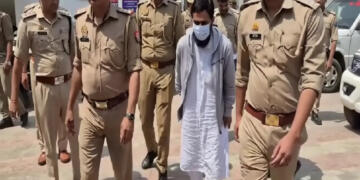
The Economic Offence Wing of Delhi’s Crime Branch took up the investigation, leading to Jawad’s arrest. He, along with his brother, spent more than three years in jail.
In March 2003, the Delhi High Court rejected his bail application, noting that “investor signatures were forged, deposits were made in the names of non-existent companies, and large sums received from investors were diverted into the petitioners’ personal accounts and misappropriated.”
Siddiqui was granted bail in February 2004 and later acquitted by the Patiala Court in 2005 — but only after he and his brother agreed to refund the defrauded investors.
The Rise of Al-Falah’s Medical Empire
In 2019, Siddiqui turned his focus to education, founding the Al-Falah School of Medical Sciences under the larger Al-Falah University banner. Initially, it flourished.
Students described it as a quiet, close-knit campus where they could pursue medicine at a lower cost than Delhi’s established institutions.
But beneath the promise of success, discontent simmered. “During the COVID-19 pandemic, nurses at Al-Falah alleged they were dismissed after requesting life insurance for working in a high-risk environment.
Last year, medical interns were suspended for protesting the college’s inadequate infrastructure and the non-payment of stipends.
Despite repeated controversies, Siddiqui managed to maintain control — until the Delhi blast brought the entire institution under the harsh glare of national attention.
The Delhi Blast and the NIA’s Lens
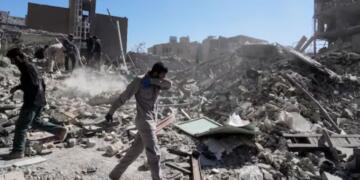
The explosion outside Delhi’s Red Fort, which killed at least 12 people and injured many more, sent shockwaves through the country. As investigations unfolded, the NIA’s trail reportedly led to Faridabad, to none other than Al-Falah’s medical college.
Sources said, “The Al-Falah School of Medical Sciences started off well in 2019. Over time, however, the college increasingly hired doctors from Kashmir, largely because they were more affordable. Already a minority-run institution, this hiring trend contributed to a more orthodox campus environment. The management was informed but chose to turn a blind eye.”
Among those arrested in connection with the alleged terror module was Dr Shaheen Saeed, a faculty member at the college.
Sources claimed, “She was frequently seen encouraging colleagues and students to adopt more conservative Islamic practices, including wearing hijabs and burqas. She had even been formally cautioned against such behaviour.”
These revelations have now thrust Siddiqui and his institution into the centre of a national security probe — one that threatens to dismantle his carefully constructed image.
A Reputation in Ruins
What began as a dream for thousands of medical students now lies in uncertainty. The college’s name — once synonymous with hope — has become shorthand for suspicion.
As investigators comb through records, digital communications, and financial trails, the founder who once prided himself on his success faces perhaps the greatest test of his life.
If not for the headlines linking his university to “the alleged hub for the terrorists behind the Delhi blast,” Jawad Ahmad Siddiqui might have been preparing to celebrate his birthday this week at his Jamia Nagar residence — Al-Falah House.
Now, instead, both he and his empire stand exposed before the nation.
The Larger Question
For regulators and educators alike, the Al-Falah scandal raises an uncomfortable question — how many private universities, built on personal ambition and unchecked expansion, are truly accountable?
As the NIA deepens its probe, the story of Al-Falah is no longer about “success, prosperity, and well-being.”
It’s about how ambition, neglect, and ideology combined to turn an institution of learning into a symbol of national concern.