
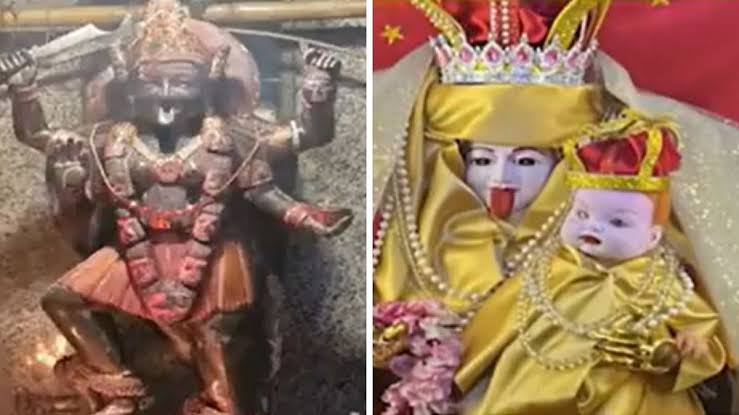
An unusual act by a temple priest triggers debate on religious sensitivities and rising anxieties over conversions. Devotees demand transparency after a controversial dressing of a Kali idol leads to police action in Chembur. The incident reignites discussions on religious harmony and the need for stronger safeguards against coercive practices.
A Startling Discovery in a Chembur Temple
Visitors at the Kali Mata Temple in Vashi Naka, Chembur, were taken aback on the morning of 23rd November when they noticed that the idol of Goddess Kali had been dressed in attire resembling depictions of Mother Mary According to devotees present at the site, the idol was not only adorned in traditional Catholic-style clothing but was also shown holding a figure resembling the infant Jesus.
The sight led to immediate confusion, followed by anger among many devotees who felt that their religious sentiments had been disregarded. Within hours, the unusual dressing of the idol drew crowds, resulting in heated arguments and rising tensions outside the temple premises. As word spread through the locality, protestors gathered, demanding clarification and accountability from temple authorities.
Priest Claims Divine Instruction Through a Dream
When confronted by devotees, the temple priest identified as Ramesh explained that he had dressed the idol in this manner because the goddess had appeared to him in a dream and asked him to present her in the form of Mother Mary. This explanation, however, did little to calm the situation.
Many locals expressed scepticism and argued that the claim lacked credibility. Some religious groups alleged that such an act could create social discord by blurring religious boundaries in a manner unacceptable to devotees. Others voiced concerns that the incident might be connected to attempts at influencing religious practices or encouraging syncretism without the consent of the community.
While several residents speculated whether the priest acted under external pressure or influence, the police have clarified that all such claims remain unverified and will be investigated through proper legal channels, including examination of CCTV footage and questioning of involved individuals.
Police Take Custody and Register Case Under IPC Section 295A
As the situation escalated, local groups accompanied the priest to the RCF Police Station, filing formal complaints. After preliminary inquiry, police registered a case under Section 295A of the Indian Penal Code, which pertains to deliberate acts intended to outrage religious feelings.
The priest was produced before the court and has been remanded to two days’ police custody. Officials stated that the investigation would explore whether the act was carried out independently or if any external parties were involved. Police assured that every angle including possible motivations, communication records, and temple surveillance would be examined thoroughly to maintain communal harmony.
The incident has once again brought to the forefront anxieties. Although no evidence has surfaced linking the Chembur temple incident to any organised effort, many citizens and community leaders insist that events which can disturb religious harmony must be scrutinised transparently.
Some voices in civil society argue that the state should take proactive steps to ensure that vulnerable communities are safeguarded from coercive influences. They advocate for stronger regulatory frameworks, clearer oversight of religious institutions, and heightened awareness of rights and protections available to citizens. Critics caution, however, that any future policies must respect constitutional freedoms while addressing public concerns effectively.
The Chembur temple incident underscores the fragile nature of religious harmony in a diverse society and the demands grow for stricter anti conversion laws in India. While the priest’s explanation has raised more questions than answers, it is essential that the investigation proceeds based on evidence, due process, and transparency.