





















At a time when India’s defence modernisation is accelerating at an unprecedented pace, the United States has cleared a major military sale worth $93 million, involving advanced Javelin anti-tank missiles and Excalibur precision-guided artillery projectiles. In this article, we break down how this approval marks a significant leap in India’s firepower, battlefield technology, and deterrence capability. As global threats evolve and enemy armour becomes more sophisticated, India is rapidly upgrading its strike precision and tactical depth.
The United States has officially cleared a major defence sale to India valued at $92.8 million, covering Javelin missile systems, Excalibur projectiles, and a wide range of associated equipment and support. This was confirmed through two formal statements issued by the Defense Security Cooperation Agency (DSCA), which said it had delivered the required certifications and notified the U.S. Congress about the proposed package. According to the DSCA, this sale directly supports American foreign policy and national security objectives by strengthening the strategic partnership with India at a time when Indo-Pacific security is becoming increasingly complex and contested.
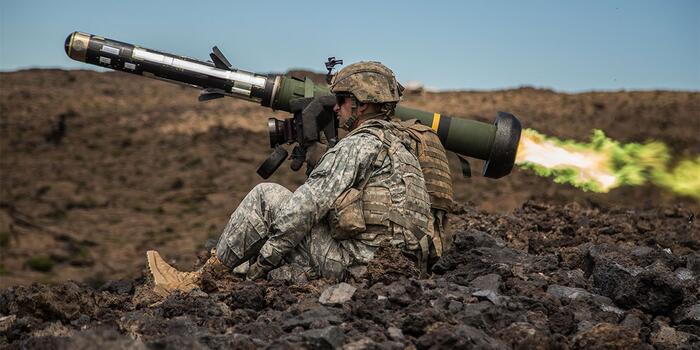
The first part of this major package is worth $45.7 million and includes the Javelin FGM-148 missile, fly-to-buy units, along with 25 Javelin Lightweight Command Launch Units (LwCLU) or the Javelin Block 1 Command Launch Units (CLU). Along with these frontline weapons, the sale brings a large set of non-major defence equipment essential for operational readiness. This includes Javelin LwCLU or CLU Basic Skills Trainers, missile simulation rounds, battery coolant units, interactive electronic technical manuals, operator manuals, and complete lifecycle support. Additionally, India will receive physical security inspection support, spare parts, system integration and checkout assistance, Security Assistance Management Directorate (SAMD) technical guidance, Tactical Aviation and Ground Munitions (TAGM) Project Office support, tool kits, training modules, and Block 1 CLU refurbishment services, along with other crucial logistics and program support mechanisms.
The second package cleared for India approves the potential sale of Excalibur Projectiles and related equipment at an estimated cost of $47.1 million. As per the DSCA’s statement, India has requested up to 216 M982A1 Excalibur tactical projectiles, one of the most advanced GPS-guided artillery rounds currently in service worldwide. This package also includes non-MDE components such as Portable Electronic Fire Control Systems (PEFCS) with Improved Platform Integration Kit (iPIK), primers, propellant charges, technical assistance from the U.S. government, technical data, repair and return services, and a full set of logistics and program support items. This combination of precision munitions and supporting systems is designed to significantly enhance India’s ability to strike targets accurately while minimising collateral damage.
The DSCA has emphasised that this sale directly improves the capabilities of a “major defence partner” that continues to play a key role in ensuring political stability, peace, and economic progress in both the Indo-Pacific and South Asia regions. It added that the proposed package will enhance India’s ability to counter current and future threats, strengthen homeland defence, and deter hostile forces. Importantly, the DSCA noted that India will have no difficulty integrating these systems into its existing armed forces, signalling high interoperability between U.S. platforms and India’s expanding inventory of advanced precision weapons. The agency also clarified that this sale would not disturb the existing military balance in the region and would have no negative impact on American defence readiness.
Now, the important question arises: why do armies around the world rely so heavily on the Javelin missile system? The Javelin has repeatedly demonstrated its battlefield superiority, most notably in the ongoing conflict in Ukraine, where it played a key role in destroying large numbers of Russian T-72 and T-90 tanks. Considered one of the world’s most advanced shoulder-launched anti-tank systems, the Javelin is a third-generation, top-attack weapon that targets the upper sections of armoured vehicles, where protection is typically weakest. Its soft-launch mechanism allows troops to fire from enclosed spaces such as bunkers or buildings, providing flexibility in urban and close-quarter combat. The system comprises a disposable launch tube paired with a reusable command launch unit, enabling rapid deployment under battlefield pressure.
Jointly produced by RTX and Lockheed Martin, the Javelin provides infantry teams with long-range, high-accuracy strike capabilities against armoured threats. On the artillery front, the Excalibur projectile adds an entirely different dimension. Using GPS-guided precision, Excalibur rounds allow artillery units to hit targets with remarkable accuracy even at extended ranges, a capability India has used previously to avoid collateral damage. Unlike standard artillery shells, Excalibur does not rely on area impact—it strikes exactly where intended, making it invaluable for modern, high-precision warfare. Several countries, including Sweden, Canada, Australia, Jordan, Spain, and the Netherlands, have selected Excalibur to meet their evolving security needs.
Through this major procurement, India continues its rapid move toward strengthening its frontline strike capabilities and adopting next-generation battlefield technologies that support both deterrence and decisive operations.