










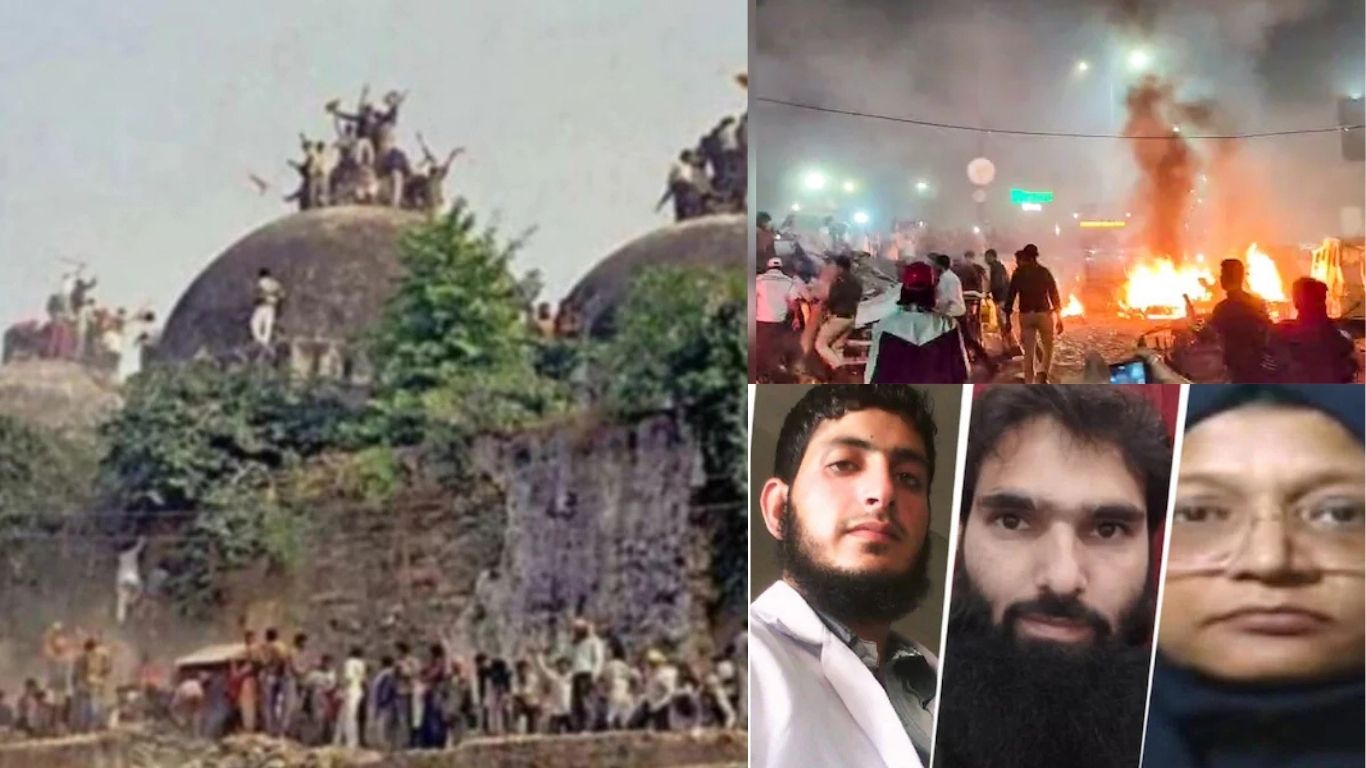
Six coordinated blasts were planned across Delhi-NCR for December 6, investigators say, in what security agencies call a chilling Babri-anniversary revenge plot. The white collar terror module reportedly composed of professionals including doctors and allegedly tied to Jaish-e-Mohammed had mapped a phase-wise campaign of recruitment, procurement, reconnaissance and attack timed to the date’s symbolic power. Arrests and raids uncovered large caches of explosive material and communications that exposed the scheme; one accused operative Dr Umar, fearing arrest after colleagues were detained, detonated a vehicle prematurely. The probe exposes worrying patterns of radicalisation, network at scale.
A painstaking investigation that began after an explosion near the Red Fort on November 10 has since unfolded into a portrait of an organised, inter-state terror cell allegedly determined to strike the national capital on a date loaded with historical and symbolic significance. Officials say those arrested and the material recovered point to a deliberate plan to synchronise bombings at multiple locations in Delhi and the surrounding region on December 6 the anniversary of the 1992 demolition of the Babri Masjid in Ayodhya, an event long invoked by violent extremists seeking revenge.
Sources involved in the probe describe the accused as a “white-collar” module: university-educated individuals, including practising doctors and academics, who investigators allege were radicalised and recruited into a network that combined local operatives with handlers and sympathisers outside the region. The capture of several members and the discovery of explosive caches in Haryana and elsewhere provided the first hard evidence that the plot went beyond rhetoric and online threats.
Dr Umar Mohammad, alias Dr Umar Un Nabi, who has been identified as the man behind the Delhi blast, was in contact with a Turkiye-based handler codenamed ‘Ukasa’, according to sources.
A massive blast rocked Delhi on Monday evening when a slow-moving Hyundai i20 car exploded at 6:52 pm near the Red Fort, killing 13 people and injuring nearly a dozen others. Visuals from the ground showed damaged vehicles and mangled bodies.
The investigation into the Delhi blast is now in its third day with the anti-terror agency, the National Investigation Agency, leading it. Investigators have taken three doctors from Faridabad’s Al-Falah University, where Dr Umar Mohammad also worked, into custody.
Investigators are also tracking the sale and purchase of i20 car used in the blast and tracing its journey ahead of the explosion.
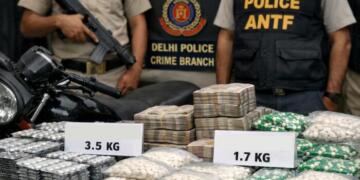
According to law-enforcement sources, raids following intelligence leads recovered substantial quantities of explosive material and ammunition, along with digital communications and other forensic evidence that helped map the group’s structure and intentions. One of the operatives, identified as Dr Umar a physician originally from Pulwama who was working in Faridabad Al-Falah university is accused of driving a vehicle that detonated after authorities say he panicked following arrests of associates. That explosion, which killed and injured civilians near a busy Lal Quila metro station, appears to have been a premature and incomplete detonation compared with the group’s alleged larger plan.
Investigators say the plot was developed in phases: the formation and recruitment of the module; procurement of materials and equipment; reconnaissance of potential targets; distribution of devices to operatives; and the final coordinated execution of attacks. While these broad stages mirror patterns seen in other conspiracies, officials emphasise that the involvement of trusted professionals presents a particularly worrying dimension one that underscores how radicalisation can penetrate unexpected social circles and institutions.
Names that have emerged in the inquiry include academics and medical professionals who, authorities allege, played distinct roles ranging from procurement to logistics and coordination. Arrests in different states from Kashmir to Uttar Pradesh and Haryana point to an interstate network that investigators say used personal contacts, travel and clandestine communications to organise and move material. Sources also say preliminary financial forensics and digital trails are being examined to identify funding channels and external links.
Security agencies have flagged the ideological backdrop the suspects invoked. For years, groups like Jaish-e-Mohammed have issued threats and spoken of revenge for events such as the Babri Masjid demolition; in some militant literature and public commentaries the anniversary of December 6 has been presented as an opportunity to stage symbolic strikes. Investigators are therefore treating both motive and timing as central to understanding the conspiracy, while being careful to separate propaganda from operational capability.
Analysts and officials interviewed in connection with the probe stress that the swift arrests in Delhi and material seizures likely prevented a much larger catastrophe. They also caution, however, that the apparent sophistication in planning including target selection and attempts to coordinate multiple attacks reveals vulnerabilities in the ways violent networks attempt to exploit urban environments. The profile of suspects as educated professionals has prompted renewed concern about how workplaces, academic institutions and social spaces might be monitored for early signs of radicalisation without stigmatizing entire communities.
The blast near a national monument has also prompted an immediate security response: authorities tightened checks at key installations, increased patrolling, and issued advisories to frontline units and local police to heighten vigilance ahead of dates identified as symbolic. Forensic teams continue to analyse remnants of the explosion to reconstruct the device and the intended method of attack, while counterterrorism units chase leads on procurement and communications. Officials say they are coordinating across state police forces and national agencies to ensure the investigation tracks the full network and any external ties.
Officials describe Umar as a “brilliant but withdrawn” student who underwent a drastic ideological transformation after a 2021 trip to Turkey. During the visit, he and Shakeel allegedly came into contact with sympathisers of the banned JeM outfit. After returning to India, Umar began sourcing ammonium nitrate, potassium nitrate, and sulphur, reportedly using open-source bomb-making manuals to build a vehicle-borne improvised explosive device (VBIED). Investigators believe Umar made a brief visit to Pulwama on October 26, telling family and friends he would be “unreachable for three months.” This, officials said, indicates he intended to go underground following the planned December attack. The probe first picked up momentum in Srinagar, when police tracked down those responsible for JeM-supporting posters pasted around the city on October 19. CCTV footage led to the arrest of Dr Shakeel, which unravelled the broader interstate network of educated individuals radicalised into terrorism.
Authorities continue to trace the module’s funding channels and digital footprint, while forensic experts analyse remnants of the Red Fort explosion in Delhi to reconstruct the intended VBIED design. Security agencies have also heightened vigilance across key installations in Delhi and northern India ahead of December 6.





