




















A disturbing video circulating on social media recently has reignited the debate on India’s growing “animal activism gone wrong” culture. In the viral clip, a woman who had already been injured is seen being slapped and threatened by another woman claiming to represent People for Animals (PFA) India, an Animal welfare organisation. The activist is heard shouting, “Tujhe sooli par chadha dungi!” (I will hang you on the gallows), in full public view a display of aggression that has shocked millions across the internet. What makes the incident even more alarming is the justification offered by some online users. They claim that the assaulted woman had allegedly beaten a dog with a stick a day earlier. But even if that claim were true does that justify physical assault? Has the right to raise awareness about animal welfare become a licence to resort to vigilantism and violence?
India has always stood for compassion for both humans and Animals. But the growing trend of extremist animal activism has begun to distort that balance. These so-called “animal lovers” are acting as moral policemen, deciding whose life matters more and in their world, it seems, a dog’s life is valued above a human’s.
No one condones animal cruelty. But who gave anyone the moral or legal right to slap another person? Activism, however noble in intent, cannot replace the law of the land. This brand of self-righteous activism is dangerous because it legitimises mob behaviour under the guise of compassion.
Many of these activists behave as though humans are expendable and dogs are divine. Yet, when it comes to real compassion, their hypocrisy becomes obvious. As thousands of stray dogs suffer on the streets unfed, untreated, and unvaccinated these activists are often seen taking selfies while feeding a few strays, not offering shelter or long-term care.
Their double standards are striking:
They buy expensive foreign dog breeds from pet shops but leave local strays to fend for themselves.
They protest against culling, yet do nothing to stop the unchecked breeding that leads to more suffering.
They demand “rights” for animals, but forget that human beings too have the right to walk safely on public roads without fear of being mauled or bitten.
As many social media users rightly pointed out, if these activists truly love animals, why not adopt them into their homes? Feeding strays on the street and then leaving them to attack pedestrians isn’t compassion it’s negligence disguised as kindness.
India today faces an unprecedented stray dog crisis. According to estimates, there are over 60 million dogs in India some experts believe the number could be as high as 120 million and more than half are stray or free-ranging. This makes dogs the most abundant terrestrial carnivore in the country, outnumbering even wild predators.
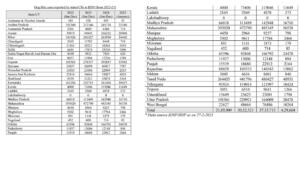
Dog bites are not minor incidents; they are potential death sentences in a country that remains the global hotspot for rabies deaths. The World Health Organisation estimates that India accounts for 36% of all rabies deaths worldwide. Every year, 18,000 to 20,000 people die from rabies, most of them due to dog bites.
Official data shows the crisis worsening:
Slapping a woman who is already injured
Street dog bit someone & this activist of @pfaindia taking name of @Manekagandhibjp is saying “tujhe sooli par chadha dungi”
Who gives these activists the right to assault a citizen @Uppolice @adgzonemeerut @meerutpolice @DelhiPolice pic.twitter.com/RocNQV0iJv
— Deepika Narayan Bhardwaj (@DeepikaBhardwaj) October 28, 2025
2022: 21 lakh dog bite cases
2023: 30 lakh cases
2024: 37.1 lakh cases a shocking rise of nearly 75% in just two years
Among these, more than 5.2 lakh victims were children under 15 years of age.
Recent tragedies illustrate the human cost:
In Delhi, a 6-year-old girl died of rabies after being bitten by a stray dog.
In Bareilly, a 3-year-old boy suffered severe facial injuries in a dog attack outside his home.
In Kerala, 26 rabies deaths were reported in 2024 alone, including several vaccinated victims — raising questions about vaccine efficacy and response delays.
Despite these alarming numbers, activists continue to push narratives that demonise anyone who dares to raise concerns about public safety.
The Supreme Court of India itself has made its position clear. In a 2016 judgment, Justices Dipak Misra and Amitava Roy observed, “Let not an impression go out that human life is of lesser value than that of dogs. Human life is divine.”
This statement should serve as a moral compass in today’s debate. Protecting animals from cruelty is essential but not at the cost of human dignity, safety, or life.
Yet, under the Animal Birth Control (ABC) Rules, 2001, and the updated ABC Rules, 2023, stray dogs must be captured, sterilised, vaccinated, and released back to the same location even if they have a history of attacking people. This framework effectively keeps dangerous strays on the streets, allowing attacks to continue unchecked.
Nowhere in the developed world are stray dogs allowed to roam freely in urban areas. Cities like Singapore, Tokyo, or London maintain strict public safety standards stray or aggressive dogs are either rehomed or euthanised humanely. India, on the other hand, continues to let them multiply under the pretext of “animal rights”, ignoring the real victims humans, especially children and the elderly.
The time has come to modernise India’s dog control laws, balancing compassion with accountability. Sterilisation drives alone are not enough; there must be provisions for removing or isolating aggressive dogs permanently.
The woman in the viral video represents a troubling new breed of activists who believe that moral superiority gives them immunity from the law. Slapping, threatening, or abusing others in the name of animal welfare is not activism it’s hooliganism.
These individuals often unleash online mobs to shame or harass anyone who questions their methods. They label critics as “animal haters” or “cruel humans,” refusing to engage in rational debate. In doing so, they weaken genuine animal welfare work by turning it into a culture of confrontation rather than compassion.
Real activism must come from empathy and balance, not aggression and arrogance. It must recognise that humans and animals both deserve safety and dignity.
India stands at a crossroads. On one hand, it is home to a rich tradition of compassion from Ahimsa to the reverence of the cow, animals have always had a sacred space in Indian civilisation. On the other hand, unchecked emotional activism and weak urban laws have turned compassion into chaos.
The viral incident is not just about one slap it’s about a society losing perspective. While dog bite victims are dying of rabies, activists are busy recording viral videos and threatening citizens. While families mourn the loss of children, social media warriors chant slogans about “animal rights” without acknowledging human suffering.
It is time for lawmakers, civic authorities, and courts to act decisively. India needs stray-free streets, modern pet ownership laws, and responsible activism not street vigilantism. Compassion should be guided by reason, not rage.
Because when activism forgets humanity, it ceases to be noble. When protecting animals comes at the cost of human life, it is no longer compassion it’s cruelty in disguise.