
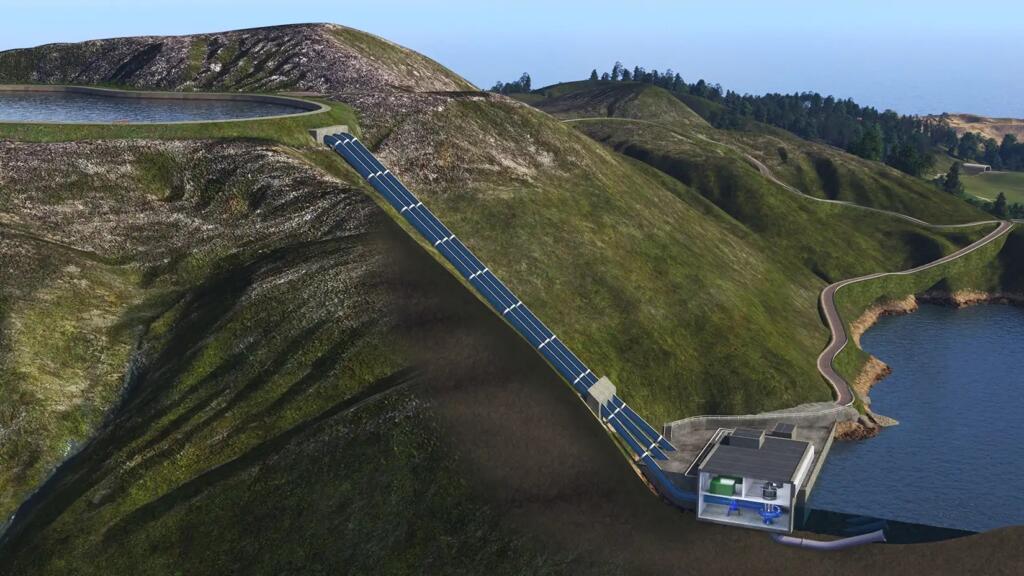
The global shift toward renewable energy has drawn attention to storage solutions that can address the variability of solar and wind power. Among these, pumped hydropower storage (PHS) has emerged as a well-established, large-scale energy storage technology that ensures the stability and reliability of modern energy grids. By storing surplus energy and delivering it during peak demand, PHS not only supports the integration of renewable energy but also plays a significant role in reducing dependence on fossil fuels and green fuels, promoting cleaner and more sustainable energy systems.
What is Pumped Storage Hydropower?
Pumped hydropower storage is a form of large-scale, mechanical energy storage that uses the gravitational potential energy of water. The system typically involves two reservoirs at different elevations. During periods of low electricity demand or excess renewable generation, water is pumped from the lower reservoir to the upper reservoir. When demand is high, water is released back down through turbines, generating electricity on demand.
Key Benefits of PHS include:
- Long lifespan of over 50 to 100 years, supported by regular maintenance and inspections.
- Rapid response to changes in electricity demand, providing real-time grid support.
- Ability to provide grid stability and frequency regulation.
- Low operational costs after initial capital investment.
- Unlike batteries, PHS can store massive amounts of energy for long durations without significant degradation, making it a cornerstone for renewable energy integration.
Unlike batteries, PHS can store massive amounts of energy for extended periods without significant degradation, making it a cornerstone for integrating renewable energy.
How Pumped Storage Supports Renewable Energy?
The growth of solar and wind energy introduces variability into the grid, as production depends on the availability of sunlight and wind. PHS systems balance this by storing excess electricity during periods of high output and discharging it during periods of deficit.
For example:
- During the day, solar farms may produce more energy than the grid can consume. This surplus is used to pump water to the upper reservoir.
- At night, when solar production drops, the stored water generates electricity to meet demand.
This approach minimizes curtailment of renewable energy, ensuring efficient use of clean power and maximizing renewable investments. It also sustains the electricity supply even when weather conditions limit generation.
Economic and Environmental Advantages
Cost-Effectiveness
Pumped hydropower storage (PHS) offers a long-lasting and cost-efficient energy storage solution compared to chemical batteries. It stores surplus renewable energy and releases it during periods of peak demand, thereby reducing dependence on expensive fossil-fuel peaker plants. This lowers energy costs and stabilizes electricity prices for utilities and industries. Companies like Avaada integrate PHS with solar and wind projects, ensuring optimized performance and a reliable, clean energy supply while maintaining financial predictability for large-scale operations.
Environmental Impact
PHS operates without direct greenhouse gas emissions, making it an environmentally sustainable solution. By storing excess solar and wind energy, it reduces wastage of clean power and minimizes reliance on carbon-intensive generation. This supports green fuels initiatives and enables businesses and governments to meet carbon reduction targets while enhancing ESG compliance.
Key Features of Pumped Storage Hydropower
| Feature | Benefit |
| Large-scale energy storage | Can store energy for hours to days, addressing peak demand |
| Grid support | Frequency regulation, black-start capability, voltage stability |
| Longevity | Long operational life of 50-100 years or more with minimal degradation |
| Environmental alignment | Supports renewable energy adoption and reduces carbon footprint |
| Socioeconomic impact | Job creation, infrastructure development, and local economic growth |
Role in Enhancing Grid Stability
Electricity grids require real-time balancing of supply and demand. PHS plays a crucial role in providing:
- Frequency regulation: Rapid response to fluctuations.
- Peak load management: Supplies power during high demand.
- Black-start capability: Restarts the grid in the event of an outage.
Integrating PHS with renewables ensures a continuous power supply without fossil fuel dependence.
Integration with Green Fuels and Renewable Projects
Modern PHS systems are increasingly paired with solar and wind farms to create hybrid energy projects. This integration:
- Reduces reliance on green fuels and fossil fuels for peak power.
- Optimizes renewable energy utilization.
- Enables round-the-clock clean energy supply for industrial and commercial consumers.
Companies such as Avaada are using PHS alongside large-scale solar and wind assets to provide dispatchable renewable power, ensuring efficiency and cost-effectiveness.
Global Trends and Adoption
Countries around the world are scaling up PHS as part of their renewable energy strategies:
- China: Leads global PHS capacity, integrating large systems with wind and solar.
- Europe: Uses PHS for grid balancing and peak management.
- India: Government initiatives and private developers are exploring PHS projects to stabilize renewable grids and support net-zero ambitions.
The adoption of PHS is accelerating as nations recognize its importance in enabling high renewable penetration without compromising grid reliability.
Challenges and Solutions
While PHS is highly effective, it faces some challenges:
- High initial capital cost: Requires careful planning and financing.
- Geographical limitations: Needs suitable terrain for reservoirs.
- Environmental considerations: Impacts on local ecosystems must be managed.
Solutions include:
- Optimized engineering designs.
- Integration with hybrid renewable projects.
- Strict environmental assessments and community engagement.
Future Outlook
Pumped hydropower storage is poised to be a key enabler of a low-carbon, sustainable energy future. As the renewable energy sector expands, PHS will:
- Ensure reliability in grids with high renewable penetration.
- Minimize the need for fossil fuel-based peaking plants.
- Provide cost-effective and environmentally responsible energy storage.
Hybrid projects that combine solar, wind, and PHS will become increasingly common, driving technological innovation and supporting global decarbonization targets.
Renewable energy companies, such as Avaada, are leading this transition by delivering end-to-end clean energy solutions across solar, wind, hybrid, storage, and green fuel sources. By using fully integrated solar manufacturing and pioneering storage technologies, including pumped hydropower and green hydrogen, Avaada enables reliable, round-the-clock power, future-ready low-carbon solutions for industries, and assured quality, cost savings, and supply chain reliability supported by strong global investors (ADB, Brookfield, PTT Group).
Conclusion
Pumped hydropower storage (PHS) is a pivotal technology for enhancing energy sustainability and ensuring grid stability. By storing surplus electricity generated from renewable sources, such as solar and wind, PHS can dispatch power whenever demand peaks, effectively addressing the intermittent nature of these sources. This reduces reliance on fossil-fuel-based peaker plants, lowering both operational costs and carbon emissions. Additionally, PHS complements green fuel initiatives, enabling a cleaner and more reliable energy ecosystem. These developments promise a sustainable and prosperous future for society and the environment.