

















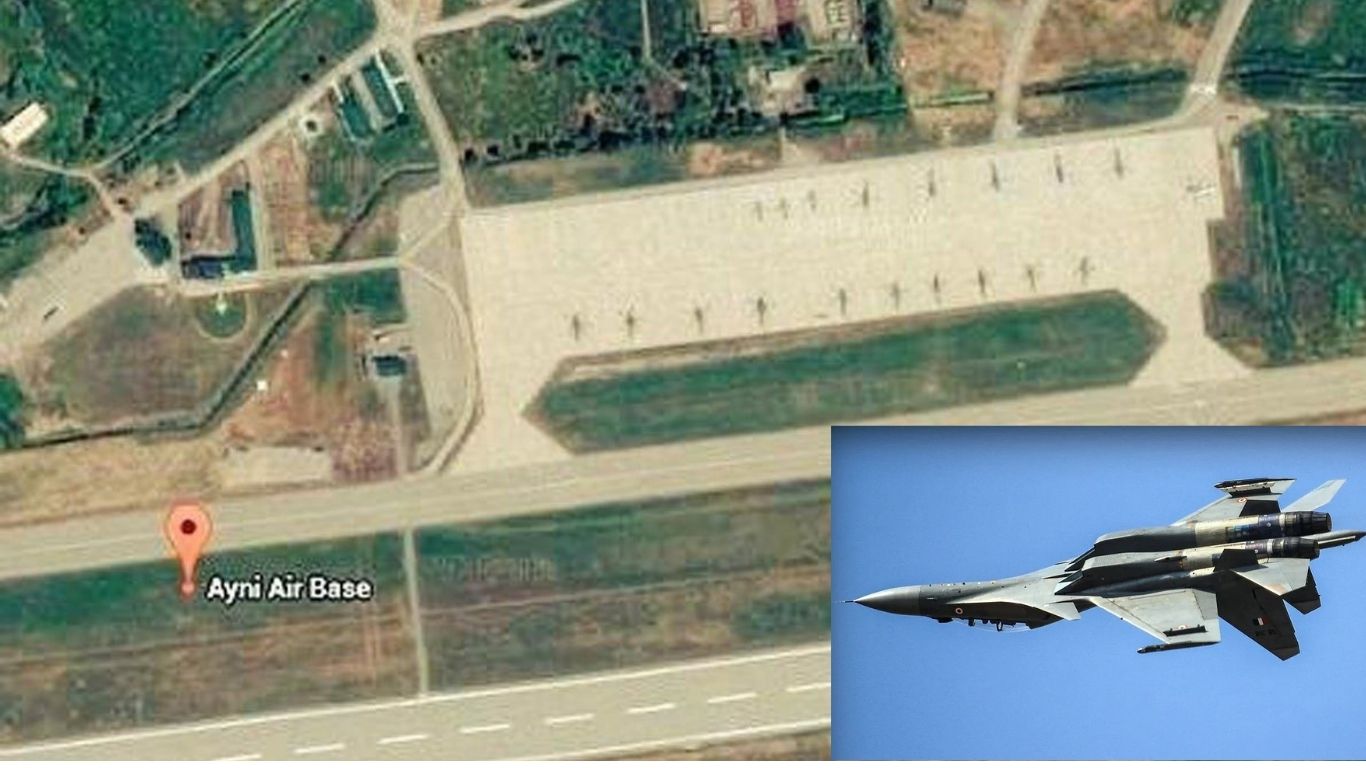
India’s withdrawal from the Ayni Air Base in Tajikistan its first and only overseas air facility marks a significant shift in South Asia’s strategic calculus. The airbase, located about 15 kilometres west of Dushanbe, was a symbol of India’s growing military reach and a powerful counterweight to Pakistan and China in the early 2000s.
Revived from a dilapidated Soviet-era structure through India’s $70 million investment in 2002, Ayni became a key regional outpost that allowed New Delhi to project influence into Central Asia and Afghanistan. Built during the height of the U.S.-led war on terror, it represented India’s ambition to secure its extended neighbourhood while countering cross-border threats emanating from Pakistan and the Taliban-controlled territories.
By 2010, India had completed extensive upgrades, including a 3,200-metre runway, reinforced aircraft shelters, refuelling systems, and modern air traffic control facilities. These enhancements made Ayni capable of hosting Su-30MKI multirole fighters and Ilyushin-76 transport aircraft a remarkable achievement that placed India among the few nations operating a foreign base in a geopolitically volatile region.
Reports now suggest that India has been asked to vacate the Ayni Air Base, ending nearly 25 years of quiet but strategic military engagement in Tajikistan. The move comes amid rising Chinese and Russian influence in Central Asia, both of whom have close ties with Dushanbe. Around 150 Indian personnel, including engineers and Border Roads Organisation (BRO) staff, have reportedly been withdrawn following Tajikistan’s request earlier this year.
According to diplomatic analysts, Beijing and Moscow were uncomfortable with India’s continuing presence. China, which shares a 470-kilometre border with Tajikistan, has rapidly expanded its military and economic footprint in the region, including a reported security facility near the Wakhan Corridor. Russia, meanwhile, views Central Asia as part of its historical sphere of influence and has consistently discouraged non-regional actors from maintaining permanent military facilities there.
For India, the closure represents more than just the loss of an airbase it narrows its operational depth against Pakistan. Strategically, Ayni provided New Delhi with an invaluable vantage point overlooking Pakistan-occupied Kashmir (PoK) and proximity to the Taliban belt. It was also an insurance asset in the event of heightened tensions with Pakistan or instability in Afghanistan.
Why the Ayni Airbase Was a Game-Changer for India
India’s presence in Tajikistan originated from its efforts to assist the Northern Alliance the anti-Taliban resistance led by Ahmad Shah Massoud during the late 1990s and early 2000s. India had already established a military hospital at Farkhor, near the Afghan border, where Massoud was treated after a fatal suicide attack in 2001.
The Ayni base’s location, roughly 20 km from Afghanistan’s Wakhan Corridor which borders Pakistan-occupied Gilgit-Baltistan made it strategically priceless. It brought India within striking distance of key Pakistani military installations, including Peshawar and the Khyber region. Military strategists argued that in the event of a war, India’s operations from Ayni could have forced Pakistan to divide its military resources between its eastern and western fronts, thus weakening its direct defence posture against India.
Beyond the military dimension, Ayni also strengthened India’s diplomatic influence in Central Asia a region dominated by Russian defence interests and China’s Belt and Road Initiative (BRI). Through its presence in Tajikistan, New Delhi not only gained access to crucial energy corridors but also deepened counter-terrorism coordination with Central Asian states.
As noted in a Newsweek analysis by Andrea Stauder, “While Russia and China remain dominant, India had an opportunity to expand its role beyond security into economic engagement.” Ayni was that stepping stone a strategic bridge between South and Central Asia.
The timing of India’s exit coincides with Beijing’s aggressive consolidation in Central Asia. China has poured billions into infrastructure and energy projects across Tajikistan, effectively making Dushanbe one of its most indebted partners. It has also been accused of quietly building a military presence along the Tajik-Afghan border to monitor Uyghur militants and regional instability.
Simultaneously, Russia through the Collective Security Treaty Organization (CSTO) maintains a stronghold in the region with over 7,000 troops stationed at the 201st Military Base in Tajikistan. With both powers already entrenched, India’s limited access and non-aligned stance may have made its position increasingly untenable in Dushanbe’s strategic calculus.
The loss of Ayni therefore reflects a larger geopolitical realignment in Central Asia where China’s economic muscle and Russia’s military dominance now overshadow others influence.
For over two decades, the facility symbolized India’s aspiration to be a decisive player in the Eurasian strategic theatre. Its loss, however, underscores the urgency of recalibrating New Delhi’s Central Asia policy.
India must now focus on expanding its diplomatic and defence cooperation through newer frameworks such as the India-Central Asia Dialogue and enhanced engagement with Iran’s Chabahar Port to sustain its presence in the region. With growing Chinese dominance and Russian assertiveness, India’s ability to maintain strategic depth beyond its borders depends on how swiftly it can reinvent its partnerships and secure alternative routes for regional influence.
In an era where power politics is reshaping Asia’s borders, India’s challenge is clear to turn the setback at Ayni into a blueprint for a more resilient and multi-dimensional foreign policy that protects its interests from the Himalayas to the heart of Central Asia.