
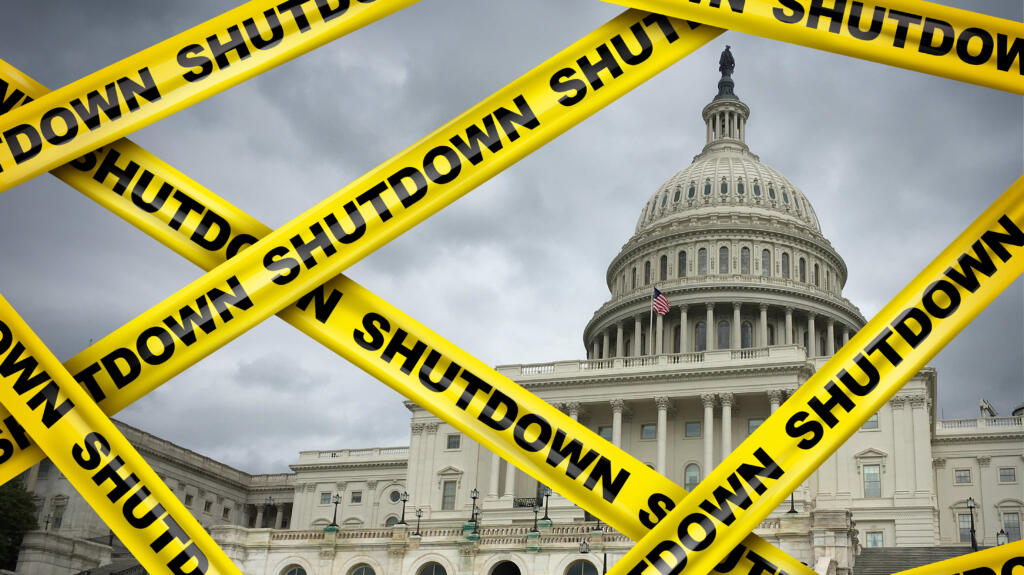
The United States has been plunged into crisis once again as a government shutdown has come into effect, disrupting federal operations and raising uncertainty for millions of citizens. With federal offices locked, services stalled, and nearly a million employees facing the fear of missed paychecks, the political impasse has triggered nationwide anxiety. The shutdown, the first since 2019, was caused by President Donald Trump’s failure to secure enough votes in the Senate to pass the federal funding bill.
A Failed Vote and Rising Deadlock
The dramatic turn of events unfolded late Tuesday night when the Senate voted on the funding bill. Although the proposal received 55 votes in favor and 45 against, it fell short of the required 60 votes for approval. With Republicans holding only 53 seats and Democrats refusing to extend support, Trump’s efforts collapsed.
Under US law, Congress must approve the federal budget annually. If lawmakers fail to reach consensus before the deadline, the flow of funds ceases, triggering a government shutdown. Precisely that scenario played out at midnight on Tuesday, leaving federal offices without the necessary resources to continue operations. President Trump quickly blamed Democrats for the shutdown, warning that if the stalemate continued, federal layoffs could soon follow.
Immediate Fallout: Federal Offices and Workers in Limbo
This is the first time in seven years that the US federal government has officially shut down. The immediate consequences are being felt across the nation, as routine government services come to a halt. Nearly 900,000 federal employees face the risk of being placed on forced unpaid leave, leaving their livelihoods and families in a state of deep uncertainty.
The shutdown has sparked fears of delayed paychecks and massive disruptions in basic government operations. While critical services such as law enforcement, emergency hospitals, and air traffic control remain functional, most non-essential services have either stopped or are operating under heavy strain. For thousands of families, the crisis means daily life has been thrown into disarray.
How Citizens Are Affected
The effects of the shutdown extend far beyond Capitol Hill. Everyday citizens are beginning to feel the pinch in ways that directly impact their lives. Services such as passport and visa issuance are expected to experience long delays, frustrating travelers and businesses alike. Programs such as Social Security and Medicare may continue but are already facing bottlenecks and staff shortages.
Federal helplines and government websites are slowing down or going offline altogether. National parks, museums, and public institutions are closing their doors, hitting not only tourism but also local economies that rely on steady visitor footfall. Small businesses dependent on federal contracts or financial support are struggling with delayed payments, which in turn slows the larger economy.
According to the Congressional Budget Office, the economic cost of the shutdown could be devastating. Analysts estimate that every day the government remains closed, roughly 750,000 federal employees are sent home, costing the US economy close to $400 million daily. This figure includes missed wages, stalled contracts, and ripple effects across multiple industries.
Political Standoff and Blame Game
The political standoff shows no signs of easing. Republicans have vowed to continue presenting the funding bill daily until Democrats agree to compromise, while Democrats accuse Trump and his allies of refusing to build consensus. The President has doubled down, accusing Democrats of intentionally sabotaging governance and threatening deeper cuts if the deadlock persists.
The battle lines are now clearly drawn, with Trump attempting to frame Democrats as responsible for derailing governance, while Democrats argue that the President’s unwillingness to negotiate fairly is to blame. As both sides dig in, millions of Americans are left stranded in uncertainty, paying the price of partisan warfare.
A Shutdown With Far-Reaching Consequences
The ongoing shutdown of the US government is not just a political skirmish in Washington; it is a crisis affecting ordinary families, federal workers, small businesses, and the broader economy. With services suspended, salaries withheld, and essential functions strained, the shutdown serves as a stark reminder of how political gridlock can paralyze a nation.
Unless consensus is reached quickly, the cost to America will extend beyond billions of dollars it will erode trust in governance itself. For now, the United States finds itself once again held hostage to partisan battles, while its citizens wait anxiously for normalcy to return.