
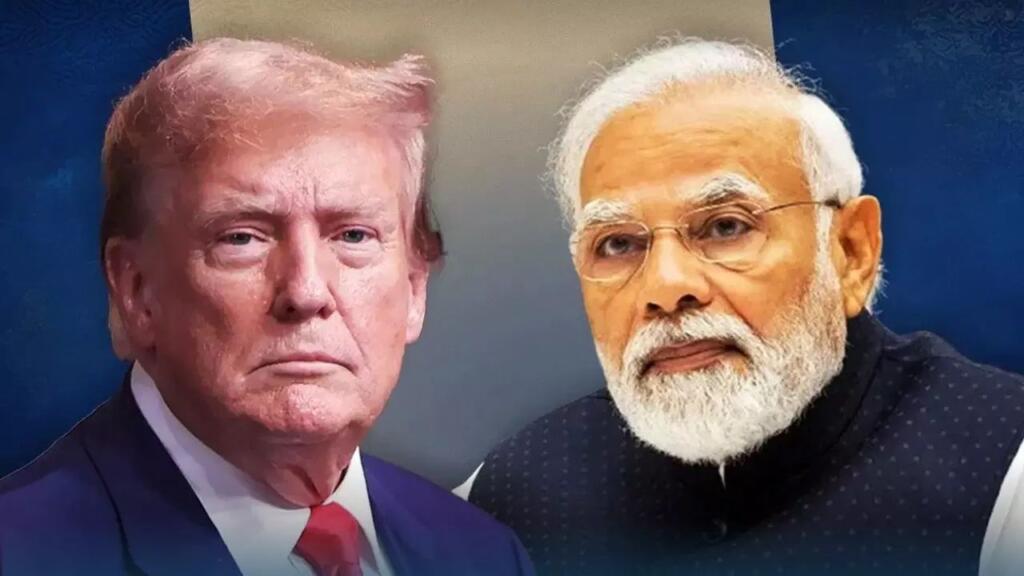
In a significant diplomatic development, Prime Minister Narendra Modi has decided not to attend the upcoming 47th ASEAN Summit in Kuala Lumpur later this month, putting an end to all speculation about a potential meeting with U.S. President Donald Trump. This will mark the second time in a decade that Modi will skip the ASEAN gathering in person. Instead, he will join the proceedings virtually, citing India’s ongoing Deepavali celebrations. With this decision, a much-anticipated Modi-Trump interaction which many had expected to reshape trade dynamics between the two nations appears unlikely to take place this year.
While Trump is set to attend the ASEAN Summit on a two-day visit to Malaysia beginning October 26, India’s representation will be led by External Affairs Minister S. Jaishankar. The Prime Minister’s decision reflects New Delhi’s careful prioritisation of domestic commitments and strategic focus on other key global forums such as the G20 and QUAD.
The announcement came after Malaysian Prime Minister Anwar Ibrahim confirmed that PM Modi would attend the ASEAN Summit online. In a statement on Instagram, Anwar said, “Prime Minister Modi informed me that he would participate in the summit virtually as the Deepavali festival is being celebrated in India during that time. I respect his decision and extend my Deepavali greetings to him and the people of India.”
PM Modi later echoed similar sentiments in a post on X (formerly Twitter), reiterating India’s commitment to the ASEAN partnership and its Act East Policy, which continues to guide India’s engagement in Southeast Asia. Sources in the Ministry of External Affairs clarified to Media houses that the decision was not a diplomatic downgrade but a “logistical and cultural” choice, considering the festival’s national significance.
Anwar further noted that both leaders held a cordial phone conversation to discuss enhancing Malaysia–India ties. “We spoke about strengthening the Malaysia–India bilateral relationship and making it more strategic and comprehensive,” Anwar said, describing India as “an important partner in trade, investment, technology, education, and regional security.”
No Trump-Modi Meeting This Year: Strategic Patience From New Delhi
With PM Modi skipping the Kuala Lumpur summit, there will be no opportunity for a bilateral meeting with U.S. President Donald Trump this year a development that signals a pause, not a setback, in India–U.S. relations. While Trump will be in Malaysia for the ASEAN proceedings, no alternative venue or meeting has been scheduled between the two leaders.
The diplomatic calendar for both leaders is already tightly packed. Modi’s focus will shift toward the G20 Summit in South Africa in November an event Trump is not attending and preparations for the QUAD Summit that India is expected to host later this year. Officials have indicated that India remains open to engaging with the U.S. on mutual interests but will do so on its own terms.
The strain in trade relations has also been a factor. Earlier this year, the U.S. administration imposed 50% tariffs on Indian goods, a move that New Delhi described as “unilateral and unfair.” India has maintained that its agricultural sector remains a red line in trade negotiations, and PM Modi has repeatedly underlined that protecting farmers’ interests is non-negotiable.
In contrast, Trump has often made inconsistent and false statements about India, including his claim in May 2025 that he had “resolved the India-Pakistan standoff” following India’s decisive strikes on Pakistan’s terror bases during Operation Sindoor. New Delhi has never acknowledged such remarks, viewing them as political rhetoric rather than serious diplomatic commentary.
Adding to the friction, Trump’s double standards allowing U.S. purchases of Russian uranium while criticising India for buying discounted Russian oil have not gone unnoticed in South Block. Indian policymakers have described such behaviour as “selective morality” that undermines genuine partnership.
India’s ASEAN Focus Remains Steadfast
Despite PM Modi’s absence in person, India’s engagement with ASEAN remains strong and strategic. Since its inception as a sectoral dialogue in 1992, the ASEAN–India relationship has steadily evolved becoming a full dialogue partnership in 1995, a summit-level partnership in 2002, and finally a strategic partnership in 2012.
ASEAN, comprising ten member nations Indonesia, Malaysia, Singapore, Thailand, Brunei, Vietnam, the Philippines, Laos, Myanmar, and Cambodia holds immense geopolitical significance for India’s Act East Policy. The grouping remains central to regional stability, trade, and maritime security in the Indo-Pacific.
India’s collaboration with ASEAN spans trade, technology, defence, and cultural exchange. Under PM Modi’s leadership, New Delhi has consistently advocated for an open, rules-based Indo-Pacific, ensuring that smaller Southeast Asian nations have equal access to trade and security frameworks.
While Trump’s attendance at the summit is expected to draw media attention, it is worth noting that the United States is not an ASEAN member but a dialogue partner. Historically, U.S. presidents have attended selectively — Trump himself participated once in 2017, and Joe Biden attended in 2022. India’s decision to participate virtually, therefore, aligns with past practices and does not reflect any diplomatic retreat.
Balancing Domestic Priorities and Global Diplomacy
Analysts say PM Modi’s decision underscores India’s growing confidence on the global stage a nation that engages with strength, not symbolism. With India recently hosting a successful G20 Summit and leading several key international initiatives, skipping one summit physically does not diminish New Delhi’s diplomatic momentum.
Moreover, the timing coincides with Deepavali, India’s most significant festival. PM Modi’s choice to celebrate the festival at home resonates with his emphasis on Indian culture, traditions, and family values principles that remain central to his leadership style.
External Affairs Minister S. Jaishankar’s participation ensures that India’s voice remains influential in ASEAN’s deliberations. The minister is expected to highlight India’s commitment to regional stability, supply chain resilience, and digital connectivity pillars that have strengthened the ASEAN–India strategic framework.
PM Modi’s decision to skip the ASEAN Summit in person and the resulting absence of a Trump-Modi meeting underline a clear message India engages globally, but always on its own terms. The country’s diplomatic stance reflects maturity and strategic depth rather than reactive politics.
Despite Washington’s tariff provocations and Trump’s inconsistent statements, India remains focused on strengthening partnerships that align with its long-term vision of Atmanirbhar Bharat and regional harmony. For New Delhi, diplomacy is not about optics or photo opportunities it is about safeguarding national interests, maintaining strategic autonomy, and asserting India’s rightful place in the global order.
As PM Modi joins the ASEAN proceedings virtually, India’s message is firm and unmistakable: the nation will continue to lead through substance, not spectacle.