













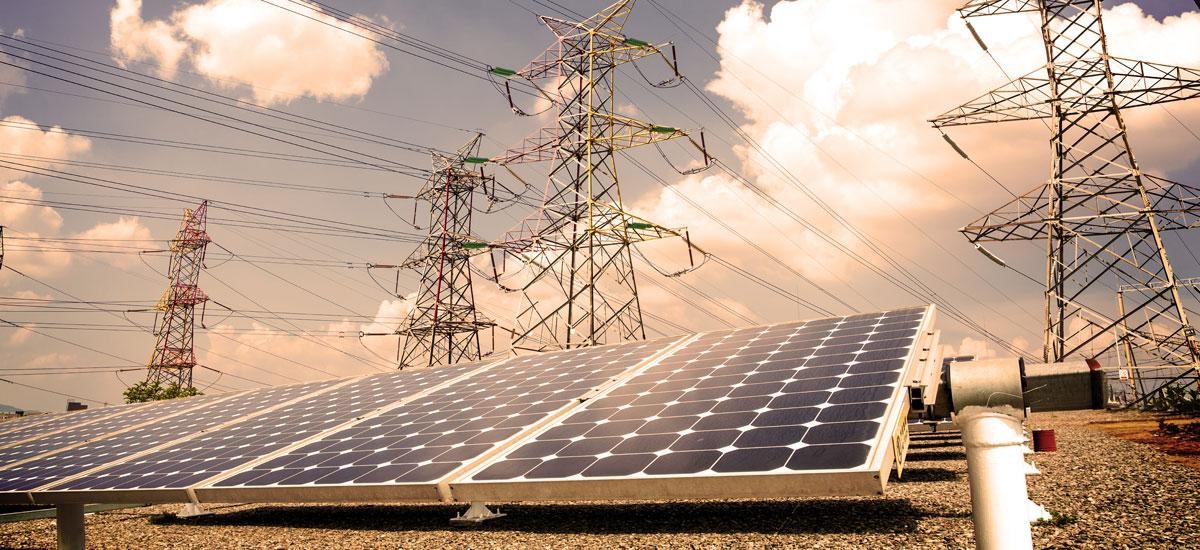
The primary source of energy in India is no longer dominated by coal chimneys and thermal plants. The spotlight has shifted to solar panels that are spread across the country in deserts, wind turbines standing tall in coastal belts, and battery storage systems discreetly integrated into grids. These projects are reducing emissions and shaping the country’s future energy landscape.
The journey of renewable energy in India has evolved from an ambitious idea to real, measurable projects that are making a visible difference.
Bhadla Solar Park, Rajasthan
Bhadla Solar Park is one of the most notable examples of scale in Indian renewable energy. Built in the harsh conditions of the Thar Desert, it shows that renewable power can work anywhere. Spanning several phases, the park has transformed the way people perceive solar energy in India.
Within this massive development, Phase III has drawn attention with the addition of 450 MW capacity.
Pavagada Solar Park, Karnataka
Another landmark project is located in Karnataka. Pavagada Solar Park has redefined what partnerships between government, developers, and local communities can look like.
Pavagada has helped cement Karnataka’s position as one of the leading renewable energy states. It’s not just a statistic on national charts; it’s a proof that clean power at scale can integrate into the grid and deliver reliably.
Rewa Ultra Mega Solar, Madhya Pradesh
Rewa made headlines when it began supplying solar power to both state distribution companies and the Delhi Metro Rail Corporation. What stood out was not only the volume of clean electricity but also the way contracts were structured. Developers, financiers, and government agencies worked out models that made the project sustainable in the long term.
It set the tone for other projects to follow. Tariffs dropped, investors became more confident, and large-scale solar no longer felt like a gamble.
Kurnool Ultra Mega Solar, Andhra Pradesh
Kurnool was one of the early flag bearers of India’s utility-scale solar wave. Its 1,000 MW capacity made it impossible to ignore and set the state on a clear path to renewable energy. Beyond generation numbers, Kurnool played an important role in skill building and job creation in the region. Thousands found employment during its development, and the operations phase has continued to build expertise in managing large plants.
It reinforced an important lesson. Renewable projects are not just about green power; they are also about economic activity that spreads far beyond the site itself.
Wind Solar Hybrid Projects In Gujarat And Rajasthan
Hybrid projects are slowly becoming the backbone of India’s renewable growth story. By combining wind and solar, they reduce the problem of intermittency and provide a stable supply. Wind and solar complement each other, keeping the power supply steady.
The first wind-solar hybrid in the country was executed back in 2018 by Hero Future Energies, and since then, the model has gained traction across Gujarat, Rajasthan, and beyond.
Green Hydrogen Projects in India
Green hydrogen is still in its early phase, but it shows great promise for India’s decarbonisation path. The idea is to utilize renewable power to split water into hydrogen and oxygen, and then utilize that hydrogen in industries that cannot operate solely on electricity. Steel, fertilisers, and cement are some of the biggest beneficiaries.
In March 2025, India saw a milestone when Hero Future Energies commissioned a hydrogen blending plant in Tirupati. With the National Green Hydrogen Mission underway, more projects like this will follow, providing heavy industries with an alternative to fossil fuels.
Energy Storage Projects Strengthening The Grid
Solar and wind alone cannot provide power all the time, but storage fills that gap. With large battery systems being deployed, renewables can be used when demand increases, making them much more reliable.
Hero Future Energies has secured around 650 MWh of storage capacity through different national tenders. This makes renewables more reliable, turning them from intermittent add-ons into steady contributors to the grid.
Government Support And Future Pathways
All in all, none of this would have been possible without supportive government policies. The National Solar Mission, renewable purchase obligations, and open access schemes have encouraged investment. Incentives for rooftop projects and reforms around tariffs have increased participation from both small and large players.
Looking ahead, India’s target of 500 GW of non-fossil fuel capacity by 2030 is ambitious, but the progress so far shows it is achievable.
Conclusion
The shift to renewable energy in India is driven by these projects, each pushing the boundaries of what was thought possible. Their impact is felt in cleaner air, new job opportunities, and healthier communities, as well as in India’s global image as a country advancing sustainability while maintaining economic growth.