
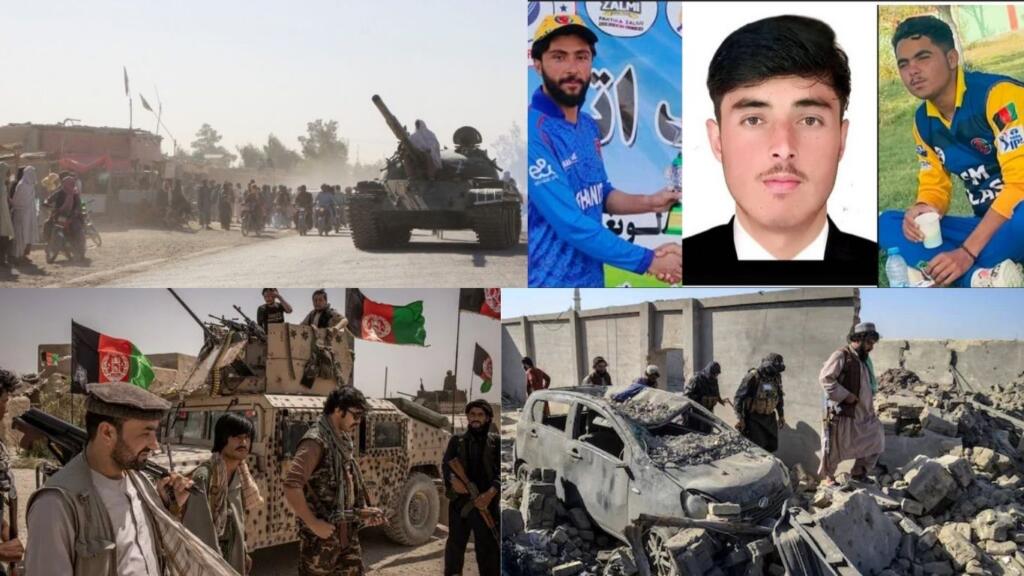
A deadly airstrike near the Afghanistan-Pakistan border has once again exposed the deepening hostility between two neighbours that were once close allies. What makes this tragedy even more shocking is that among the eight people killed in the Pakistani air raid were three young Afghan cricketers symbols of hope, talent, and unity in a war-torn nation. Identified as Kabeer, Sibghatullah, and Haroon, these players had travelled to play a friendly match in Paktika province, only to be killed upon returning home. Their deaths have not only shaken Afghanistan’s cricketing community but also reignited the bitter debate over Pakistan’s repeated violations of Afghan sovereignty. As Afghanistan mourns its athletes, the Taliban government has accused Islamabad of “cowardly” attacks, leading to the cancellation of an upcoming tri-nation cricket series with Pakistan and Sri Lanka. The tragedy underlines a grim reality peace remains elusive in South Asia’s most volatile borderland.
Pakistani Airstrike Kills Afghan Cricketers: A Shocking Breach of Peace
The Pakistan Air Force’s deadly strikes in Afghanistan’s eastern Paktika province have triggered outrage across the region. According to the Afghanistan Cricket Board (ACB), the attack killed eight people, including three domestic-level cricketers from Urgun Kabeer, Sibghatullah, and Haroon. These young men had travelled to Sharana, near the Afghanistan-Pakistan border, to participate in a friendly match. But when they returned home, their gathering was hit by what the ACB described as “a cowardly attack carried out by the Pakistani regime.”
The ACB confirmed the details in an emotional post on X, saying, “The Afghanistan Cricket Board expresses its deepest sorrow and grief over the tragic martyrdom of the brave cricketers from Urgun District in Paktika Province, who were targeted this evening in a cowardly attack carried out by the Pakistani regime.” The statement described the victims as “heroes who dreamed of representing their nation on the world stage,” and called the incident an “unforgivable assault on Afghanistan’s sports and civilian spirit.”
The attack comes at a time of heightened border tensions between the Taliban-led Afghanistan and Pakistan. Islamabad claims its military action targeted Tehrik-i-Taliban Pakistan (TTP) militants who allegedly operate from Afghan soil, while Kabul accuses Pakistan of indiscriminate bombings that violate Afghan sovereignty and kill innocent civilians. This latest assault, however, has gone beyond politics it has struck the very soul of Afghan sports, a sector that once brought pride and international recognition to a nation devastated by decades of conflict.
In response, the Afghanistan Cricket Board has announced the withdrawal of its team from the upcoming tri-nation T20 series with Pakistan and Sri Lanka as a mark of respect for the slain cricketers. “Our national dignity must come before all else,” the ACB said, emphasizing that no cricketing tie could continue in the face of such an atrocity.
Outrage Across Afghanistan: Cricketers Unite Against the “Cowardly Act”
The deaths of the young athletes have sparked widespread grief and anger across Afghanistan’s cricketing community. Rashid Khan, the captain of Afghanistan’s T20 team and one of the world’s leading cricketers, condemned Pakistan’s actions in strong words. “I am deeply saddened by the loss of civilian lives in the recent Pakistani aerial strikes on Afghanistan,” he wrote on X. “A tragedy that claimed the lives of women, children, and aspiring young cricketers who dreamed of representing their nation on the world stage.”
Rashid described the bombing as “immoral and barbaric,” calling it a grave violation of human rights that “must not go unnoticed.” He also backed the ACB’s decision to pull out of the Pakistan series, saying, “Our national dignity must come before all else.”
Other Afghan cricketers echoed his sentiments. Veteran all-rounder Mohammad Nabi said, “This incident is not only a tragedy for Paktika but for the entire Afghan cricket family and the nation as a whole.” Left-arm pacer Fazalhaq Farooqi posted a moving message on Facebook, calling the massacre of innocent civilians “a heinous, unforgivable crime.”
The collective outrage has united Afghanistan’s cricketing fraternity in mourning and defiance. Many players have called for international cricket bodies, including the International Cricket Council (ICC), to take cognizance of Pakistan’s actions and pressure Islamabad to refrain from targeting civilians under the guise of counterterrorism.
The tragedy has also exposed the hypocrisy of Pakistan’s claims of solidarity with Afghanistan’s people. For years, Pakistan’s establishment has projected itself as a friend of the Afghan people, yet its military actions have repeatedly inflicted suffering across the border. The death of the three cricketers — young men who represented the spirit of a hopeful Afghanistan — has further eroded whatever goodwill existed between the two nations.
Fragile Ceasefire Collapses: From Brotherhood to Bitter Enemies
The airstrike in Paktika came just hours after a fragile 48-hour ceasefire between Afghanistan and Pakistan was agreed upon. Reports from Afghan media outlet TOLO News indicated that Pakistan launched multiple air raids targeting residential areas in the Urgun and Barmal districts, causing massive civilian casualties. The attacks shattered any remaining trust between the two governments, with Kabul accusing Islamabad of deliberately breaching the truce.
Ironically, the ceasefire was supposed to pave the way for peace talks in Doha, where top officials from both sides were to meet. Pakistan’s Defence Minister Khawaja Asif and intelligence chief General Asim Malik were scheduled to meet Afghan Taliban representatives led by Defence Minister Mohammad Yaqub. The goal was to ease tensions and prevent further cross-border violence. But the strikes in Paktika have turned that diplomatic mission into a credibility crisis for Islamabad.
The Afghan Taliban government, which seized power in 2021, reacted furiously. Its spokesperson, Zabihullah Mujahid, condemned the Pakistani strikes as “a violation of Afghanistan’s sovereignty and an insult to our national dignity.” He announced that the Taliban would reconsider its cooperation with Pakistan on border and security issues, adding that Afghanistan “will defend its soil at all costs.”
This breakdown of relations marks a new low in Afghanistan-Pakistan ties. Ironically, Pakistan was one of the few countries that had initially celebrated the Taliban’s return to power, believing it would ensure a friendly regime in Kabul. But since 2021, that optimism has vanished. The Taliban’s refusal to act against the Pakistan Taliban (TTP) — an extremist group responsible for hundreds of attacks inside Pakistan — has infuriated Islamabad. Meanwhile, Kabul accuses Pakistan of using airstrikes to intimidate Afghanistan and shift blame for its own internal instability.
The current hostilities reflect a dramatic reversal of what was once a strategic partnership. For over two decades, Pakistan’s military and intelligence agency — the Inter-Services Intelligence (ISI) — played a key role in supporting the Afghan Taliban. This complex relationship began during the U.S. occupation of Afghanistan, when Islamabad provided covert sanctuary and logistical support to Taliban leaders, even while publicly backing Washington’s counterterrorism mission.
Pakistan hoped that when the Taliban returned to power in 2021, the group would serve as a stabilizing, pro-Pakistan government that could keep rival powers like India at bay. But reality turned out differently. Once in power, the Taliban asserted its independence, often rejecting Pakistan’s demands and refusing to crack down on the TTP.
The Tehrik-i-Taliban Pakistan (TTP), composed largely of fighters from Pakistan’s tribal areas, has waged a violent insurgency against the Pakistani state for years. Its goal: to enforce Islamic law across Pakistan and restore the semi-autonomous tribal regions that Islamabad dissolved in 2018. Pakistan had expected the Afghan Taliban to rein in their ideological cousins, but instead, the TTP found sanctuary and breathing space under Taliban rule.
The consequences have been devastating for Pakistan. Since 2021, the country has witnessed a surge in terrorist attacks, with more than 2,400 people killed in just the first three quarters of 2025. These attacks have targeted military bases, police stations, and civilians, plunging Pakistan into one of its worst security crises in decades.
Facing a domestic rebellion and economic collapse, Pakistan’s security establishment appears to be using airstrikes inside Afghanistan as a show of force. But this strategy is risky. Not only does it violate international law, but it also risks provoking a full-scale conflict with Kabul — a war Pakistan can ill afford. Its economy is reeling from inflation, debt, and international isolation, while its political system remains fractured after years of instability.
For Afghanistan, the consequences are equally grim. Still struggling under international sanctions and humanitarian crises, the Taliban government can neither afford prolonged conflict nor international alienation. Yet, its defiance against Pakistan reflects growing nationalist sentiment within Afghanistan — a refusal to be treated as a vassal state anymore.
The deaths of Kabeer, Sibghatullah, and Haroon symbolize far more than just another tragedy in a region accustomed to war. These were young athletes who dreamed of representing a nation beyond conflict, a nation that could finally stand proud on the global stage. Instead, their lives were cut short by bombs dropped in the name of security a grim reminder that in South Asia’s politics, the innocent always pay the highest price.
The fallout from this attack has already begun to reshape regional dynamics. Afghanistan’s withdrawal from cricketing ties with Pakistan is not just a sporting decision; it is a political statement one that resonates with millions of Afghans who have long accused Pakistan of undermining their sovereignty.
As Pakistan’s ministers head to Doha seeking peace, both sides must realize that their fates are intertwined. Prolonged hostility will only deepen misery — for Pakistan, it means more insurgent violence and instability; for Afghanistan, it means further isolation and economic pain.
But until both governments abandon the language of bombs and airstrikes, peace will remain a distant dream. The blood of three young cricketers should have been a unifying tragedy. Instead, it has become a symbol of the broken promises, mistrust, and moral decay that define the Afghanistan-Pakistan relationship today.