
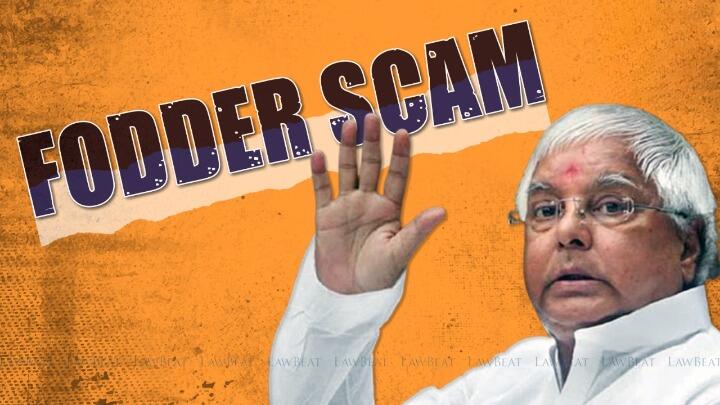
In the political heartland of Bihar during the mid-1990s, there was one man whose grip over power seemed unshakeable — Lalu Prasad Yadav. A master of the caste arithmetic, with unmatched political charisma and a loyal voter base, Lalu ruled Bihar like an emperor. His iconic boast, “Jab tak rahega samose mein aloo, tab tak rahega Bihar mein Lalu,” wasn’t just political rhetoric — it reflected a reality where opposition was irrelevant, bureaucracy was pliant, and the state was firmly under his thumb.
Yet, as history has often shown, it sometimes takes just one thread to unravel even the most tightly woven empires. For Lalu, that thread came in the form of a no-nonsense bureaucrat and a forged voucher from the Animal Husbandry Department. What followed was one of India’s biggest political scandals — the infamous Fodder Scam — that not only brought Lalu crashing down from national aspirations but exposed the rot at the core of Bihar’s governance.
The Honest Officer Who Noticed a Pattern
In July 1995, Bihar’s financial health was in complete disarray. Salaries were delayed, funds had mysteriously evaporated, and the state treasury was in crisis. Into this chaos stepped Vijay Shankar Dubey, a veteran 1966-batch IAS officer, as the Finance Secretary. Known for his honesty, Dubey immediately began reviewing the state’s dismal fiscal records.
During this audit, Dubey noticed that the Animal Husbandry Department had spent nearly five times its allotted budget. A routine anomaly, one might assume — but Dubey sensed something deeper. He ordered a detailed audit of three years’ expenditures, and the findings were disturbing. In early 1996, the Comptroller and Auditor General (CAG) raised similar red flags.
What tipped the scales was the discovery by an Additional Secretary, sent to Ranchi, that the bills used for fund withdrawals were entirely fake. These weren’t just accounting errors — they were the makings of a massive scam. Funds meant for animal feed, medicines, and care had been siphoned off through forged documents, with involvement reaching into the highest echelons of power.
The Raid That Shook Bihar
On January 27, 1996, Amit Khare, then the District Magistrate of Chaibasa, carried out raids on local treasuries and the Animal Husbandry Department. The findings were nothing short of explosive — bundles of fake receipts, false veterinary records, and withdrawals made without any legitimate basis. It was evident that a nexus of corrupt bureaucrats, businessmen, and politicians had colluded in what would come to be known as the Fodder Scam.
This wasn’t a small-time fraud — it was a well-oiled machinery of corruption. Fake bills had been used to siphon off hundreds of crores, and all fingers pointed towards the corridors of power in Patna.
Lalu’s System Strikes Back
Faced with mounting public pressure and media scrutiny, Lalu attempted damage control. He formed two single-member inquiry commissions, one of which included Phoolchand Singh, who himself was listed in the scam’s chargesheet. Unsurprisingly, the move backfired.
The opposition, led by BJP’s Sushil Kumar Modi, knocked on the doors of the Patna High Court, demanding a Central Bureau of Investigation (CBI) probe. On March 11, 1996, the court agreed. The state government, loyal to Lalu, appealed to the Supreme Court — which upheld the order. The CBI was now officially in.
The CBI Moves In — And So Does the Political Drama
U.N. Biswas, the CBI’s Joint Director, took charge of the case. It soon became clear that the scam reached all the way to the Chief Minister. Meanwhile, national politics was shifting. H.D. Deve Gowda’s government had fallen, and Lalu’s name briefly floated as a possible successor. However, the role eventually went to I.K. Gujral in April 1997 — a man whose political fortunes had previously been helped by Lalu himself.
But political favours had their limits. The Governor of Bihar, A.R. Kidwai, granted sanction to prosecute Lalu. The noose was tightening.
Lalu’s Masterstroke: RJD is Born
Refusing to bow out quietly, Lalu pulled a political rabbit out of his hat. On July 5, 1997, he resigned from Janata Dal and launched his own party — the Rashtriya Janata Dal (RJD). Most of his MLAs followed him, ensuring that while the party name changed, the power dynamic in Bihar did not.
Even as CBI Chief Joginder Singh was pressured to “go slow,” with reported suggestions from PM Gujral himself, the investigation pressed on. Singh famously asked for written orders to delay — none came. The political shield was weakening.
The Fall of the Kingmaker
On July 25, 1997, Lalu Prasad Yadav was arrested in connection with the Fodder Scam. Yet, he wasn’t done with power. He ensured that Bihar remained within his family’s control by installing his wife, Rabri Devi, as Chief Minister — making her the first woman to hold the position in the state’s history.
Though jailed, Lalu still pulled the political strings from behind bars. However, the damage to his national ambitions was irreversible. As he would later confess in 2006, “I could have become Prime Minister, but the Fodder Scam ruined it all.”
A Legacy of Distrust and Dysfunction
The Fodder Scam wasn’t just a personal setback for Lalu — it was a death knell for administrative confidence in Bihar. As Mritunjay Sharma notes in his book The Broken Promises, the scandal cast a long shadow over governance. Officers became reluctant to take decisions for fear of being implicated. Files gathered dust, projects stalled, and the already crumbling state machinery nearly froze.
More importantly, it demonstrated how deep-rooted corruption could cripple a state’s future — not just economically but morally. The scam didn’t just steal money; it stole time, trust, and the chance of progress for millions in one of India’s most backward states.
Conclusion: The Warning in the Fall
Lalu Prasad Yadav’s fall was not just about one man’s ambition gone awry — it was a systemic failure where political power, caste alliances, and bureaucratic complicity collided to create a perfect storm of corruption. The Fodder Scam remains a case study in how unchecked power, when married with institutional decay, can derail not just leaders but the very dreams of a state’s people.
And perhaps that’s why it continues to haunt Bihar — not as a closed chapter, but as an enduring warning.