
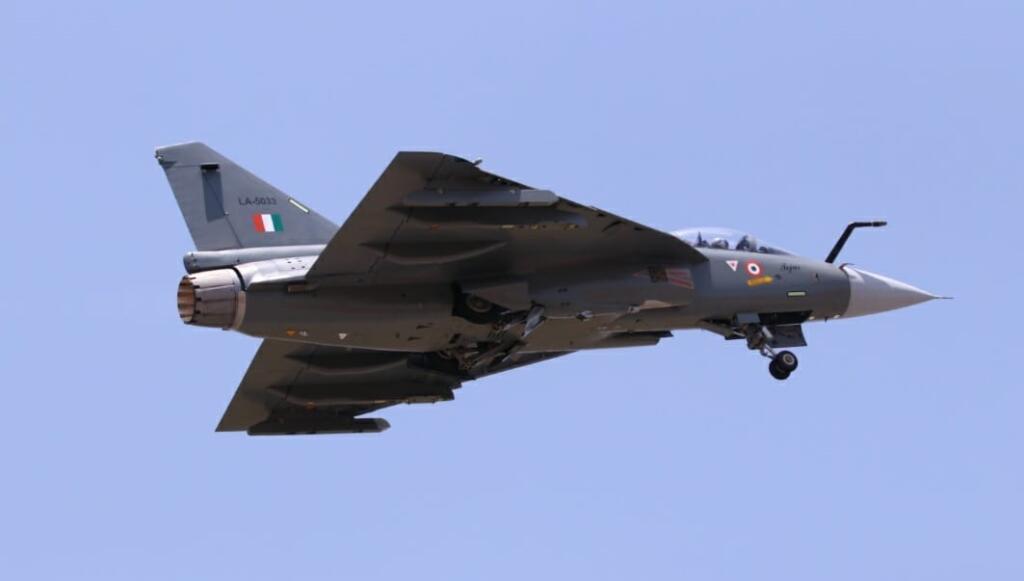
India’s indigenous fighter jet program is poised for a defining moment. Hindustan Aeronautics Limited (HAL) is gearing up for the first flight of the Tejas Mk-1A from its Nashik facility on October 17, marking a historic milestone in the nation’s aerospace evolution. More than just a test flight, this event embodies decades of effort toward self-reliance under the Atmanirbhar Bharat initiative. With advanced avionics, powerful engines, and a growing domestic production base, the Tejas Mk-1A is set to project Indian engineering prowess to the world. The skies over Nashik are ready to witness India’s flight of confidence.
Nashik Takes Flight: HAL’s Third Production Line Boosts Capacity
The upcoming test flight will be conducted at HAL’s Nashik plant, which has now become a key hub in India’s fighter jet production ecosystem. The facility represents HAL’s third Tejas production line, following two operational units in Bengaluru. With an annual capacity to produce eight aircraft, Nashik raises the overall output to 24 Tejas Mk-1A jets per year, accelerating delivery schedules to meet the Indian Air Force’s (IAF) operational needs.
Originally planned for May 2025, the test was delayed due to technical challenges and supply constraints. However, with the Directorate General of Aeronautical Quality Assurance (DGAQA) granting clearances and fresh shipments of GE-404 engines arriving from the U.S., the project is now back on track.
Defence Minister Rajnath Singh is expected to attend the historic maiden flight, underscoring the government’s focus on boosting indigenous defense manufacturing. HAL aims to deliver the first two Tejas Mk-1A fighters to the IAF by the end of October 2025, marking the beginning of a new production phase from Nashik.
The facility, employing over 2,200 personnel, including engineers, technicians, and aerospace specialists, reflects the growing sophistication of India’s defense industry. The Nashik expansion, inaugurated in April 2023 with an investment of ₹150 crore, has already begun transforming India’s aerospace landscape.
Upgraded and Indigenous: Inside the Tejas Mk-1A’s Cutting-Edge Design
The Tejas Mk-1A, classified as a 4.5-generation fighter, is a significant evolution over its predecessor. The aircraft integrates over 40 enhancements, reflecting years of refinement through feedback from IAF pilots and engineers.
Its key advancements include the indigenously developed Uttam Active Electronically Scanned Array (AESA) radar, a robust electronic warfare suite, and digital fly-by-wire controls for enhanced maneuverability. The aircraft’s improved aerodynamic design gives it exceptional agility, while in-flight refueling capability ensures longer endurance and operational range.
The Mk-1A is also equipped with Beyond Visual Range (BVR) and short-range air-to-air missiles like Astra and ASRAAM, allowing for precision engagement in multi-role missions. Maintenance turnaround time has been reduced significantly, ensuring higher availability during combat operations.
With 70% indigenous content, the Tejas Mk-1A stands as a symbol of India’s engineering capability and technological self-reliance. It will serve as a crucial replacement for the now retired MiG-21 fleet, enhancing both safety and performance within the IAF’s fighter squadrons.
Expanding Horizons: New GE Engine Deal and Global Partnerships
HAL’s modernization drive has been complemented by strategic international collaborations. Following the successful integration of the GE-404 engines powering the Mk-1A, HAL is finalizing a new contract with GE Aerospace for 113 additional engines, valued at over USD 1 billion.
According to HAL Chairman and Managing Director Dr. D.K. Sunil, negotiations are complete and the deal is expected to be signed by October 2025. “The agreement is worth more than a billion dollars. Pricing is finalised, and only the legal documentation remains,” he confirmed.
This order will support the production of 68 single-seat fighters and 29 twin-seat trainers, with deliveries scheduled between 2027 and 2033. Combined with the earlier 99-engine order, this will ensure uninterrupted engine supply for the Tejas program through the next decade.
Meanwhile, the Mk-1A has completed its weapons integration trials, including successful live firings of Astra and ASRAAM missiles, validating its combat readiness.
Beyond the Mk-1A, HAL is negotiating for an 80% technology transfer of GE’s more powerful F414 engines a key propulsion system for the Advanced Medium Combat Aircraft (AMCA) program. This deal would mark one of the largest defense technology transfers between India and the United States, propelling India toward full-scale indigenous jet engine production under Atmanirbhar Bharat.
Strengthening the IAF: From MiG-21 Replacement to Modern Combat Power
The Tejas Mk-1A forms the backbone of the IAF’s modernization roadmap. India’s 2021 contract for 83 Mk-1A fighters including 73 single-seaters and 10 MK-1 twin-seaters is valued at approximately ₹48,000 crore. Deliveries are scheduled through 2029, following a delay of four quarters due to global supply disruptions.
The aircraft’s operational deployment will allow the IAF to retire ageing platforms and strengthen its squadrons with a domestically produced, combat-tested fighter. Its lightweight frame and multi-role capabilities make it ideal for both defensive and offensive operations.
HAL has already built three Tejas Mk-1A units currently undergoing final trials. The company expects the first delivery by late October, setting the stage for serial production from 2026 onward. With Nashik’s production line fully functional, HAL aims to maintain consistent supply for both domestic and potential export orders to friendly nations in Asia and Africa.
Tejas Soars as a Symbol of Atmanirbhar Bharat
The Tejas Mk-1A’s upcoming maiden flight is more than a technological achievement it is a statement of India’s strategic independence. In a world dominated by defense imports, India is building the capacity to design, produce, and maintain its own fighter aircraft fleet.
HAL’s achievements reflect the broader success of Prime Minister Narendra Modi’s Atmanirbhar Bharat vision, which seeks to transform India into a global defense manufacturing hub. As Nashik prepares for takeoff, the Tejas Mk-1A stands as a proud testament to Indian innovation, resilience, and determination.
From Bengaluru’s workshops to Nashik’s hangars, India’s wings of steel are ready to fly carrying the dream of self-reliance skyward.
Tejas Mark 1A is an upgraded version of the Tejas Mark 1, which is serving in two squadrons of the Indian Air Force – No. 45, the Flying Daggers and No. 18, the Flying Bullets. HAL is expected to receive 12 GE-404 engines by the end of this financial year