
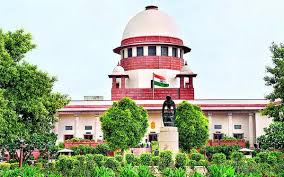
In a significant verdict underscoring the gravity of the Popular Front of India’s (PFI) extremist agenda, the Supreme Court on October 16 denied bail to Wasid Khan, a key member of the banned Islamist outfit. The apex court upheld the Madhya Pradesh High Court’s earlier order, confirming that there existed sufficient material evidence linking Khan to subversive activities aimed at disrupting communal harmony and waging war against the Indian state.
A bench comprising Justice M.M. Sundresh and Justice Vipul M. Pancholi dismissed Khan’s criminal appeal, reiterating that the evidence against him clearly pointed towards an attempt to re-establish a “Mughal order” in India—a phrase that chillingly reflects the PFI’s ideological goal of transforming India into an Islamic nation governed by Sharia law.
PFI’s ‘Mughal Order’ Dream: A Radical Blueprint for Subversion
Wasid Khan’s case has drawn national attention because of the incriminating material seized from his residence and office. The Madhya Pradesh High Court, while denying bail earlier this year, highlighted that the seized materials—books, CDs, pamphlets, a computer, a pen drive, and written lectures—reflected Khan’s efforts to “achieve an object of establishing a Mughal Order as it existed prior to British rule.”
The High Court observed that such material prima facie demonstrated an organized attempt to incite communal divisions and revive an Islamic political structure reminiscent of medieval times, when non-Muslim communities lived under subjugation. The objective, according to the prosecution, was not religious reform but the creation of a parallel ideological state within the Indian democracy—a vision of domination disguised as faith-based activism.
When Khan’s counsel, Senior Advocate Shoeb Alam, argued before the Supreme Court that his client had no links with the PFI after it was banned in 2022, the Bench remained unconvinced. The judges stated that the nature of the evidence and the ongoing investigation by the National Investigation Agency (NIA) left little room for doubt about Khan’s continued involvement in extremist operations.
The Unveiling of ‘Vision 2047’: A Plan to Islamise India
The NIA’s investigation exposed the existence of a chilling document titled “India 2047: Towards Rule of Islam in India”, which outlined PFI’s detailed strategy to turn India into an Islamic state within a century of independence. The document, first seized by Bihar Police in July 2022 during a crackdown on a secret PFI unit, spoke explicitly about subjugating Hindus and enforcing Sharia law by the year 2047.
The blueprint revealed plans for radical mobilisation, military-style training, and alliances with global Islamic powers such as Turkey. It proposed recruiting Muslims from backward classes (OBCs) and Dalit communities by exploiting their social grievances, thus weaving a web of religious and caste-based politics aimed at destabilising India from within.
According to the NIA, the document also contained chilling statements encouraging cadres to “dominate coward Hindus” and launch an armed uprising against the Indian state. It mentioned strategies to acquire weapons, fabricate improvised explosive devices (IEDs) from household materials, and use small knives and metal rods to carry out targeted killings.
This exposure led to one of the largest coordinated counter-terror raids in India’s history. The NIA and Enforcement Directorate jointly raided PFI offices and residences across 17 states, arresting several leaders and seizing explosive training manuals, communication devices, and the Vision 2047 document itself.
Wasid Khan’s Role: Legal Front of Radical Islamism
The NIA investigation revealed that Wasid Khan served as the General Secretary of the National Confederation of Human Rights Organisations (NCHRO)—the legal wing of PFI. Through this platform, Khan handled legal cases of radical Islamist groups such as PFI and the banned Students Islamic Movement of India (SIMI), both of which advocate for the imposition of Sharia law in India.
Khan’s interrogation disclosed that he joined PFI in 2017 and quickly rose through the ranks. His duties included recruitment of new members, organising indoctrination sessions disguised as “human rights classes,” and managing legal aid for detained radicals. Most alarmingly, he attended a secret meeting in August 2022 where several PFI leaders laid out the roadmap for achieving Vision 2047, urging cadres to prepare for an Islamic takeover of the Indian state through infiltration, funding networks, and armed resistance.
The NIA court’s order noted that Khan and other senior PFI operatives were directly involved in “training Muslim youth in the use of small weapons and hand-to-hand combat” to prepare them for eventual violence against state institutions. Training reportedly included the use of rods, knives shorter than six inches, and martial drills to evade police attention while maintaining lethal efficiency.
The Banned Network and India’s Countermove
Following the seizure of the Vision 2047 document and mounting evidence of PFI’s terror links, the Union Government in September 2022 imposed a five-year ban on the Popular Front of India and its affiliated organisations under the Unlawful Activities (Prevention) Act (UAPA).
The banned affiliates included the All India Imams Council, Campus Front of India (CFI), Rehab India Foundation, NCHRO, National Women’s Front, Junior Front, Empower India Foundation, and Rehab Foundation, Kerala. The government stated that these bodies operated as “unlawful associations” that served as recruitment and propaganda wings of PFI.
The NIA’s multi-state investigation also found that PFI had been running underground arms training camps under the guise of martial arts schools. Its operatives had been actively building sleeper cells and fundraising through hawala networks linked to Gulf countries.
The agency also cited multiple instances where PFI cadres were implicated in political killings, riots, and attempts to radicalise Muslim youth under the pretext of social justice and minority empowerment.
The Verdict and Its Message
By denying bail to Wasid Khan, the Supreme Court has sent a strong message reaffirming the state’s zero-tolerance stance against radical Islamism and anti-national conspiracies. The judgment underscores that freedom of association cannot be used as a shield for waging ideological warfare against the constitutional order of India.
The case serves as a reminder of how outfits like PFI, while masquerading as rights-based organisations, have systematically attempted to weaponise religion and social fault lines to destabilise the country.
Wasid Khan’s “Mughal order” ambition, rooted in a fantasy of historical supremacy, stands as a stark warning of the dangers of organised radicalisation. As India marches toward its centenary of independence in 2047, the nation’s security forces and judicial institutions remain vigilant against those who seek to turn democracy into a battlefield for extremist ideologies.