
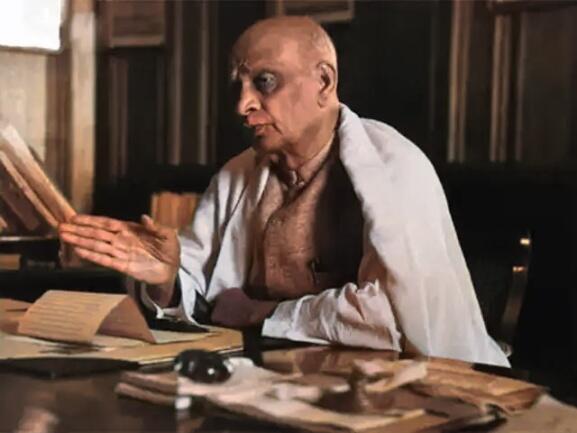
Sardar Vallabhbhai Patel, known as the “Iron Man of India,” played a pivotal role in shaping India’s destiny during and after the country’s independence. His relationship with the Muslim community was nuanced, marked by both efforts to foster unity and clear, uncompromising stands against what he perceived as separatist tendencies. Unlike Mahatma Gandhi and Jawaharlal Nehru, Patel was never accused of appeasement toward Muslims, and this position led to both admiration and controversy in his career.
Early Period: Advocacy for Unity
Before the radicalization of communal politics, Sardar Patel was among Gandhi’s chief lieutenants committed to Hindu-Muslim unity. He gave strong support to the Khilafat movement and worked to bring Hindus and Muslims together during major national campaigns such as the Bardoli and Salt Satyagrahas. His presidency at the Congress’s Karachi session in 1931 saw him assure minorities with a “blank cheque,” demonstrating genuine commitment to inclusive nationalism.
Change in Attitude: Partition and Muslim League Politics
Following the sharp rise of the Muslim League under Muhammad Ali Jinnah in 1937 and the League’s increasing demands for Pakistan, entire approach of Sardar changed. The two-nation theory and growing communal violence deeply perturbed him. Patel grew more guarded and, at times, confrontational in defense of India’s unity. His bluntness led to perceptions—even among close associates like Nehru and Maulana Azad—that he was drifting toward anti-Muslim sentiment. However, Patel insisted his stance was about national interest rather than communal bias.
Not a Muslim Appeaser
Patel’s policies were notably distinct from Gandhi and Nehru’s, who were often seen as advocates for Muslim interests in the hope of maintaining harmony. Sardar opposed the notion of appeasement, especially after the trauma of Partition and the horrors faced by Hindu refugees. He refused pressure to declare India a Hindu state, insisting on safeguarding minority rights while remaining clear about his displeasure with Muslim separatism. In a famous exchange with B.M. Birla, Patel said, “I do not think it will be possible to consider India as a Hindu state… there are other minorities whose protection is our primary responsibility.”
Protecting Muslims Amidst Crisis
Despite his strong views, Patel was not apathetic to the suffering of innocent Muslims. Sardar personally intervened to protect Muslim lives and property during post-Partition riots, taking police officers to task for failures and even visiting religious shrines to signal his commitment to minority welfare. He repeatedly condemned reprisals against ordinary Muslims, revealing a complex balance of firmness and compassion.
Fatal Attacks on Patel by Muslims
The decisive shift in Patel’s attitude had consequences. His criticism of the Muslim League and his outspoken defense of national unity made him a target for radical elements. In 1939, an assassination attempt occurred in Bhavnagar, Gujarat. During a public procession, 57 Muslim men emerged from concealment and attacked Patel’s jeep with swords and spears. Two young men, Bachubhai Patel and Jadhavbhai Modi, shielded him as human barriers—both were fatally wounded. The British authorities arrested the assailants, sentencing several to life, and one to death. Another notable incident occurred in Delhi, near the Dawn newspaper building, when shots were fired at Patel by radicals aggrieved over his stance on Partition and Muslim migration, though he survived the attempt.
Public Perception and Legacy
Patel’s relationship with Muslims remains contested. While his critics argue he harbored anti-Muslim sentiments post-Partition, others point to his consistent protections and warnings against ghettoization. Patel’s foremost priority was national unity, and he refused to countenance appeasement or division. His willingness to confront both majority and minority communalism set him apart from contemporaries.
Conclusion
Sardar Patel was not a Muslim appeaser. His relationship with the community evolved—from an early proponent of unity to a stern guardian of India’s integrity post-Partition, marked by two assassination attempts that exemplified the fraught times. Patel’s legacy lies in his unwavering commitment to secular principles—defending national unity without favor yet protecting the innocent, regardless of faith.