
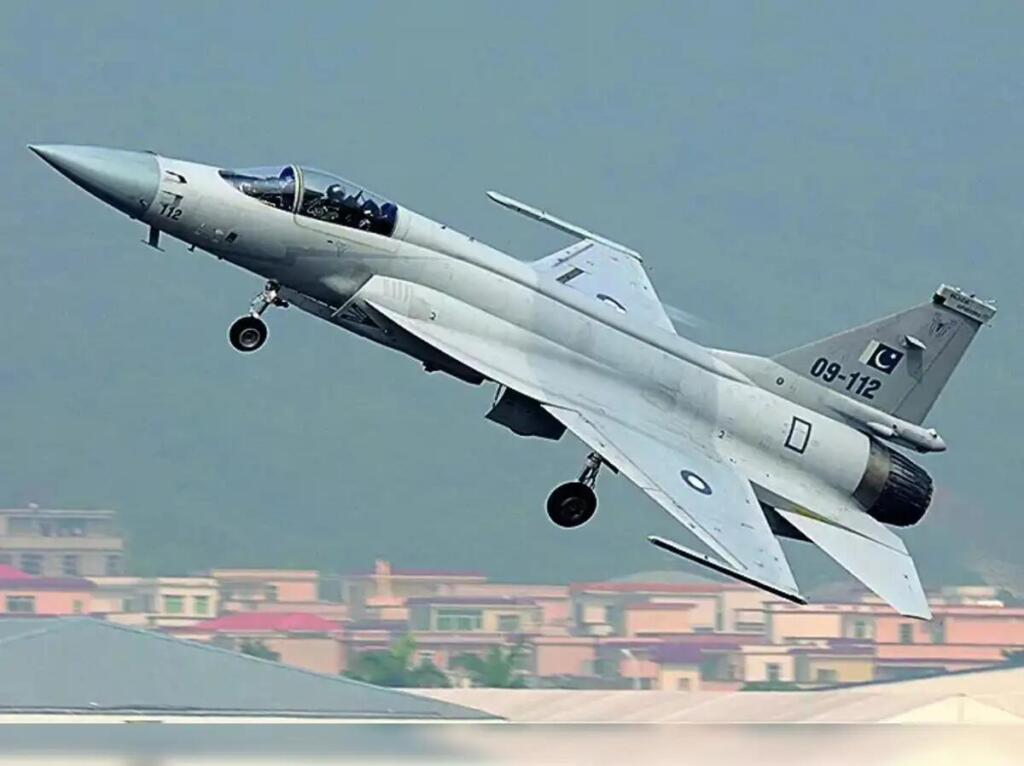
Russia has categorically dismissed claims that it is supplying RD-93MA jet engines to Pakistan for use in the JF-17 Thunder Block III fighter jets, calling the reports “illogical” and “baseless.” The clarification, which came through Russian sources quoted by WION, not only reaffirmed Moscow’s unwavering strategic alignment with India but also exposed the Congress party’s hasty political attack on Prime Minister Narendra Modi. Once again, the Opposition’s obsession with blaming Modi without verifying facts has backfired, highlighting both its diplomatic ignorance and its habitual misuse of misinformation for political gain.
Russia’s Firm Denial: No Military Cooperation With Pakistan
A Russian source, while speaking to WION, categorically dismissed reports of Moscow proceeding with the supply of RD-93MA engines to Pakistan, describing them as “unverified and illogical.” The source stated, “There is no confirmation on such a development. It looks illogical for serious and professional observers who trace big deals ahead between Russia and India. We don’t have such a level of cooperation with Pakistan that would make India feel uncomfortable.”
This strong denial reflects Moscow’s recognition of India’s deep strategic and defence partnership. Russia’s defence relations with India go far beyond any minor engagements elsewhere. The source also hinted that some forces may be deliberately spreading such stories to create friction between Moscow and New Delhi, especially at a time when both countries are preparing for major diplomatic engagements.
Congress Falls for Fake News, Launches Attack on Modi
Despite the absence of official confirmation or credible sourcing, the Congress party immediately used the false reports as ammunition to attack the Modi government. Senior Congress leader Jairam Ramesh took to X (formerly Twitter), accusing Russia of “ignoring India” and claiming that Moscow was supplying Pakistan with advanced engines for its JF-17 Block III jets.
Ramesh wrote, “The Modi government must explain why Russia – once India’s most reliable strategic ally – has chosen to ignore New Delhi’s appeals and proceed with supplying advanced RD-93MA engines to Pakistan’s fleet of Chinese-made JF-17 fighter jets.” He further accused Modi of allowing India’s strategic relations with Russia to “deteriorate,” describing it as a “failure of Modi’s personalised diplomacy.”
However, the Congress leader’s comments were based entirely on misinformation circulating on social media platforms. The fact that the party did not even attempt to verify the authenticity of the report before attacking the government shows a pattern of irresponsible political opportunism.
Russia-India Ties Remain Robust Amid Global Turbulence
Russia’s immediate clarification not only put to rest the rumours but also reinforced the stability of the long-standing India-Russia partnership. Both nations are set to hold the India-Russia annual summit in December 2025, where President Vladimir Putin is scheduled to visit India and meet Prime Minister Modi. Putin recently referred to Modi as his “dear friend” and “trustworthy partner,” underlining the depth of bilateral trust.
India has also continued to stand firmly by Russia amid Western sanctions and global geopolitical shifts. Today, India is among the largest importers of Russian crude oil, ensuring energy security at affordable prices. Furthermore, both countries are expanding cooperation in critical defence sectors. India is already receiving deliveries of the S-400 air defence systems, while talks are progressing for the acquisition of the next-generation S-500 system. Moscow has also offered to sell its Su-57 stealth fighter aircraft to India as a stopgap solution until India’s indigenously developed AMCA fighter becomes operational.
Pakistan’s Dependency on Chinese Defence Manufacturing
While Russia’s clarification has cleared the air, it is important to understand the background of the issue. The JF-17 Thunder fighter jet, jointly produced by China and Pakistan, is primarily powered by Russian-origin engines—supplied to China, not directly to Pakistan. China purchases the RD-93 engines from Russia and integrates them into the aircraft before transferring the final assembly components to Pakistan Aeronautical Complex (PAC) for completion.
Therefore, even if Pakistan is receiving aircraft fitted with RD-93 engines, it is through its deal with China, not a direct transaction with Moscow. In this context, the reports suggesting a direct Russia-Pakistan engine deal were not only misleading but technically inaccurate. Russia’s defence cooperation with China operates within its own framework and does not automatically translate to any direct collaboration with Islamabad.
Congress’s Misstep Highlights Its Diplomatic Incompetence
The episode once again highlights Congress’s inability to distinguish between verified intelligence and social media speculation. By rushing to politicize the false report, the party demonstrated not only poor understanding of international relations but also reckless disregard for India’s diplomatic image. Such statements risk damaging India’s credibility abroad and send confusing signals to long-time allies like Russia.
Congress’s narrative about Modi’s diplomacy “failing” is far removed from ground reality. Under the Modi government, India has not only strengthened defence and trade partnerships with Russia but has also managed to maintain a delicate balance with the United States, Europe, and the Indo-Pacific allies. New Delhi’s position as an independent power broker—purchasing oil from Russia despite U.S. pressure—reflects a confident, sovereign foreign policy, not the weakness Congress alleges.
Fake News Cannot Shake a Strategic Partnership
The controversy surrounding the alleged supply of RD-93MA engines to Pakistan has turned out to be yet another instance of fake news exploited for political mileage. Russia’s clear denial reaffirms that its cooperation with India remains central to its foreign policy in Asia. The Congress party’s eagerness to attack Prime Minister Modi without verifying facts reveals more about its desperation than about India’s foreign policy.
At a time when India and Russia are preparing for a major bilateral summit and expanding defence collaboration, this episode serves as a reminder that misinformation can only serve to weaken national unity. The Modi government’s measured diplomatic handling and Moscow’s public clarification have once again demonstrated that India’s strategic partnerships are built on trust, maturity, and mutual respect—not on baseless political propaganda.