
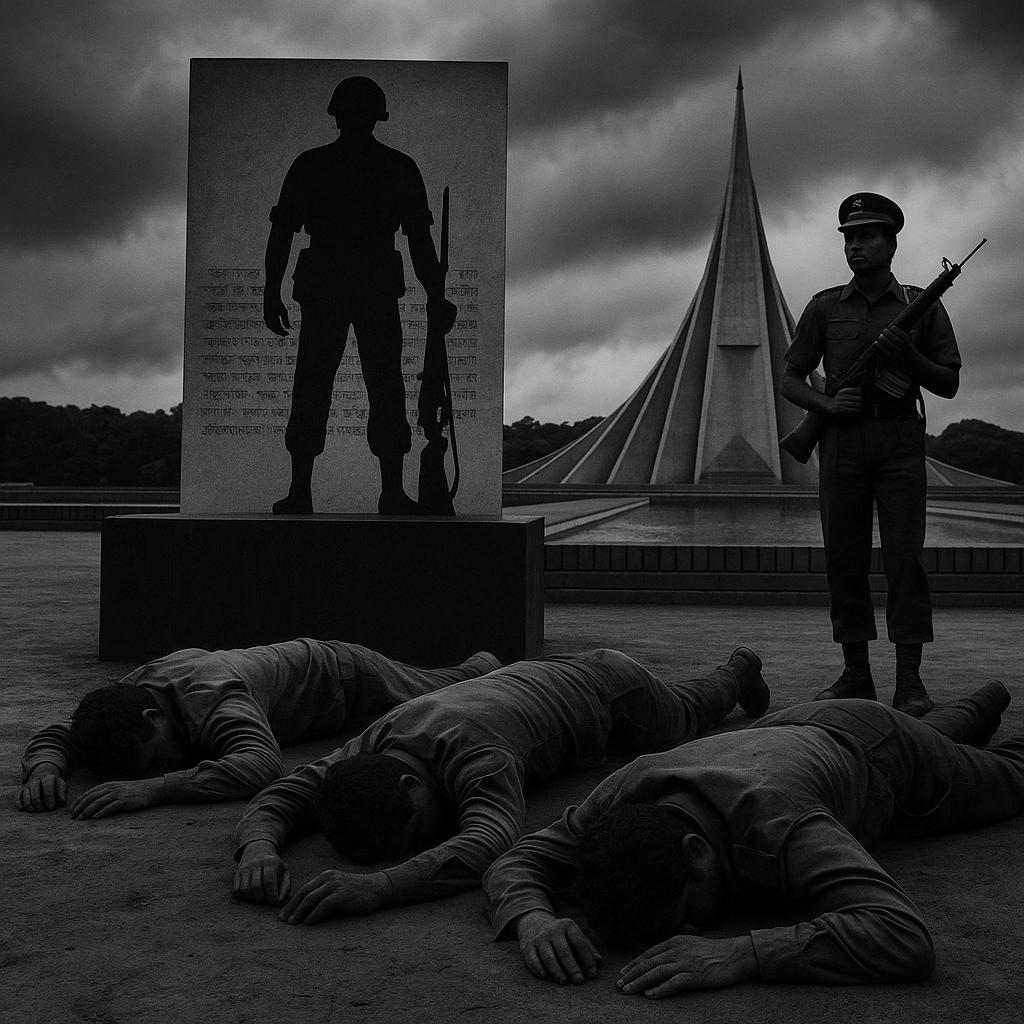
In 1977, Bangladesh faced a dark chapter in its history when many brave soldiers and patriots who had fought for the nation’s independence were persecuted under a brutal authoritarian regime. These heroes, who had sacrificed everything for freedom, became victims of political oppression, torture, and extrajudicial actions. The events of that year left deep scars on the nation’s collective memory, highlighting the dangers of unchecked power and the urgent need for truth, justice, and accountability to prevent history from repeating itself.
In 1977, Bangladesh witnessed one of the darkest episodes in its post-independence history when hundreds of soldiers and airmen were executed following a failed mutiny in the Air Force. The government, led by General Ziaur Rahman, responded to the uprising with extreme brutality, carrying out mass arrests, secret trials, and summary executions without due process. Many of those killed were veterans of the 1971 Liberation War, men who had once fought for the nation’s freedom. The tragedy of 1977 remains a painful reminder of political repression, injustice, and the erosion of democratic ideals in the early years of Bangladesh’s statehood.
The mass executions carried out in Bangladesh in 1977 under General Ziaur Rahman were seen as unfair because they were based on hasty and secret military trials without proper due process. The executions targeted soldiers and airmen suspected of involvement in a mutiny and coup attempts, but many of those executed were veterans of the 1971 Liberation War, loyal to the country. The trials were often summary in nature, with no fair legal representation, and many victims were killed without clear evidence or transparent judicial procedures. This harsh response was driven by Zia’s attempt to consolidate power and suppress dissent in a highly politicized and unstable military environment, which led to widespread accusations of political repression and injustice during this period.
The mass executions of 1977 left a deep and lasting impact on the people of Bangladesh, creating an atmosphere of fear, grief, and mistrust toward the government and military institutions. Families of the executed soldiers and airmen were devastated, often stigmatized and silenced, with many never receiving justice or even the remains of their loved ones. The brutal suppression and lack of due process eroded public confidence in the rule of law and deepened divisions within society. The events also discouraged dissent and free expression, as citizens became wary of criticizing authority. Over time, the 1977 executions came to symbolize the dangers of authoritarianism and political repression, serving as a painful reminder of how the ideals of the Liberation War—justice, democracy, and freedom—were betrayed in the early years of Bangladesh’s independence.
The tragic mass executions of 1977 in Bangladesh serve as a powerful lesson on the consequences of injustice, unchecked power, and the absence of due process. They highlight the need for accountability, transparency, and respect for human rights in governance and the military. The events underscore that stability cannot be achieved through fear or repression but through justice, dialogue, and the rule of law. Remembering 1977 reminds Bangladesh of the importance of protecting democratic values and ensuring that no individual or institution stands above justice.
The tragic mass executions of 1977 in Bangladesh serve as a powerful lesson on the consequences of injustice, unchecked power, and the absence of due process. They highlight the need for accountability, transparency, and respect for human rights in governance and the military. The events underscore that stability cannot be achieved through fear or repression but through justice, dialogue, and the rule of law. Remembering 1977 reminds Bangladesh of the importance of protecting democratic values and ensuring that no individual or institution stands above justice.
In conclusion, the mass executions of 1977 remain one of the most tragic and controversial chapters in Bangladesh’s history—an episode that exposed the perils of authoritarian rule and the suppression of justice. What began as an attempt to maintain control in a turbulent time became a symbol of state violence against its own heroes. The pain and injustice endured by the victims and their families continue to echo through generations, reminding the nation that true freedom is sustained not by fear, but by fairness, accountability, and respect for human rights. The lessons of 1977 urge Bangladesh to uphold the democratic ideals born from its Liberation War—ensuring that power is never again placed above justice, and that the sacrifices of those who built the nation are honoured through truth and integrity.
Ashu Mann is an Associate Fellow at the Centre for Land Warfare Studies. He was awarded the Vice Chief of the Army Staff Commendation card on Army Day 2025. He is pursuing a PhD from Amity University, Noida, in Defence and Strategic Studies. His research focuses include the India-China territorial dispute, great power rivalry, and Chinese foreign policy.