
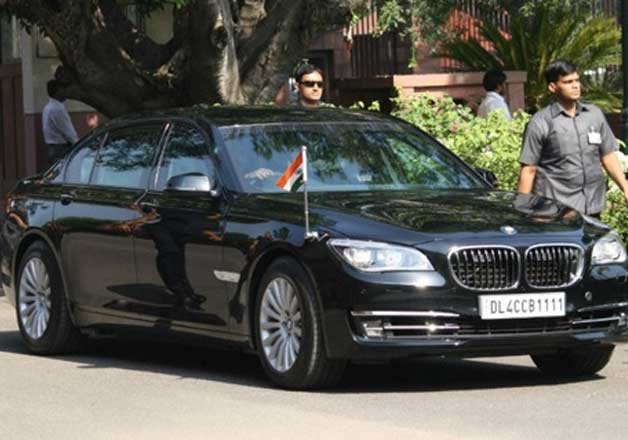
A video that surfaced recently has set off alarm bells across eyes of India’s security apparatus: vehicles belonging to the official convoy of Narendra Modi, including his bullet-proof SUV, were recorded being washed at a local public car-wash facility, raising serious questions about protocol, accountability and the integrity of VVIP protection measures.
According to reports, four black cars – identified as belonging to the Special Protection Group (SPG) detail responsible for the Prime Minister’s close security – were filmed undergoing cleaning at an ordinary car-wash outlet. One of the cars, bearing registration number “DL 2C AY 8167,” matched one seen in recent images with the Prime Minister himself inside.
This revelation has sparked a debate among security experts and observers about how such high-security assets, even PM’s convoy, ended up outside the strict supervision of the SPG, and whether this represents a vulnerability that could be exploited for intelligence gathering, tampering or worse.
What the video shows
The clip shows vehicles parked openly on a ramp and side bays of a local car-wash. One vehicle even still features a network jammer mounted atop – a piece of hardware generally reserved for secure convoy. Security norms dictate that washing, servicing and inspection of VVIP armoured vehicles are to be carried out at classified facilities guarded by SPG personnel, logged meticulously, and insulated from contact with outsiders. In this case, external individuals appear to have had direct access to the vehicles.
Why this matters
Exposure of sensitive assets – Armoured vehicles used by the Prime Minister are known to contain jammers, communication gear and hardened chassis. Exposing them to unsupervised environments increases the risk of covert surveillance device installation or physical tampering.
Protocol failure – Experts note this may signal a breakdown in the chain of custody for VVIP vehicles, where responsibility for route, cleaning and servicing is firmly defined. A deviation—whether administrative oversight or logistical lapse—can create a weakness.
Perceptions & deterrence – Even if nothing nefarious occurred, the optics of a Prime Minister’s armoured car being treated like an ordinary civilian vehicle erode perceived inviolability, which is itself a deterrent in security planning.
Accountability – Who authorised the transfer of such vehicles related to such a high-profile convoy to a public car-wash? What safeguards were bypassed? Are recordings, logs, CCTV, personnel records intact? These questions are now pressing.
Official response and next steps
At present, no detailed official comment appears to have been released by the Prime Minister’s Office (PMO) or the SPG regarding this incident, and the location of the car-wash remains unverified.
Given the seriousness of the matter, it would be reasonable to expect:
- An internal SPG inquiry to trace how vehicles of this nature left controlled zones.
- Review of logs (movement, handover, cleaning) for the suspect vehicles.
- Physical inspection and forensic examination of the vehicles to rule out any tampering.
- Revised protocols to ensure that car‐wash or cleaning of highly‐secure vehicles occurs only within SPG-controlled facilities or at vetted sites with full supervision.
Public Reaction
Social media users reacted with sharp criticism. One Redditor observed:
“These cars are an integral part of his day-to-day activities and should be strictly off-limits to anyone without authorisation. This level of recklessness is nothing but an accident waiting to happen.” While some argue that it might simply be a “routine cleaning” incident without malicious intent, many others view it as symptomatic of lax enforcement of high-security protocols.
Final Thoughts
The video of the Prime Minister’s convoy vehicles at a local public car-wash may at first glance seem benign. But in the domain of VVIP security, such “routine” actions are governed by strict standards for a reason – one minor mismatch can ripple into major vulnerabilities. This incident will test whether the SPG and other security agencies respond swiftly, transparently and impose corrective measures to restore confidence in the inviolability of India’s top leadership’s protective umbrella.