
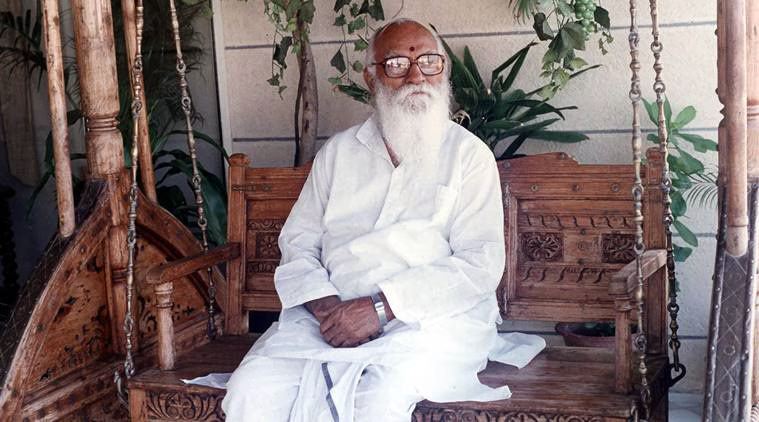
Born on October 11, 1916, Nanaji Deshmukh was one of independent India’s most revered social reformers, educationists, and nationalists whose life was a living embodiment of service, simplicity, and self-reliance. A man deeply rooted in the soil, he dedicated his entire life to transforming India’s villages into models of sustainable development and social harmony. Posthumously awarded the Bharat Ratna, the nation’s highest civilian honour, Nanaji’s contributions went far beyond politics he represented the moral force of a nation striving to rebuild itself from within. Prime Minister Narendra Modi, while paying tribute to him, remarked that “Nanaji Deshmukh’s stellar contribution towards rural development showed the way for a new paradigm of empowering those living in our villages. He personifies humility, compassion and service to the downtrodden. He is a Bharat Ratna in the truest sense.”
Early Life and Ideological Foundation
Born as Chandikadas Amritrao Deshmukh in a small town in Maharashtra, Nanaji displayed leadership and empathy even in his youth. Inspired by Dr. Keshav Baliram Hedgewar, the founder of the Rashtriya Swayamsevak Sangh (RSS), he joined the organization at the tender age of 13. The RSS, which emphasized discipline, patriotism, and character-building, shaped Nanaji’s worldview and commitment to national service. After Hedgewar’s death in 1940, many young men in Maharashtra, stirred by his ideals, joined the RSS. Among them, Nanaji stood out as a selfless volunteer who was ready to devote his entire life to the cause of Rashtra Seva (national service).
As a young pracharak in Agra, he came in close contact with Pandit Deendayal Upadhyaya, whose philosophy of Integral Humanism became the ideological cornerstone of Nanaji’s later work. Under the guidance of Guruji M.S. Golwalkar, Nanaji was assigned to expand the Bharatiya Jana Sangh in Uttar Pradesh a role that introduced him to the world of politics and organizational strategy.
The Educationist and Nation Builder
Nanaji Deshmukh believed that true national progress begins with education that instills cultural values, discipline, and self-respect. With this conviction, he established the Saraswati Shishu Mandir (SSM) in Gorakhpur in 1950 the first of what would become a vast network of schools across India. These institutions, inspired by Indian traditions, aimed at producing citizens who were morally upright and socially conscious.
He later founded the Deendayal Research Institute (DRI) at Chitrakoot, which became the epicenter of his vision for rural transformation. Under his leadership, DRI initiated several innovative projects that combined modern scientific techniques with traditional wisdom. His pioneering effort in establishing Chitrakoot Gramodaya Vishwavidyalaya India’s first rural university reflected his lifelong belief that the soul of India lives in its villages. Through this university, Nanaji sought to empower rural youth with practical skills in agriculture, cottage industries, and sustainable living.
Role in the JP Movement and Political Journey
Nanaji’s influence extended beyond education and social reform. He played a crucial role in India’s political transformation during the turbulent years of the 1970s. As General Secretary of the Lok Sangharsh Samiti, he became one of the key architects of Jayaprakash Narayan’s movement against the Emergency imposed by Prime Minister Indira Gandhi in 1975. His organizational acumen and unyielding courage inspired a generation of youth to rise against authoritarianism.
On July 29, 1975, he was arrested from South Delhi during a surprise raid a testimony to his central role in the anti-Emergency struggle. Just a month earlier, he had convened a crucial meeting of underground leaders like Subramanian Swamy, M.L. Khurana, Ravindra Verma, and Dattopant Thengadi, where he called for “Operation Takeover” a symbolic plan to reclaim India’s democracy from dictatorship.
After the Emergency, Nanaji contested and won the 1977 Lok Sabha election from Balrampur in Uttar Pradesh, securing a comfortable margin. His integrity and simplicity made him one of the most respected figures in the Janata Party government. Although Prime Minister Morarji Desai and Jayaprakash Narayan offered him a cabinet berth, Nanaji politely declined, saying he preferred to serve the people directly rather than through ministerial power.
Architect of Rural Renaissance
Disillusioned with politics, Nanaji retired in 1980 and shifted his focus entirely to rural development through the Deendayal Research Institute. He implemented alternative models of self-reliance in the villages of Gonda and Chitrakoot, covering hundreds of villages across Uttar Pradesh and Madhya Pradesh. His model emphasized five key pillars education, health, self-employment, self-governance, and values.
Nanaji believed that India’s true wealth lies in its villages and not in the urban centers. He once remarked, “India’s wealth, both in terms of people and natural resources, is in her villages.” His projects introduced new techniques in agriculture, cottage industries, and healthcare, integrating modern tools with traditional practices. Under his guidance, Chitrakoot became a self-sustained development hub where rural communities could meet their own needs without dependency on external aid.
He also played a pivotal role in the Bhoodan Movement launched by Acharya Vinoba Bhave, promoting voluntary land redistribution and equitable ownership. His reform programs covered more than 500 villages, focusing on eradicating poverty, uplifting marginalized communities, and ensuring that development was both humane and ecologically sustainable.
His Views and Relationship with the RSS
Nanaji’s lifelong association with the RSS remained a cornerstone of his identity. In a 1997 interview with India Today, he said, “If it had not been for the RSS, I would not have thought of the country and devoted my life to it. Whatever Nanaji Deshmukh is today is because of the RSS.” He often recalled how the Sangh’s discipline and moral training helped him remain grounded and fearless during political and social upheavals.
In the same interview, he also expressed his concern over India’s inaction against Pakistan’s repeated provocations, stating that “perpetual inaction against continuous attacks cannot be explained away.” His comments came in the wake of the 9/11 attacks when the U.S. had launched strikes on Afghanistan, contrasting sharply with India’s restrained response to cross-border terrorism.
When asked about his views on Hindu-Muslim relations, Nanaji emphasized that the RSS was not anti-Muslim but pro-national focused on building a society based on cultural unity, not religious division. His personal life reflected this inclusive spirit; he worked tirelessly for all sections of society, transcending barriers of caste and creed.
A Life of Service Beyond Self
Nanaji Deshmukh passed away on February 27, 2010, at Chitrakoot Gramodaya Vishwavidyalaya, the very institution that embodied his vision for self-reliant rural India. His death marked the end of an era, but his ideas continue to inspire India’s developmental discourse.Nanaji Deshmukh was not merely a reformer or politician he was a visionary who lived for India’s soul. His legacy lies in the empowerment of villages, in the revival of moral values, and in his conviction that national strength must grow from self-sufficient communities. At a time when India is pursuing Atmanirbhar Bharat, Nanaji’s philosophy resonates more than ever. His life reminds us that true progress comes not from wealth or power but from service, simplicity, and selfless love for the nation.