
















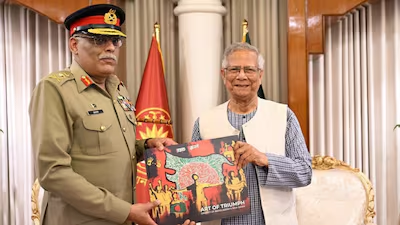
Bangladesh chief adviser Muhammad Yunus’s recent diplomatic gestures notably gifting an artwork titled “Art of Triumph” to Pakistan’s Chairman Joint Chiefs, General Sahir Shamshad Mirza have sent shockwaves in the strategic community. Intelligence sources say the painting, which reportedly depicts India’s northeastern states within an expanded Bangladeshi boundary, was not a casual diplomatic gift but a deliberate, symbolic act directed at Pakistan’s military leadership. The timing and the recipient, they argue, suggest more than art-for-art’s sake, a psy-war move that undermines trust and revisits painful memories of 1971.
Indian agencies view the episode as layered symbolism. Presented to a top general rather than a civilian envoy, the gift is read as signaling a covert alignment between Dhaka’s interim regime and elements in Rawalpindi at a moment when both capitals are accused in Indian strategic circles of recalibrating regional messaging under external influence. The depiction of the seven states India’s “Seven Sisters” inside an enlarged Bangladesh boundary has been described by those sources as a provocative attempt to sow doubt, stir old wounds and symbolically erase Pakistan’s 1971 defeat.
A Strange Convergence: Maps, Infiltration and Soft Power
The artwork controversy did not occur in isolation. Intelligence agencies point to a worrying uptick in illegal infiltrations along Tripura and Mizoram borders in the same period movements that New Delhi links to Islamist NGOs operating through Bangladeshi channels. These cross-border patterns, coupled with the gift, have increased suspicion in Delhi that a coordinated soft-power offensive is underway, culture and diplomacy used as instruments to test India’s strategic responses while stopping short of conventional escalation.
Diplomatic insiders also claim Western funding networks have quietly fuelled Dhaka’s interim administration. They allege that organisations including some Washington-based think tanks and aid agencies have worked to weaken the prior government and promoted Yunus’s rise. If true, intelligence analysts say, this would make the episode part of a larger experiment in geopolitical messaging, test the limits of what a friendly neighbouring state will accept before reacting.
A Public Pitch to China: “We Are the Guardian of the Ocean”
Compounding concerns, Yunus in April publicly invited China to establish a commercial base in Bangladesh, explicitly framing his argument around the alleged landlocked status of India’s northeastern states. In a widely circulated clip, Yunus said the seven states are “landlocked” and that Bangladesh is “the only guardian of the ocean” for the region an argument he presented as an economic opportunity for Beijing to build trade hubs and logistics links through Dhaka.
Economist Sanjeev Sanyal a member of India’s economic advisory council highlighted the oddity of Yunus’s framing on X, asking why the landlocked status of India’s northeastern states should become a public justification for Chinese economic expansion. Analysts in Delhi saw the appeal as more than economic: it is a strategic opening for deeper Chinese penetration into a region India regards as its sensitive periphery.
The General’s Facebook Post: Crossing the Line
Tensions rose further in April 2025, after retrospective social-media posts by Major General (Retd.) A.L.M. Fazlur Rahman, a former Bangladesh Army officer and a Yunus appointee. In a widely reported post, Fazlur suggested that, should India attack Pakistan, Dhaka ought to discuss joint military arrangements with China to occupy India’s seven northeastern states. Dhaka’s interim government publicly distanced itself from Fazlur’s remarks, but the damage was done: the suggestion coming from a senior retired officer with recent governmental linkage inflamed strategic anxieties in New Delhi and raised questions about the coherence of Dhaka’s official stance.
History, Help and a Reminder of 1971
For many in India, these recent moves by Dhaka are a bitter reversal of memory. India played a decisive role in Bangladesh’s birth in 1971, intervening to stop atrocities and enable the creation of an independent nation. Critics of Yunus argue that current theatrics changing maps, symbolic gifts, and public invitations to foreign powers amount to an affront to that shared history of sacrifice and solidarity.
Observers in India say Dhaka would do well to remember who stood with Bangladesh in its hour of need, rather than courted powers who once supported its oppressors. They warn that trading historical bonds for short-term geopolitical theatre is a strategic miscalculation that risks isolating Bangladesh regionally and provoking unnecessary friction with New Delhi.
Domestic politics also color the episode. Yunus leads an interim administration that has promised elections, yet critics note the delay and suggest he may be reluctant to relinquish power. Indian analysts see a danger: when an unelected interim executive seeks geopolitical visibility, it can cross red lines in pursuit of domestic legitimacy. The map-gift episode becomes a glaring example, symbolic assertions that may rally domestic audiences in Dhaka can simultaneously inflame strategic anxieties in New Delhi.
Maps on Paper Won’t Change Reality
The artwork, the public pitch to China, and the inflammatory social-media posts together form a disturbing mosaic for Indian policymakers. Shrugging these off as artistic expression or off-hand remarks would be a mistake. Even symbolic acts carry consequences when they intersect with hardened narratives, refugee flows, infiltration concerns, and great-power competition.
Changing a map on a canvas does not alter international borders. But it can shift perceptions, nudge narratives and test political resolve. If Dhaka under any administration is serious about regional stability, it should remember history, honour practical cooperation with India, and avoid theatrical postures that hand propaganda victories to adversaries. India’s northeast will remain an integral part of the Republic; attempts to redraw it on paper will not redraw the loyalties, history or strategic reality that bind it to Delhi.