
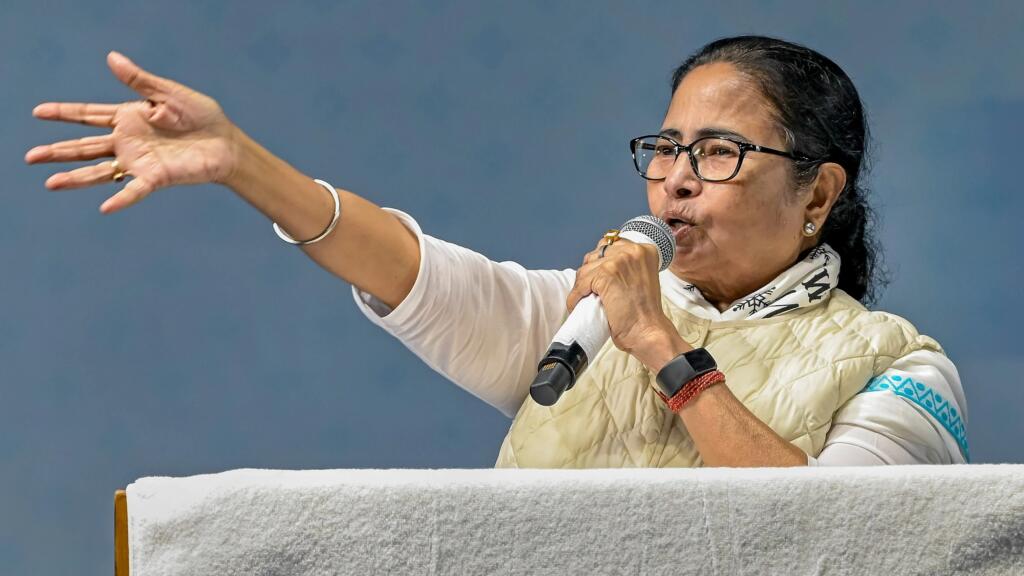
In yet another disturbing example of political insensitivity, West Bengal Chief Minister Mamata Banerjee has sparked nationwide outrage over her remarks on the Durgapur gangrape case. Instead of promising justice or accountability, Banerjee blamed the victim suggesting that college girls should avoid stepping out at night. This callous statement has triggered massive anger across Bengal, where the memory of several gruesome assaults from the RG Kar Medical College rape-murder case to the Park Street horror still haunts the public.
West Bengal’s worsening law-and-order situation, especially concerning crimes against women, has now become a question of both political responsibility and moral accountability. The Chief Minister, despite being one of the few female heads of government in India, continues to trivialise sexual crimes with remarks that blame victims rather than confront systemic failures in her administration.
Durgapur Gangrape Case: A Mirror of Failing Policing in Bengal
The latest tragedy in Durgapur exposed the shocking vulnerability of women in the state’s educational institutions. A second-year MBBS student from IQ City Medical College was brutally gang-raped in a forested area near Shobhapur on the night of October 10. According to reports, the 20-year-old woman had gone out with a friend when they were accosted by five men. Three of them Apu Bauri (21), Firdos Sekh (23), and Sekh Reajuddin (31) were later arrested, while another, Sheikh Sofiqul, remains under investigation.
Instead of standing with the survivor and assuring swift justice, Mamata Banerjee stated at the Kolkata airport, “The girls should not be allowed to go outside at night. They have to protect themselves also.” Her words, broadcast across media channels, reflected a leadership tone disturbingly out of touch with the responsibilities of a constitutional head.
Critics argue that such remarks embolden criminals, weaken public trust in the police, and force survivors into silence. The incident has also revived anger over the RG Kar Medical College rape-murder case last year, where a young trainee doctor was found dead after being sexually assaulted a case that triggered protests from medical associations and women’s groups across the country.
Pattern of Insensitivity: From Park Street to Hanskhali
This is not the first time Mamata Banerjee has made remarks that appear to trivialise crimes against women. In fact, she has a long record of dismissing such incidents as “politically motivated” or “fabricated.”
The most infamous example remains the Park Street gangrape case, where a woman named Suzette Jordan was raped in a moving car. Banerjee publicly termed it a “shajano ghotona” (concocted story) meant to malign her government. Her party leaders, including MP Kakoli Ghosh Dastidar, even questioned the victim’s character, calling the incident “a misunderstanding between a lady and her client.” It was only in 2015, when the court convicted three of the accused, that the truth emerged proving how dismissive and damaging the Chief Minister’s early comments had been.
In 2013, while addressing the Assembly on the rising number of sexual assaults, Banerjee shockingly linked the rise in rape cases to “modernisation, shopping malls, and population growth.” The same year, she accused opposition parties of “staging” rape incidents in Katwa, Burdwan to tarnish Bengal’s image — again undermining victims and shielding her administration from scrutiny.
In 2022, the Chief Minister downplayed the rape and murder of a 14-year-old girl from Hanskhali, Nadia district. The accused was the son of a Trinamool Congress panchayat member, yet Banerjee suggested the incident was simply a “love affair gone wrong.” Instead of assuring justice, she cast doubts on whether the girl had even been raped, claiming there was “no evidence” and that the victim “might have died of illness.”
The following year, in 2023, she reacted similarly to the death of a 17-year-old Dalit girl in Kaliagunj, saying it appeared to be a “suicide due to a love affair” — once again, before any investigation had concluded. Each of these statements revealed a disturbing trend: denial, dismissal, and deflection.
The Moral Erosion of Governance in Bengal
Beyond insensitivity, the larger concern is the collapse of governance in protecting women across West Bengal. From Kolkata to Durgapur, campuses that should have been safe havens for young women have instead turned into danger zones. Law and order a subject directly under the state government has consistently deteriorated.
Even more alarming is the presence of individuals linked to the ruling Trinamool Congress in several such crimes. In the Kolkata law college rape case, the accused included Monojit Mishra, a former leader of the Trinamool Congress Chhatra Parishad (TMCP). Police have charged them with gang rape and wrongful confinement. Yet, despite such direct associations, the TMC leadership has remained evasive and silent.
Rather than introspecting on the administrative failures that have allowed such crimes to multiply, Mamata Banerjee continues to frame the issue as one of women’s behaviour, suggesting that they must “protect themselves” instead of ensuring that men fear the law. This dangerous mindset not only normalises predatory behaviour but also erodes the fundamental rights of women to live freely and safely.
When a Woman Leader Fails to Protect Women
Ironically, Mamata Banerjee, who once rose to prominence as a symbol of women’s empowerment, now finds herself accused of perpetuating misogyny from within the corridors of power. Her tendency to shift blame rather than fix accountability has deeply undermined public trust in the administration.
For a state that once prided itself on its cultural and intellectual leadership, Bengal today stands as a grim reminder of what happens when political convenience overrides justice. The Chief Minister’s repeated remarks reveal not only poor governance but also a moral void in leadership.
Every time she labels a crime as “fabricated,” every time she casts doubt on a victim’s integrity, the message to society becomes clear — that women’s safety is secondary to political image management.
Time for Accountability, Not Excuses
West Bengal’s women do not need lectures on when to step out of their homes. They need a government that ensures their safety at all hours, in all spaces. Mamata Banerjee’s remarks after the Durgapur gangrape have once again exposed a mindset that excuses administrative failure by placing the burden of safety on women themselves.
In a democracy, the Chief Minister is constitutionally bound to uphold law and order, not undermine it through prejudice and denial. The people of Bengal deserve accountability not excuses, not victim-blaming, and certainly not political theatrics. If the state continues on this path of denial, the message will be clear: under Mamata Banerjee’s rule, women’s safety is not a right but a risk.