
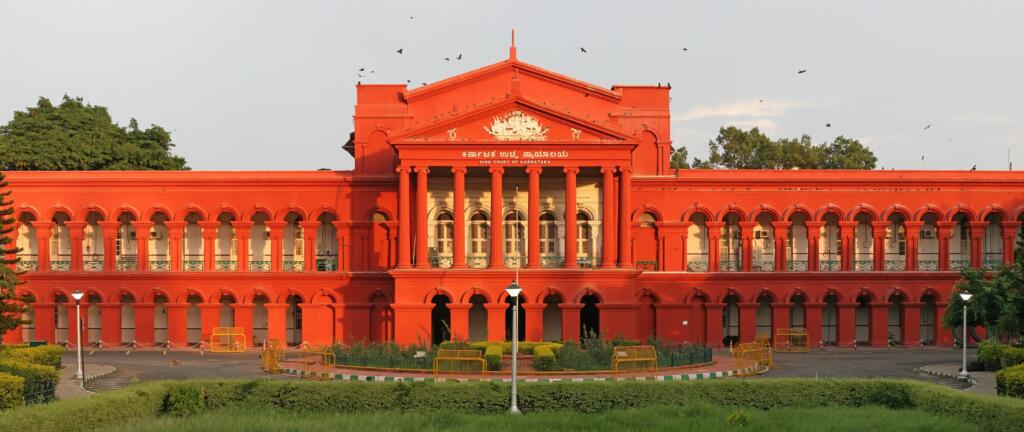
In a major embarrassment for the Congress-led Siddaramaiah government, the Dharwad Bench of the Karnataka High Court has stayed the state’s controversial order banning gatherings of more than ten people in public spaces maintained by the government. The interim relief, granted by Justice M. Nagaprasanna, comes as a strong judicial rebuke to the Congress government’s blatant attempt to curb fundamental rights and its continuing political vendetta against the Rashtriya Swayamsevak Sangh (RSS).
Court Calls Out Congress’ Assault on Constitutional Freedoms
Justice Nagaprasanna minced no words while observing that the Congress government’s October 18 order “takes away the rights conferred upon citizens under Chapter III of the Constitution.” The judge reminded the state that no executive order can override fundamental rights guaranteed by Articles 19(1)(a) and 19(1)(b) the freedom of speech and peaceful assembly. In simple terms, the High Court made it clear: Congress cannot trample democracy through administrative diktats.
The timing of the government’s order exposed its true motive. The restriction came immediately after the RSS announced route marches to mark its centenary a celebration of an organisation that has contributed immensely to nation-building and social service for a century. The move was widely seen as a politically motivated effort to suppress the Sangh and its ideology something the Congress has done repeatedly when faced with rising nationalist sentiment.
Siddaramaiah’s Hypocrisy Exposed
After the backlash, Chief Minister Siddaramaiah tried to deflect blame, claiming that his government merely “repeated” a rule introduced under a previous BJP administration. But this defence fell flat. Unlike the earlier provision under the Karnataka Police Act, the Siddaramaiah government’s order was issued through an executive directive without legislative backing and outside the scope of existing laws.
The court’s observation made that distinction crystal clear, noting that the Karnataka Police Act already regulates public gatherings and processions, and that the government has no authority to override statutory law with a political order.
The intent was evident: silence the RSS, restrict nationalist gatherings, and paint them as law-and-order threats all while turning a blind eye to the growing instances of mob violence, corruption, and lawlessness under Congress rule.
Petitioners Stand Up for Liberty, Congress Gets a Legal Lesson
The case was brought by two Hubballi-based organisations Punashcetana Seva Samsthe and We Care Foundation along with two citizens, Rajeev Malhar Patil Kulkarni and Uma Satyajit Chavan. Their argument, presented by senior advocate Ashok Haranahalli, was simple yet powerful: the order was unconstitutional and arbitrary.
Haranahalli pointed out that the government cannot restrict ordinary citizens from gathering in public parks, schools, or roads activities as innocent as laughter clubs or morning walks under the pretext of maintaining order. He stressed that these spaces belong to the people, not the ruling party.
Justice Nagaprasanna agreed, stating clearly that “fundamental rights cannot be curtailed by executive orders.” Article 13(2) of the Constitution bars the state from taking away citizens’ rights through administrative fiat a lesson the Congress government seemed to have forgotten in its haste to target the Sangh.
Congress Ministers’ Obsession with RSS Continues
The High Court’s decision has come amid a string of anti-RSS statements from Congress leaders in Karnataka. Chief Minister Siddaramaiah recently alleged that the RSS opposed Dr. B.R. Ambedkar and the Constitution a baseless attack that reflects Congress’ deep-seated insecurity about the Sangh’s growing influence among youth and intellectuals.
Meanwhile, IT/BT Minister Priyank Kharge had earlier demanded a ban on RSS activities in government schools and temples, falsely accusing the organisation of “brainwashing young minds.” Ironically, it was the RSS that played a crucial role in national integration, disaster relief, and rural development while Congress leaders remain mired in corruption and dynastic politics.
Kharge even went so far as to question BJP MP Tejasvi Surya’s contribution to Bengaluru’s IT sector a bizarre diversion from the Congress government’s own failure to attract investment or prevent industries from leaving Karnataka. Such remarks only expose how desperate the Congress has become to divert public attention from its failures.
BJP Hits Back: Congress Hiding Behind Diversion Tactics
BJP leader and former Karnataka Chief Minister Jagadish Shettar rightly called out Siddaramaiah’s anti-RSS tirade as a desperate ploy to divert attention from corruption and law-and-order failures. He said, “Because of the failure of his administration and rampant corruption, Siddaramaiah is making these statements against RSS without reason or proof.”
Under Congress rule, Karnataka has seen rising communal tensions, failing infrastructure, and deteriorating governance. Instead of fixing these issues, Congress has chosen to attack the RSS an organisation that represents patriotism, discipline, and service to society.
Congress Can’t Silence Nationalism
The High Court’s stay order is not just a legal victory; it is a moral and ideological triumph. It reaffirms that no government however arrogant or insecure can crush the constitutional freedoms of citizens. Congress’ attempt to criminalise gatherings and curb nationalist movements has backfired spectacularly.
From targeting Sanatan Dharma to now trying to stifle the RSS, the Siddaramaiah government is revealing its true anti-Hindu, anti-national mindset. The judiciary’s timely intervention has reminded Congress that India runs on the Constitution not on the whims of a government allergic to nationalism.