
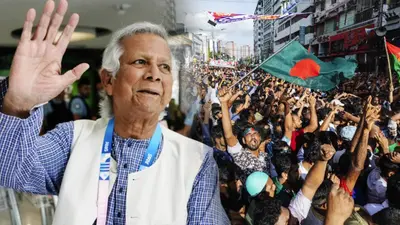
The student-led July Uprising of 2024 in Bangladesh, which toppled Sheikh Hasina’s authoritarian regime, was one of the most defining episodes in the nation’s modern history. What began as a youth-driven revolt against discrimination and state brutality became a nationwide movement that redefined Bangladesh’s political landscape. Yet, just months later, the very heroes who sparked that revolution stand neglected — betrayed by the Nobel Laureate Dr. Muhammad Yunus-led interim government and its Bangladesh Nationalist Party (BNP) allies, who now enjoy the fruits of their struggle.
From Protest to Revolution
The uprising began on 1 July 2024, when students took to the streets to oppose discriminatory quota reforms in public-sector jobs. Their call for justice rapidly gained momentum, with campuses and cities erupting in solidarity. As demonstrations spread, police and Awami League loyalists responded with deadly force — firing live rounds, lobbing tear gas, and unleashing brutal assaults to suppress dissent.
Undeterred, students, activists, and citizens stood their ground. Their defiance transformed a protest into a revolution. Public outrage swelled until the Hasina government collapsed, paving the way for an interim administration under Dr. Yunus, supported by the BNP. For many, this seemed like the dawn of a new Bangladesh. But for those who fought and bled for it, the promise quickly turned hollow.
A Heavy Price Paid in Blood
The scale of suffering during the uprising was immense. According to an August 2024 Health Ministry report, corroborated by independent monitors:
631 people were killed between 15 July and 5 August 2024.
Of these, over 450 died instantly, while 181 succumbed later to their injuries.
19,200 people were injured — 16,000 in government hospitals and 3,000 in private facilities.
Dhaka alone accounted for 477 deaths and more than 11,000 injuries, followed by Chattogram and Khulna.
3,048 required surgeries, and 525 were permanently disabled.
Over 400 lost their eyesight due to gunfire and explosions.
Many survivors face lifelong disabilities, unemployment, and trauma. Countless others went unrecorded as families hid victims’ identities out of fear. The social and financial toll remains incalculable.
Revolution Hijacked
The uprising’s moral and political gains have been systematically co-opted. Dr. Yunus and BNP leaders quickly assumed power, invoking the revolution’s ideals while marginalising the very people who made it possible. Promised reforms and compensation schemes remain unfulfilled.
The interim government has offered no comprehensive welfare or rehabilitation programmes for victims or families. Instead, political elites have consolidated control, diverting resources to entrench their position. What was once a people’s movement for justice has been appropriated by the powerful, leaving the grassroots fighters disenfranchised.
Forgotten Heroes, Broken Families
Across Bangladesh, the families of slain and injured protestors live in quiet despair.
Thousands of students and youth remain jobless, their education disrupted.
Families face food insecurity and lack access to medical care.
Government requests for aid go unanswered, and only limited NGO support — notably from the July Shaheed Smriti Foundation — has reached a fraction of the victims.
Disputes over compensation and bureaucratic delays have deepened their suffering.
For those who risked everything for change, daily survival has replaced the dream of a just and democratic Bangladesh.
Lavish Power, Stark Neglect
While the uprising’s fighters struggle to eat, the new ruling class lives in luxury. Reports have surfaced of extravagant spending by senior BNP figures and Yunus-era officials, enjoying privileges far removed from the hardship of ordinary citizens. This gross misuse of public funds, juxtaposed against the deprivation of those who secured their rise, underscores the moral decay of Bangladesh’s new establishment.
A Betrayal Etched in History
The abandonment of July’s revolutionaries is not merely a political failure — it is a national disgrace. Those who toppled tyranny now languish in poverty, while those who claim their victory build careers and legacies on their sacrifice.
Dr. Yunus and his BNP partners owe Bangladesh’s people more than rhetoric. They owe justice, recognition, and care. The government must act decisively — providing financial relief, healthcare, education grants, and rehabilitation — to honour those who gave everything for freedom.
Until that happens, the July Uprising will remain a story not of liberation, but of betrayal.