
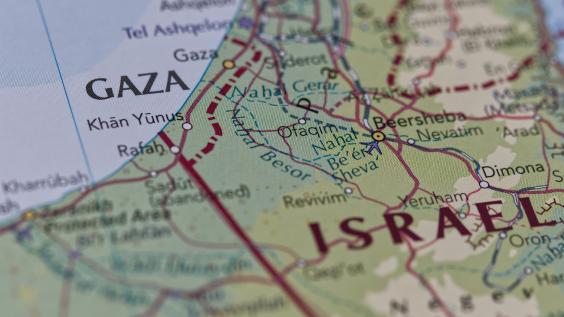
After two years of relentless warfare that reduced Gaza to rubble and displaced millions, the world finally witnessed a moment of cautious optimism on October 8. U.S. President Donald Trump dramatically announced that Israel and Hamas had agreed on the first phase of a ceasefire deal following marathon indirect talks in Egypt. “This is a great day for the world,” Trump told Reuters, moments after both parties accepted the first step of his Gaza peace plan. Across Israel, Palestine, and beyond, the announcement sparked scenes of jubilation families of hostages cried tears of relief, while residents of Khan Younis celebrated in the streets. Yet, behind the global euphoria, difficult questions loom. Will this truly end the bloodshed? Who will govern Gaza when the guns fall silent?
Inside the Sharm el-Sheikh Negotiations
The breakthrough came after three tense days of talks in the Egyptian resort town of Sharm el-Sheikh, attended by representatives from Hamas, Israel, the United States, Egypt, Qatar, and Turkey. Negotiators reportedly worked around the clock, drafting and revising terms of a phased peace plan that Trump has personally championed for months.
According to officials familiar with the deliberations, the agreement includes a major hostage-prisoner exchange. Hamas has pledged to release 20 living hostages in exchange for 2,000 Palestinian prisoners, including 250 serving life sentences. Israel, in turn, will undertake “specific troop withdrawals” from designated zones in Gaza, synchronized with the release process.
Additionally, the agreement mandates the entry of at least 400 trucks of humanitarian aid per day into Gaza during the first five days of the truce, with the number increasing in subsequent phases. The deal also guarantees the return of displaced persons from southern Gaza back to Gaza City and the north a vital step given the near-total depopulation of the region since late 2023.
Trump’s dramatic announcement followed a cinematic moment at the White House when Secretary of State Marco Rubio interrupted a televised meeting to hand him a note confirming that a deal was imminent. Moments later, Trump posted on his Truth Social handle: “Blessed are the peacemakers!” signaling to the world that the first step toward ending the Gaza war was finally in motion.
Israel, Hamas, and the Road to Implementation
Soon after the U.S. announcement, Israeli Prime Minister Benjamin Netanyahu expressed guarded optimism. “With God’s help, we will bring them all home,” he said, referring to the hostages still held in Gaza. The agreement has now been sent to Israel’s Cabinet for ratification, a formality expected to take less than 24 hours. Once approved, Israeli forces will begin withdrawing from pre-determined zones in Gaza, while Hamas will have 72 hours to release the hostages as per the terms of the first phase.
Speaking to Fox News, Trump revealed that the U.S. would “help rebuild Gaza and ensure it stays peaceful.” He emphasized that the hostages were “deep underground” in Hamas tunnels but expressed confidence they would be released “by Monday.” The Israel Defense Forces (IDF) have meanwhile been instructed to maintain “strong defensive readiness” on all fronts, preparing for any possible retaliation or breach of trust during the truce’s early hours.
Despite the optimism, military analysts warn that a fragile truce does not automatically mean an end to the war. “We have seen ceasefires before what matters now is sustained implementation and enforcement,” said an Israeli defense expert, hinting at skepticism within military circles.
The Larger Questions: Governance, Trust, and Future of Hamas
While the deal marks a turning point, it leaves major questions unanswered. Chief among them is the future governance of Gaza. Neither Israel nor Western nations are willing to allow Hamas to retain political control, even if it remains militarily weakened. The Trump administration’s peace framework reportedly envisions an “interim administration” possibly supervised by a joint Arab coalition to manage Gaza’s reconstruction and governance once hostilities end.
For Hamas, the ceasefire presents both relief and risk. The group’s statement after the deal confirmed its commitment to Palestinian “national rights” but made no mention of disarmament or political compromise. “We affirm that the sacrifices of our people will not be in vain,” it declared, suggesting Hamas intends to frame the deal as a strategic victory, not surrender.
Meanwhile, Israel’s far-right coalition faces internal pressure from hardliners who oppose prisoner releases. Netanyahu’s government must balance domestic politics with international diplomacy particularly Trump’s expectations, which are tied to his promise of delivering peace in “major global conflicts.”
Global Reactions and India’s Response
Across the world, the announcement drew a collective sigh of relief. Global leaders, including Indian Prime Minister Narendra Modi, welcomed the ceasefire as a step toward lasting peace. “We welcome the agreement on the first phase of President Trump’s peace plan. This is also a reflection of the strong leadership of PM Netanyahu,” Modi said in an X post.
Trump’s announcement also reverberated through Western capitals. European leaders praised the development as “historic,” while the United Nations called it “a vital humanitarian breakthrough.”
A Fragile Peace, A Long Road Ahead
The Gaza ceasefire deal the first tangible outcome of Trump’s ambitious peace plan has given the world a rare glimpse of hope after two years of despair. If fully implemented, it could lead to the release of remaining hostages, large-scale reconstruction of Gaza, and possibly a blueprint for long-term regional stability.
Yet, the challenges remain immense. Deep mistrust, political fragmentation, and the absence of a clear post-war administration could still derail the process. The world has seen many “historic” peace deals crumble under the weight of old grievances and new provocations.
As celebrations continue in Gaza and Tel Aviv, the real test begins now turning a fragile ceasefire into a sustainable peace. Whether Trump’s “great day for the world” truly marks the dawn of a new era or just another pause in an endless conflict will depend on what follows next week, not what was signed this Wednesday.