
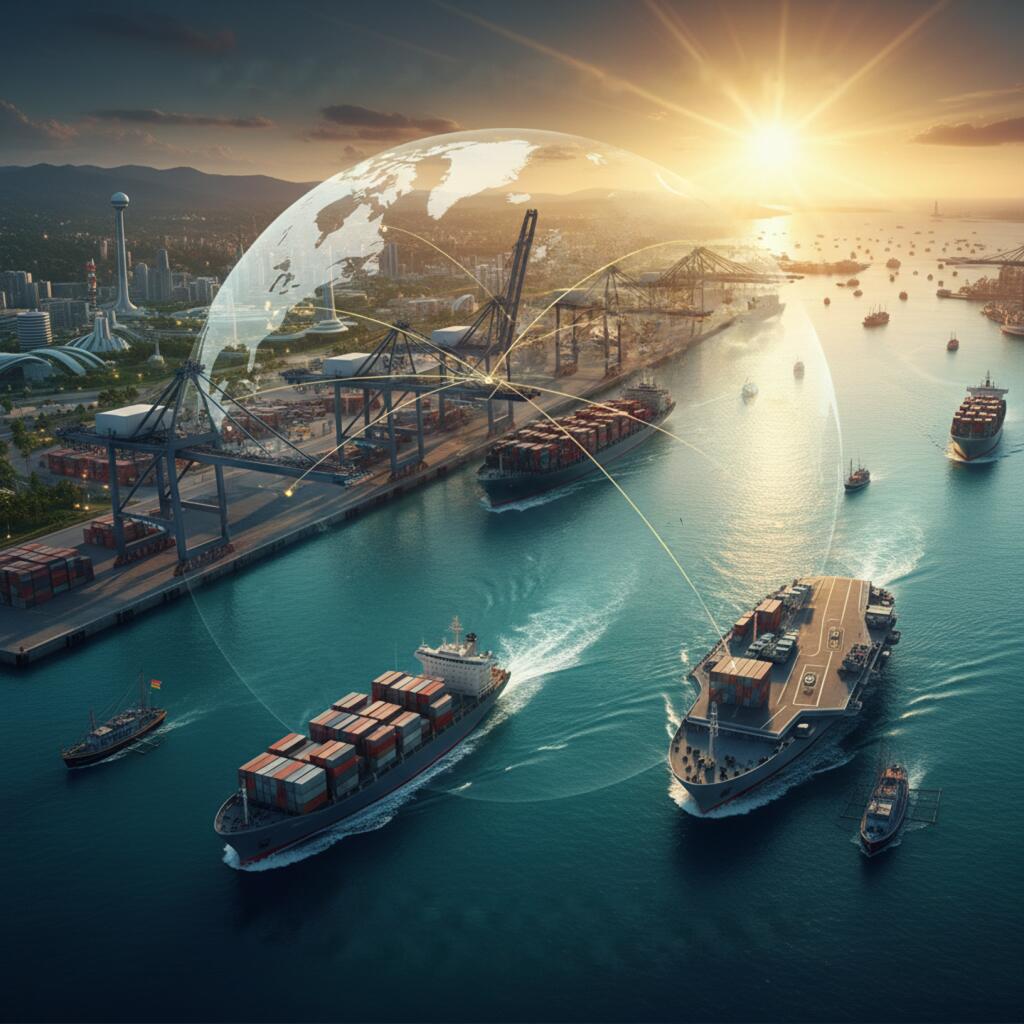
India is scripting a new chapter of maritime resurgence — a story that connects ancient seafaring glory with modern innovation, sustainability, and global leadership. The recently held Maritime Leaders Conclave in Mumbai, part of India Maritime Week 2025, symbolized this transformation. In Mumbai — a city whose maritime legacy dates back to Chhatrapati Shivaji Maharaj and whose ports now anchor the nation’s global trade — industry leaders, policymakers, and visionaries gathered to reflect on how far India’s maritime sector has come and how far it can go.
Rediscovering a Proud Maritime Legacy
For centuries, India was a formidable maritime power. The Cholas dominated Southeast Asian trade routes, while the Maratha Navy under Shivaji Maharaj asserted sovereignty along the western coast. Indian shipyards once built some of the world’s finest vessels, and coastal trade sustained vast economic networks. Yet, over time, this deep connection with the sea weakened. Outdated laws, inefficient ports, and a lack of strategic vision left India adrift in global maritime affairs.
That narrative has decisively changed over the past decade. With a renewed focus on infrastructure, reform, and public-private partnership, India’s maritime sector has been revitalized — transforming from a lagging domain into a beacon of efficiency, sustainability, and growth.
Maritime Growth That Redefined Scale
The numbers tell a remarkable story. India’s total port capacity has nearly doubled — from 1,400 to 2,762 million metric tonnes per annum (MMTPA). Cargo handling has surged from 972 million metric tonnes to 1,594 million metric tonnes, including 855 MMT in FY 2024–25.
Efficiency has been at the heart of this transformation. Vessel turnaround time has dropped from 93 hours to just 48 hours, while the net surplus of major ports has multiplied ninefold, from ₹1,026 crore to ₹9,352 crore. The operating ratio — a key measure of cost efficiency — has improved from 73% to 43%, reflecting a sharp rise in productivity and profitability.
At the core of this success are India’s skilled seafarers — the human anchors of this maritime revival. Their numbers have grown from 1.25 lakh to over 3 lakh, making up 12% of the global seafaring workforce and placing India among the top three suppliers of trained seafarers worldwide.
Blue Waters as Engines of Growth
The scope of India’s maritime renaissance extends beyond its coasts. The number of Indian-flagged vessels has increased from 1,205 to 1,549, with fleet gross tonnage expanding to 13.52 MGT. Coastal shipping cargo has nearly doubled, while inland waterway cargo has grown an astonishing 710%, from 18 MMT in 2014 to 146 MMT in 2025.
Once limited to three operational waterways, India now has 32, with ferry and Ro-Pax services carrying 7.5 crore passengers annually. These developments are not only transforming logistics efficiency but also driving regional economic integration and green mobility.
Modern Ports, Sustainable Future
India’s maritime future is being built on sustainability and innovation. The Vizhinjam Port has emerged as the country’s first deep-water transshipment hub, capable of handling the world’s largest container ships. Kandla Port has pioneered the nation’s first green hydrogen facility, while JNPT has doubled its capacity and attracted the largest foreign direct investment (FDI) in India’s port history.
The upcoming Vadhvan Port in Maharashtra, with an investment of ₹76,000 crore, exemplifies India’s ambition. With a 20-meter draft and seamless multimodal connectivity, it is poised to become one of the world’s most advanced deep-sea ports — reshaping trade dynamics along the Western coast and creating vast opportunities in logistics, warehousing, and manufacturing.
Reform, Perform, Transform
The government’s “Reform, Perform, Transform” mantra has guided the sector’s evolution. Landmark legislations — including the Indian Ports Bill 2025 and Bills of Lading Bill — have modernized maritime governance, simplified trade, and empowered coastal states. A ₹70,000 crore umbrella package is now fueling further modernization through schemes like the Shipbuilding Assistance Scheme and Maritime Development Fund, expected to attract ₹4.5 lakh crore in investments and produce over 2,500 vessels in the coming decade.
A Global Call to Anchor in India
With a 7,500-kilometer coastline, strategic positioning along global trade routes, and a fast-evolving blue economy, India is emerging as the maritime hub of the 21st century. The message from Mumbai is clear — India is open for maritime investment, innovation, and partnership.
In rediscovering its maritime soul, India has not just revived a sector — it has rekindled an ancient spirit of exploration, enterprise, and excellence. The tide has turned, and the world is watching India sail confidently toward its maritime destiny.