
















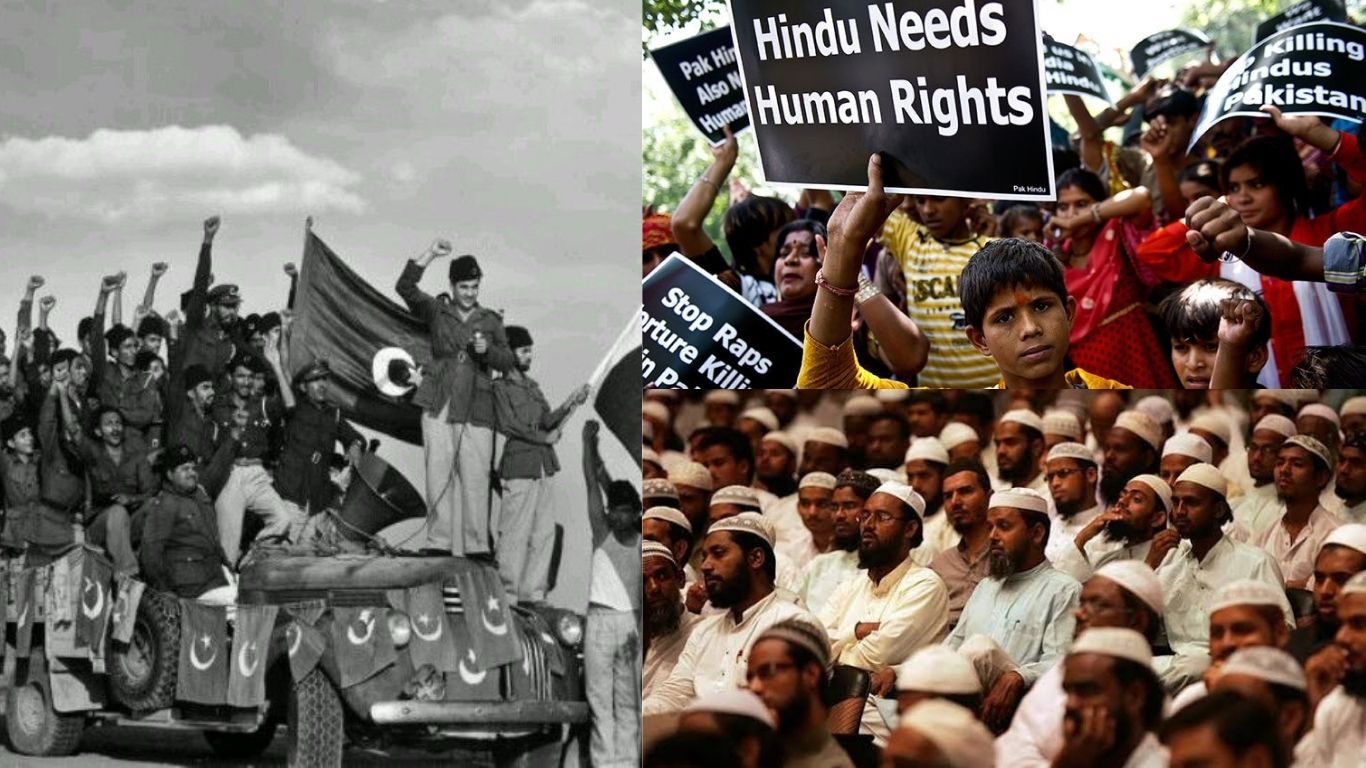
When India’s Permanent Representative to the UNSC, Ambassador Parvathaneni Harish, declared that Pakistan conducts “systematic genocide,” it wasn’t just diplomatic rhetoric it was a long-overdue truth spoken on the world’s most powerful stage. For decades, Hindus in Pakistan have been subjected to abductions, rapes, murders, and forced conversions while global institutions like the UN and Western human rights watchdogs remain criminally silent. Why does the world, which rushes to condemn India over fabricated narratives, look away when a Hindu child in Sindh is kidnapped or a temple is demolished in Karachi? Is selective outrage now the new face of global morality?
India Calls Out Pakistan’s Hypocrisy
During the UN Security Council’s Open Debate on Women, Peace, and Security, Ambassador Parvathaneni Harish dismantled Pakistan’s propaganda piece by piece. Responding to Pakistan’s baseless allegations of “sexual violence” against Kashmiri women, Harish reminded the world that Pakistan’s record on human rights is drenched in blood. “A country that bombs its own people, conducts systematic genocide, can only attempt to distract the world with misdirection and hyperbole,” he said.
Harish recalled the 1971 Operation Searchlight, where Pakistan’s military unleashed a genocidal campaign in then East Pakistan (now Bangladesh), killing over three million Bengalis and raping more than 400,000 women its own citizens. “The world sees through Pakistan’s propaganda,” Harish asserted, emphasizing that Islamabad’s moral bankruptcy is evident in its history and its treatment of minorities today.
Hindu Population in Pakistan: From 23% to 3%
At the time of Partition in 1947, Hindus made up nearly 23 percent of Pakistan’s population. Today, they have dwindled to less than 3 percent, with an estimated 2.2 million Hindus remaining a stark reminder of systematic ethnic cleansing masked under religious intolerance. The vanishing numbers tell a grim story of targeted persecution, mass migration, and forced conversion.
According to a Hudson Institute paper by Farahnaz Ispahani, former aide to Benazir Bhutto, Pakistan has deliberately engineered the exodus of Hindus through “a steady barrage of kidnappings, conversions, and killings.” Many Hindus, unable to bear the trauma, have fled to India seeking asylum. Yet, the global media so vocal about minority issues in India rarely acknowledges this genocide next door.
Temples in Ruins, Faith Under Siege
From over 300 Hindu temples in 1947, only about 20 remain in Pakistan today most in dilapidated condition or encroached upon by radical groups. The recent wave of temple demolitions across Sindh and Balochistan highlights the institutional nature of this religious persecution. The Pakistani state machinery, often working hand in glove with extremist clerics, turns a blind eye or even aids these acts of destruction.
Temples in Karachi, Hyderabad, and Rahim Yar Khan have been razed under false claims of “illegal construction,” while ancient idols of deities are desecrated in broad daylight. Yet, no international human rights body or Islamic nation utters a word in condemnation. The silence is not ignorance it is complicity.
The Horror of Forced Conversions and Abductions
The Asian Human Rights Watch estimates that 20 to 25 Hindu girls are abducted and forcibly converted every month in Sindh alone. These girls some as young as 12 are kidnapped, raped, and coerced into marriages with their captors. Their parents, too poor to fight the legal machinery, are silenced under threats.
One infamous case is that of Rinkel Kumari, abducted with the help of a ruling-party lawmaker and forced to convert and marry her kidnapper. Such cases rarely make it to trial, and when they do, Pakistani courts often validate the conversions under “free will,” despite overwhelming evidence of coercion.
A report by the Centre for Integrated and Holistic Studies (CIHS) states that over 1,000 forced conversions occurred in Sindh in 2018 alone. Between 2013 and 2020, 162 cases were documented, 88 of which involved Hindu girls. These numbers represent only a fraction of the reality many cases go unreported due to fear of retaliation.
Mass Killings and Cover-Ups
Beyond forced conversions, the scale of violence against Hindus in Pakistan is horrifying. A 2020 report from DIG Sindh (Mirpurkhas Division) revealed over 200 bodies of Hindu men, women, and children found hanging or brutally tortured victims of mass killings linked to failed conversion attempts. These deaths were quietly buried under the official narrative of “suicides,” a grotesque attempt to whitewash genocide.
Even the Human Rights Commission of Pakistan (HRCP), despite its limited freedom, has recorded alarming trends. Its 2022 report confirmed that Hindus “neither enjoy religious freedom nor the right to live with dignity.” Yet, even these watered-down findings fail to capture the full extent of atrocities because in Pakistan, truth itself is a crime.
Pakistan’s Anti-Hindu Ideology Rooted in Its History
The hostility against Hindus is not incidental it is foundational. Pakistan’s first law minister, Jogendra Nath Mandal, himself a Hindu, fled to India in 1950 after realizing that minorities had no place in the Islamic republic he helped create.
Former Pakistani president Ayub Khan, in his writings, equated “Hinduism and communism as twin threats to Islam.” His ideological successors institutionalized these prejudices into Pakistan’s education system, media, and governance. Textbooks glorify invaders like Ghaznavi and Aurangzeb while portraying Hindus as eternal enemies. Over decades, this poisonous narrative has justified the persecution of minorities as a patriotic duty.
The CIHS report further shows that between 2013 and 2020, over half of all documented forced conversions occurred in Punjab and Sindh, with minor girls forming 46 percent of the victims. The state’s unwillingness to reform its laws or punish the perpetrators underscores its tacit endorsement of these crimes.
The World’s Selective Blindness to Hindu Suffering
India’s voice at the UN has finally pierced a wall of silence that the world maintained for decades. While global organizations issue statements over imagined Islamophobia in India, they ignore the real genocide of Hindus in Pakistan. Every temple razed, every child abducted, and every family fleeing across the border tells a story of a state-built system of extermination.
Ambassador Parvathaneni Harish’s statement is not just a diplomatic rebuttal it is a moral call to action. Pakistan’s crimes against Hindus are no less heinous than any genocide in modern history. The global community’s refusal to acknowledge it exposes a dangerous hypocrisy that must end.
The question remains How many more Hindu daughters must vanish before the world finally opens its eyes to Pakistan’s systematic genocide? Silence, after all, is not neutrality it is complicity.