




















Chhath Puja, one of the most ancient and spiritually profound festivals of Sanatan Dharma, will be celebrated this year from October 25 to 28, 2025. Observed with great devotion in Bihar, Jharkhand, Uttar Pradesh, and Nepal’s Tarai region, the festival pays homage to Lord Surya (the Sun God) and Chhathi Maiya, symbolising purity, discipline, and gratitude toward nature. Unlike other festivals that rely on grand decorations, Chhath Puja is marked by austere fasting, sunrise and sunset prayers, and complete surrender to divine energy. It is a reminder of India’s eternal connection between humanity, nature, and spirituality a tradition untouched by modern distortions.
The festival transcends regional boundaries, bringing together millions of devotees who fast rigorously and stand in rivers offering ‘arghya’ to the rising and setting sun. Through songs, rituals, and faith, Chhath Puja represents the core values of Sanatan Dharma devotion (bhakti), discipline (tap), and gratitude (kruta gnyata).
King Priyavrata and the Blessings of Chhathi Maiya
The earliest mention of Chhath Puja appears in the Puranas, linked to King Priyavrata, the son of the first Manu. Despite being a noble and just ruler, he was burdened by sorrow as he and his queen, Malini, were childless. A sage advised them to perform a sacred yajna to be blessed with a child. Though the ritual was performed, the queen gave birth to a stillborn baby.
In his grief, King Priyavrata decided to end his life, but divine mercy intervened. A celestial goddess appeared she was Devasena, daughter of Lord Brahma, and the protector of children. She is worshipped today as Chhathi Maiya. With her divine touch, the lifeless infant came to life. Overwhelmed, the king promised to establish her worship across the land. Since that day, Chhathi Maiya has been revered as the goddess who protects children and blesses childless couples. Every offering made during Chhath Puja is a continuation of that divine promise to honour the goddess who brings hope and life.
From Karna to Lord Rama: Faith and Devotion
Among the many legends tied to Chhath Puja, the story of Karna, the heroic son of Surya Dev and Kunti, holds immense importance. A warrior known for his courage and generosity, Karna was also a devoted worshipper of the Sun God. He would stand waist-deep in water and offer arghya daily, a ritual symbolising humility and surrender. This ancient act of devotion is seen as the origin of the Chhath ritual still observed by millions today.
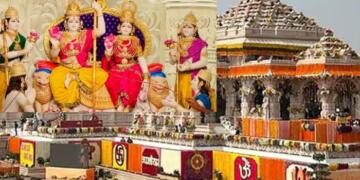
The Ramayana too echoes the sanctity of Chhath. Upon returning to Ayodhya after 14 years of exile and the victory over Ravana, Lord Rama and Goddess Sita observed a fast and offered prayers to the Sun God and Chhathi Maiya. They sought blessings for peace and prosperity in their kingdom a tradition that later spread across North India. The act of offering gratitude to the Sun after success symbolises humility before divine forces a timeless message that power and victory must be tempered with faith and gratitude.
Draupadi’s Devotion and the Sages’ Path of Enlightenment
The Mahabharata also records Chhath Puja as part of Draupadi’s deep faith. During their exile, Draupadi and the Pandavas, guided by sage Dhaumya, performed Chhath rituals and fasted to please Surya Dev. Through this austerity, she sought blessings for the return of their lost kingdom. Her devotion was rewarded the Pandavas regained their throne. This story reinforces the belief that Chhath Puja brings strength, fulfilment, and divine intervention in times of adversity.
In ancient times, sages and priests performed these rituals as a spiritual discipline. Standing in rivers, meditating under the sun, and observing fasts, they sought purification of mind and body. These practices, rooted in Vedic Sanatan tradition, eventually evolved into the public festival we know today a living bridge between Vedic wisdom and household devotion.
Chhathi Maiya: The Divine Sister of the Sun God
In Vedic texts, Chhathi Maiya, also known as Usha or Devasena, is described as the sister of Lord Surya. While Surya represents cosmic energy and light, Chhathi Maiya embodies nurturing protection, fertility, and longevity. She guards children and grants prosperity to families. Her worship during Chhath Puja highlights the balance between energy and compassion, light and life, which defines Sanatan philosophy.
Chhath Puja is far more than a festival; it is a living testament to India’s Vedic roots celebrating nature, discipline, and divine gratitude. Each chant, each diya floating on river waters, reflects centuries of unbroken faith. In an era where the world struggles to reconnect with nature, Chhath Puja stands as a glowing reminder of the Sanatan vision that the divine exists within the sun, the rivers, the earth, and within every act of human devotion.
In 2025, as devotees gather along riverbanks, fasting and singing traditional songs at dawn and dusk, they will once again reaffirm the eternal truth that faith transcends time, and the light of Surya Dev and blessings of Chhathi Maiya will forever guide Bharat’s spiritual journey.
Chhath Puja 2025 will not just be a festival of rituals it will be a reaffirmation of dharma, purity, and the timeless bond between humanity and the cosmos.