
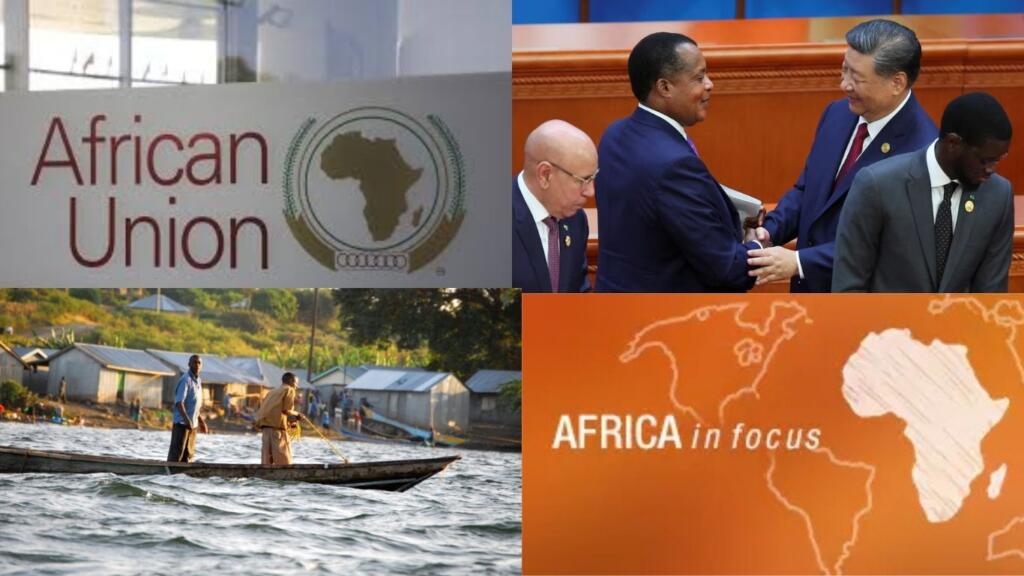
The Horn of Africa, once synonymous with concerted international anti-piracy action and pan-African coordination, now finds itself at a perilous crossroads. The recent bilateral security pact between Pakistan and Somalia, inked in August 2025, is emblematic of a new trend: African coastal security increasingly shaped by deals that consciously bypass the collective frameworks of the African Union (AU) and the Intergovernmental Authority on Development (IGAD). This shift threatens not only Africa’s ambitious agenda for regional maritime governance but also undermines continental agency, echoing the troubling legacies of colonial patronage and divide-and-rule tactics.
Fractured Unity: Bypassing the AU and IGAD
The five-year Pakistan-Somalia pact grants Islamabad extensive influence in the training, equipping, and operational management of Somalia’s navy, supplementing Turkey’s established military presence. Unlike earlier initiatives rooted in regional coordination—such as the EU’s Operation Atalanta, Indian Navy patrols, and Combined Maritime Forces (CMF) operations—these deals exclude key African forums and their mandates. Such exclusion not only fragments command chains and intelligence sharing but risks introducing opaque, dual-track security arrangements in a maritime zone vital for global trade and security.
The AU and IGAD have long championed joint infrastructure for maritime safety and governance. The African Union’s Durban Resolution on Maritime Safety explicitly “reaffirms…the fundamental leadership, coordination, harmonisation…role of the African Union Commission in the building of infrastructure for Africa’s economic development.” Crucially, it also calls for “regional and sub-regional coordination and monitoring of maritime activities” as the only viable route to lasting stability, and explicitly urges “member states to work together for the ratification and implementation of various international instruments relating to maritime safety, security…and to promote and support regional and sub-regional coordination”.
IGAD’s Integrated Maritime Strategy (IMS) likewise mandates that security challenges and opportunities “be addressed regionally,” anchoring all reform in a cross-sectoral framework validated by the bloc’s member states. Both institutions, drawing lessons from Africa’s colonial past, reject piecemeal bilateralism in favour of robust, homegrown, and representative governance.
Repeating Colonial Patterns: Patronage over Partnership
By sidestepping regional mechanisms, bilateral pacts return the continent’s maritime governance to a familiar but pernicious template: outside powers competing for local adherence while driving wedges into already fragile institutions. As the AU’s 2009 Resolution warns, “the dumping of toxic waste along African coast and hazards health-related marine pollution incidents” are not simply environmental issues but symptoms of external actors exploiting weak national stewardship to advance their interests.
The current moment closely mirrors the colonial era, when European powers, coveting influence and resources, shunned African political collectives in favour of direct relationships with malleable local authorities—a pattern that bequeathed instability, dependency and chronic underdevelopment. In bypassing AU and IGAD oversight, the Pakistan-Somalia pact, effectively facilitated by Beijing via Islamabad, replicates what can be aptly described as “strategic subcontracting”: Beijing secures indirect access to Africa’s maritime theatre, all while avoiding international scrutiny of a formal PLA presence. This proxy arrangement divides African institutions, blurs accountability, and diverts Somalia from true regional integration to dependency-driven, externally imposed security frameworks.
Testimonies from African maritime resolutions reinforce this critique. The 2022 AU Peace and Security Council communiqué on the Gulf of Guinea “reaffirmed the commitment to ensure full cooperation and coordination—at the national, regional and continental levels—consistent with African leadership and autonomy.” It lamented that “fragmentation and parallel structures dilute collective capability… and diminish Africa’s voice on oceanic security matters.”
China’s Hidden Hand and the Dismantling of Africa’s Agency
The strategic logic for China is transparent. By acting through Islamabad and Ankara, Beijing cements multi-layered access to the western rim of the Indo-Pacific, the Gulf of Aden and the exit routes to the Suez Canal. With each bilateral pact, Beijing’s influence grows while Africa’s collective voice is progressively weakened. Such a model, favouring loyal proxies over empowered partners, discards the AU’s vision of the “Blue Economy” and undermines initiatives to institutionalise “Africa’s Day of the Seas and Oceans” as a grand expression of continental stewardship.
These arrangements persist despite well-documented successes of African-led and internationally-aligned efforts in combating piracy and strengthening institutional capacity in Somalia. Recent International Maritime Organisation (IMO) workshops, held under the aegis of the EU-funded Red Sea Programme and in partnership with AU, IGAD, and UNODC, have produced practical templates for consolidated, nationally anchored, and regionally coordinated maritime governance. The new bilateral initiatives, by circumventing such structures, threaten to erode progress painstakingly built over the past decade.
Conclusion
The Pakistan-Somalia deal is more than a technical agreement; it is a stark warning. Its structure, intent, and backers challenge the very essence of Africa’s quest for maritime sovereignty, continental consensus, and strategic autonomy. For New Delhi and its partners who value a rules-based regional order, the lesson is clear: genuine multilateral engagement and African leadership, not transactional patronage, must guide future maritime security in Africa. Anything less risks trapping the continent in a dangerous cycle of competitive dependency—where Africa’s maritime voice is not merely marginalised but drowned out entirely.
(Ashu Mann is an Associate Fellow at the Centre for Land Warfare Studies. He was awarded the Vice Chief of the Army Staff Commendation card on Army Day 2025. He is pursuing a PhD from Amity University, Noida, in Defence and Strategic Studies. His research focuses include the India-China territorial dispute, great power rivalry, and Chinese foreign policy.