


















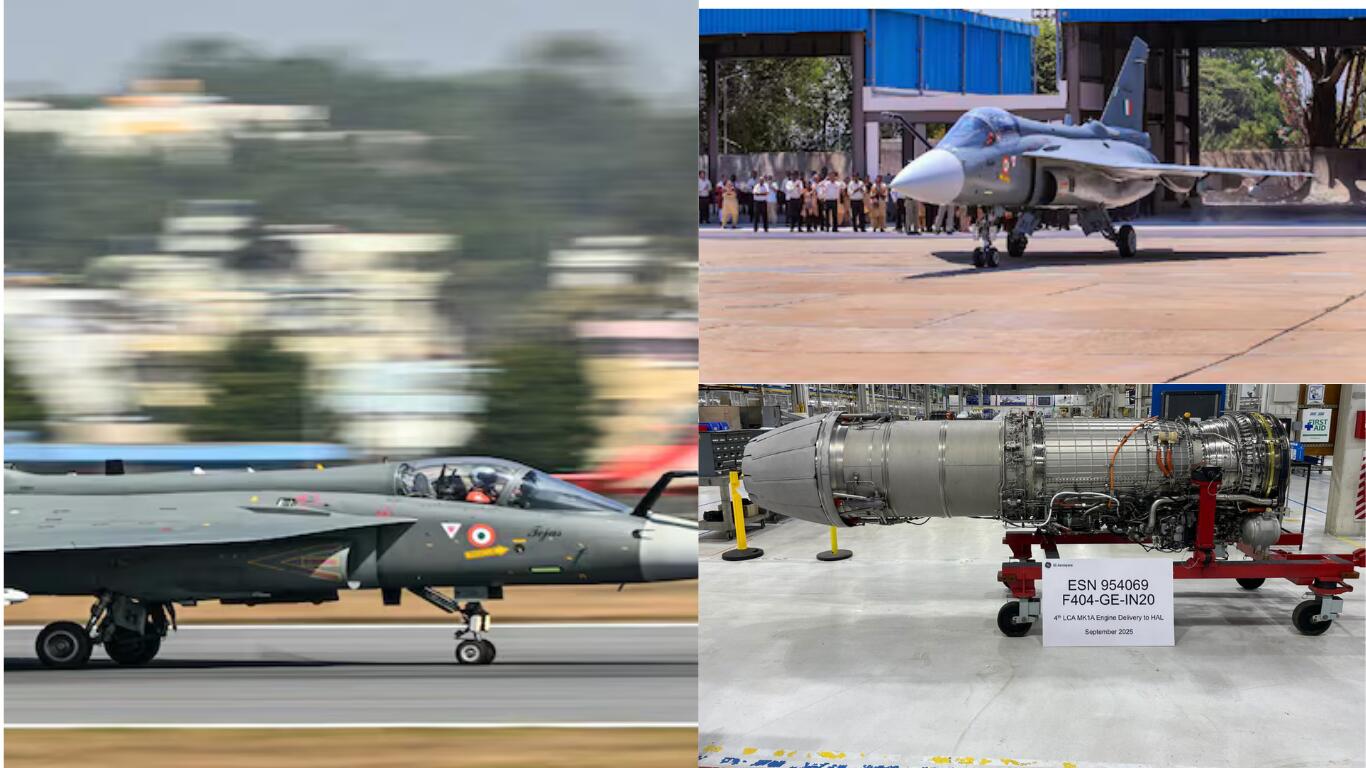
India’s indigenous fighter jet programme is moving closer to a major milestone with Hindustan Aeronautics Limited (HAL) receiving the fourth GE-F404-IN20 engine from GE Aerospace. The development is part of a 2021 contract under which GE will supply 99 engines to power the Light Combat Aircraft (LCA) Tejas Mk1A. With weapon trials underway and additional aircraft awaiting engines, HAL is preparing to deliver the first Tejas Mk1A fighters to the Indian Air Force (IAF) by October end.
HAL Gears Up for Initial Deliveries
HAL officials have confirmed that the first two Tejas Mk1A aircraft will soon be handed over to the IAF. At least 10 additional units are already in the pipeline, awaiting engines for integration. “We are all set for our first delivery to the Indian Air Force. We can start with two jets initially. Weapon firing is ongoing, and we have at least 10 more units ready and waiting for engines,” HAL officials stated.
The deliveries are part of the IAF’s order for 83 Tejas Mk1A jets placed in 2021. These include 73 single-seat fighters and 10 twin-seat trainers, with production timelines structured to meet operational requirements. The Nashik facility, HAL’s third Tejas production line inaugurated in April 2023 with an investment of over ₹150 crore, is expected to significantly accelerate production. Designed to manufacture eight aircraft annually, the facility will help HAL reach its target of 24 aircraft deliveries per year starting 2027.
Expansion Through New GE Engine Deal
In addition to the existing 99-engine order, HAL is finalising another contract with GE Aerospace for 113 more F404-IN20 engines. This follow-on deal, valued at over USD 1 billion, is expected to be signed in October. HAL Chairman and Managing Director Dr. D.K. Sunil confirmed that negotiations are complete, with pricing finalised and only legal details pending.
“We expect to sign the contract in October. The agreement is worth more than a billion dollars. Negotiations are done, and the price is finalised. We only need to complete the contract details,” Dr. Sunil said. The new order will support the production of 68 single-seat fighters and 29 twin-seat trainers, with deliveries scheduled between 2027 and 2033.
This expansion underscores India’s commitment to indigenisation and strengthening its aerospace ecosystem. The additional engines will not only ensure a steady supply for Tejas Mk1A production but also provide greater reliability and flexibility to the IAF as it phases out older aircraft.
Strengthening the Tejas Programme
The Tejas Mk1A is central to the IAF’s modernization efforts, bridging the gap left by the retirement of ageing MiG-21 squadrons. Equipped with modern avionics, electronic warfare capabilities, and advanced weapons, the Mk1A is designed to enhance India’s air combat edge.
With three aircraft already built and undergoing final trials, HAL is confident that the first delivery can be made by October end.
Beyond the Mk1A, HAL is also negotiating an 80% technology transfer for GE’s more powerful F414 engines, intended for the upcoming LCA Mk2 and the Advanced Medium Combat Aircraft (AMCA). This marks a significant step under the Atmanirbhar Bharat initiative, aiming to reduce dependency on foreign suppliers and build indigenous capability in high-end jet engine technology.
Nashik Facility to Boost Production Capabilities
The Nashik plant will play a vital role in scaling up Tejas production. As HAL’s third dedicated production line for the Mk1A, it complements two existing lines in Bengaluru.
Flight tests from Nashik are scheduled later this month, while weapon firing trials are already in progress. The plant’s establishment not only reflects HAL’s growing capacity but also demonstrates India’s long-term vision of creating a robust defence manufacturing infrastructure capable of meeting both domestic and export demands.
A Major Boost for India’s Defence Indigenisation
The arrival of the fourth GE F404-IN20 engine and the expected signing of a $1 billion follow-on contract mark an important turning point for the Tejas programme. HAL is on the verge of delivering the first batch of Mk1A jets to the IAF, with expanded engine supplies ensuring production continuity for years ahead. At the same time, negotiations for F414 technology transfer highlight India’s intent to achieve self-reliance in advanced aerospace technologies.
With Nashik boosting production capacity and HAL preparing to ramp up deliveries, the Tejas Mk1A is set to become a backbone of the IAF’s fighter fleet. More than just a defence project, it reflects India’s rise as a credible force in indigenous aircraft manufacturing one that combines operational strength with strategic autonomy.





