

















The shocking assault on customs inspector Pradeep Kumar in Sonarpur, South 24 Parganas, on the evening of October 23 has become a flashpoint highlighting the deepening communal fault lines in West Bengal. What began as a minor traffic altercation between a Hindu officer and a Muslim auto driver has spiraled into a political and communal controversy, reflecting a troubling pattern of polarization that now threatens Bengal’s social harmony.
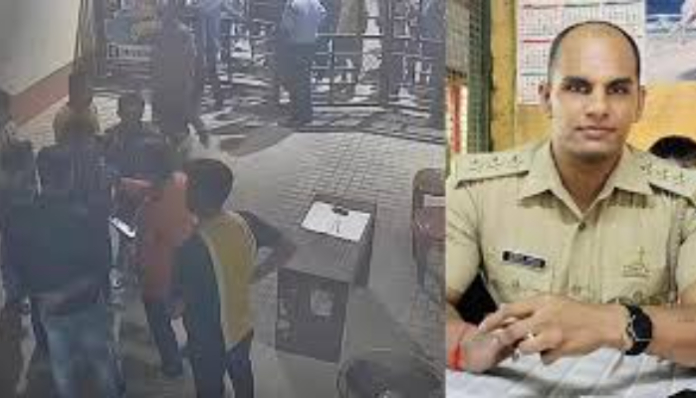
According to reports, the incident unfolded after Kumar’s SUV accidentally brushed against an auto-rickshaw during a Kali Puja immersion procession. The driver, identified as Azizul Gazi, reportedly reacted with rage, leading to a heated verbal exchange. What followed was an act of unprecedented mob violence. Later that evening, Gazi allegedly returned with a group of 50 to 60 men, forced their way into the Deeshari Megacity condominium where Kumar lived, broke open the iron grill of his fourth-floor apartment, and brutally attacked him and his wife in the presence of their terrified four-year-old daughter.
CCTV footage confirmed the mob assault and communal vandalism of Kumar’s residence. Despite frantic calls to the local police station, help arrived nearly forty minutes late — by which time the attackers had fled. Kumar, who hails from Uttar Pradesh, sustained head and facial injuries and had to be rushed to Kalyani AIIMS for treatment. He expressed anguish not only over the brutality of the attack but also over the indifference of the authorities: “As the assault continued, we thought our end was near. They smashed the grill and beat me. If a common man is not safe, what is the point?”
While Gazi was arrested the following day and charged with robbery, grievous hurt, trespass, and wrongful restraint, all of them were bailable offences, leading to his quick release. Three others, including another auto driver, Azad Ali Mondal, were later charged on similar counts and also freed within hours. This leniency has drawn sharp criticism and further inflamed tensions between communities, communal feelings is having its crowning glory.
Eyewitnesses recount that the mob, reportedly numbering around 200 at the apartment gate, overpowered security guards and stormed the complex. “They scaled the gates and ran towards Kumar’s flat. We tried to stop them, but they pushed everyone aside,” said Gora Bose, vice-president of the Deeshari Megacity Residents’ Association.
The political aftermath has been equally explosive. BJP leaders, led by Suvendu Adhikari, swiftly accused the ruling Trinamool Congress (TMC) of shielding the culprits, labeling the incident as an example of the party’s alleged communal “goonda raj.” Adhikari claimed that Gazi was “a close aide of Nazrul Ali, husband of Sonarpur North TMC MLA Firdousi Begum,” and that the attackers were all “TMC workers.” He declared, “If a serving central officer can be attacked in his own home, no one is safe in West Bengal anymore.”
BJP leader Agnimitra Paul echoed this sentiment, alleging that the attackers were part of TMC’s “vote-bank politics” and warning that the state’s law and order had been compromised by communal favoritism. These statements, while politically charged, have found resonance among residents disturbed by the incident’s communal undertones.
The Sonarpur attack underscores a dangerous trend — the transformation of everyday disputes into communal flashpoints. While the initial altercation had no overt religious motive, the identities of those involved quickly became markers of division: a Hindu officer versus a Muslim driver, with political forces on both sides exploiting the narrative for their own ends.
Bengal, historically a land of syncretic traditions, is witnessing growing mistrust between communities. The erosion of faith in law enforcement, coupled with political polarization, risks deepening these divides. If incidents like the Sonarpur assault continue to be viewed through a communal or partisan lens, they could unleash wider unrest across the state.
The real danger lies not only in the violence itself but in its normalization — when mobs act with impunity, and justice bends under political pressure. Bengal’s fragile communal peace, once its defining strength, now hangs by a thread. The Sonarpur case serves as a grim warning: unless law and order rise above political and religious divides and communal anatagonism is contained with firm grip, the state may find itself on the edge of a far more dangerous conflagration.