
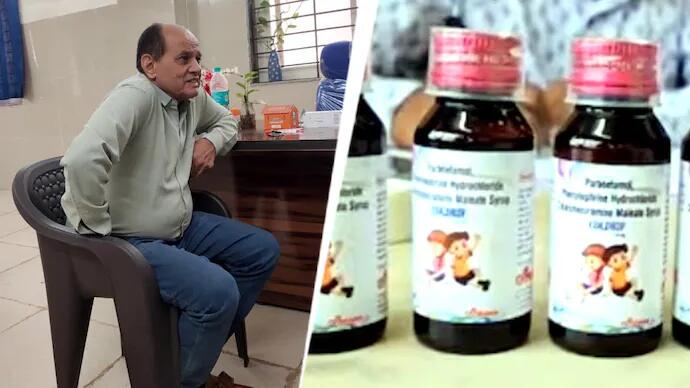
Madhya Pradesh Police arrested Dr. Pravin Soni, a senior pediatrician, as the Coldrif Cough Syrup Prescribed by him led to deaths of 16 Children. Dr. Soni stands accused of prescribing the contaminated Coldrif syrup that led to the deaths of 11 children later revised to 16- across the state. But as the case unfolds, lot of questions arises who is truly responsible for these horrifying deaths? Was it medical negligence by one doctor, or the collective failure of drug regulation and public health system that allowed a poisonous cough syrup to reach infants’ hands?
If negligence is to be punished, then it must be traced through the entire chain only then the true fault lines will be exposed. Also there is a huge ambiguity about who approved Coldrif syrup for sale and cleared the contaminated batch in testing labs?
The Doctor at the Centre of the Storm
Hours before his arrest, Dr. Pravin Soni defended his treatment practices. Speaking to Media, he stated, “I have been prescribing medicines from this company for over ten years. It’s wrong to suggest that a doctor decides the formulation we receive sealed, approved medicines.” The pediatrician, posted at a government hospital in Parasia and running a private clinic, said he had treated children for viral fevers amid the seasonal surge and stopped seeing infants after being advised by authorities.
However, within days, laboratory tests confirmed that the syrup he had prescribed contained 48.6% Diethylene Glycol (DEG) – a highly toxic industrial chemical known to cause kidney failure and death. Following the confirmation, Madhya Pradesh Chief Minister Mohan Yadav ordered Dr. Soni’s immediate suspension and banned the sale and distribution of Coldrif syrup across the state.
Was the Doctor Truly Negligent?
The key question remains here is can a doctor be held legally responsible for a government-approved medicine that was sold through licensed pharmacies? Dr. Soni prescribed a brand that was available in the open market and approved by regulatory bodies. He did not manufacture, test, or supply the drug. Yet, he now faces charges of culpable homicide not amounting to murder.
While negligence cannot be dismissed outright, experts argue that such punishment without investigating the systemic lapses could set a dangerous precedent. If this logic holds, then every doctor who prescribes Paracetamol could be held criminally liable if a contaminated batch causes harm. Accountability must start from where the contamination began the manufacturing and regulatory chain apart from the prescription desk.
Why Were Post-Mortems Not Conducted?
The most alarming aspect of the Coldrif case is the absence of post-mortems on the deceased children. Initially, local officials claimed that the parents did not consent. However, reporters later found that parents were never even asked. In cases of unnatural deaths, CrPC Section 174 allows post-mortems without consent especially when poisoning is suspected.
By skipping autopsies, crucial forensic evidence has been lost. Without confirmed cause-of-death reports, the prosecution’s case becomes weaker, increasing the risk that the accused whether the doctor or the drug manufacturer could escape with lighter punishment. This omission points to administrative negligence that goes far beyond one doctor’s action
None of the senior health department officials, regulators, or quality-control officers have faced arrest. Instead, the blame has landed solely on the most visible and vulnerable link the doctor. This is not an isolated pattern. India’s public health system often shields bureaucrats while making one professional as the scapegoat.
Are Indian Lives Worth Less?
There’s a darker truth hidden beneath this story that is the double standards in drug manufacturing. When companies produce for export to Europe or the US, they follow the highest standards of purity and documentation. But for domestic use, a “sab chalta hai” attitude prevails. Contaminated syrups, low-quality chocolates, and cheap soft drinks often make it to Indian and African markets, but not to Western shelves.
The Coldrif case forces us to ask are Indian lives cheaper? Why are companies and regulators not held to the same international standards for citizens at home? This isn’t just a question of one tragedy documentation.
This tragedy is not merely about Dr. Pravin Soni it’s about a broken system that failed at multiple levels. From manufacturing oversight to regulatory testing, from administrative apathy to the absence of basic post-mortems, every layer of responsibility has cracks.
What Is Diethylene Glycol (DEG) and How Did It Enter the Syrup?
Diethylene Glycol (DEG) and Ethylene Glycol (EG) are industrial solvents used in paints, brake fluids, and antifreeze never meant for human consumption. Sometimes, they enter medicines due to adulterated raw materials like glycerine, often substituted with cheaper, industrial-grade variants to cut costs.
These compounds are colourless and syrupy, making them easy to confuse with pharmaceutical excipients if strict testing is skipped. When ingested, they damage the kidneys, liver, and nervous system. Children, due to their small body weight, are particularly vulnerable even small doses can be fatal. The 2022 Gambia tragedy, where over 70 children died after consuming contaminated cough syrups, was caused by the same chemicals.
When the System Becomes the Killer
The Coldrif tragedy once again exposes how India’s regulatory system becomes a silent killer never punished, never accountable. In state after state, whether in Punjab, Jammu, or Tamil Nadu, contaminated drugs have slipped through official testing processes. The same labs that pass medicines for public hospitals have failed to detect toxins like DEG.
The problem is systemic poor inspections, weak law enforcement, and corruption in drug approvals. Manufacturers often get away with low-grade production by exploiting loopholes and bribing officials. The tragedy is that such systemic rot only surfaces when innocent children die and even then, the system survives.
Justice in this case must not stop with one arrest or a media trial. It must travel upward to the drug manufacturers, state regulators, and national oversight bodies that failed to protect the most vulnerable citizens.