
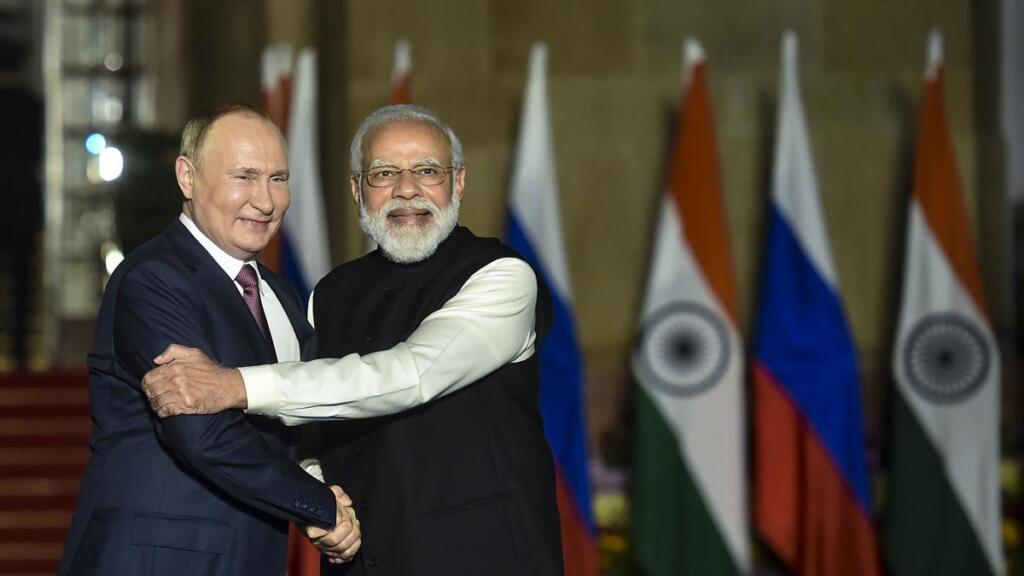
A sensational report by Organiser, one of India’s oldest weekly magazines associated with the Rashtriya Swayamsevak Sangh (RSS), has sent shockwaves across the geopolitical landscape. The publication alleges that Indian and Russian intelligence agencies jointly foiled a CIA-linked plot to assassinate Prime Minister Narendra Modi during the Shanghai Cooperation Organisation (SCO) Summit in China earlier this year. The report, published on October 24, 2025, ties the mysterious death of a U.S. Special Forces officer in Dhaka to the alleged conspiracy a connection that, if even partially true, could have enormous implications for India-U.S. relations and global intelligence dynamics.
The Summit That Turned Suspicious
The events trace back to the SCO Summit held in Tianjin, China a high-stakes diplomatic gathering attended by leaders including Prime Minister Narendra Modi and Russian President Vladimir Putin. According to Organiser, both Indian and Russian security agencies received a “credible intelligence alert” on the morning of the summit. The information reportedly came via China’s Ministry of State Security (MSS), warning of a potential assassination attempt targeting Prime Minister Modi.
What followed, if the report is to be believed, was an extraordinary sequence of security manoeuvres. President Putin allegedly delayed his own arrival for nearly an hour, waiting for Modi and then personally inviting him to travel together in his armoured limousine an unprecedented gesture that, according to Organiser, was based on “fresh intelligence inputs of a credible threat.”
Unnamed Indian intelligence sources cited by the magazine claim that Russian operatives had intercepted communications linking a U.S. operative stationed in Dhaka to the plot. The trail, they suggest, led to one man Terrence Arvelle Jackson.
The Dhaka Connection: The Mystery of Terrence Arvelle Jackson
The most explosive element in Organiser’s report is the mysterious death of Terrence Arvelle Jackson, a U.S. Army Special Forces officer reportedly working under diplomatic cover in Bangladesh. On August 31, 2025, Jackson was found dead in Room 808 of the Westin Hotel in Dhaka. Initial police reports described it as a possible poisoning, but later accounts cited by Organiser claim radioactive isotopes were detected in his body details chillingly reminiscent of Cold War-era spy killings.
The report alleges that Jackson’s presence in Dhaka had little to do with security training or bilateral cooperation. Instead, he was allegedly coordinating a covert operation targeting Prime Minister Modi during the SCO Summit. Organiser claims Jackson was in contact with intermediaries linked to Western-funded NGOs and former military contractors operating in Bangladesh.
Under the guise of “security coordination,” Jackson allegedly worked in close proximity to the interim government of Nobel laureate Muhammad Yunus, who took charge after Sheikh Hasina’s fall earlier this year. Intelligence sources quoted in the article suggest that the operation aimed not only to eliminate Modi but also to destabilise the entire South Asian region creating chaos that would weaken India’s growing influence within the SCO and BRICS blocs.
India, Russia, and China: A Rare Intelligence Convergence
The Organiser report highlights what it calls a “rare moment of triangular intelligence coordination” involving India, Russia, and China three powers often on opposite ends of the geopolitical spectrum.
According to the publication, China’s MSS first detected chatter indicating a Western intelligence-linked operation targeting Modi and quietly alerted both India’s Research and Analysis Wing (RAW) and Russia’s Federal Security Service (FSB). The three agencies reportedly began monitoring Jackson’s activities in Dhaka, tracking his meetings with “foreign operatives and local fixers” at luxury hotels and diplomatic enclaves.
As the SCO Summit neared, the network was allegedly “neutralised.” Organiser further claims that three other foreign contractors linked to Jackson died under “unexplained circumstances” in Dhaka and Chittagong during the same period. While no official confirmation exists, the report asserts that these deaths were part of a covert clean-up operation involving multiple intelligence services.
A Web of Silence and Denials
As expected, the United States has made no official statement on the matter. There has been no independent verification of Organiser’s claims so far. On September 4, the U.S. Army Special Operations Command issued a brief press release stating that all personnel were “accounted for” and that there were “no ongoing operations” in Bangladesh. It made no mention of Jackson by name and declined to provide further clarification.
However, Indian intelligence officials quoted by Organiser insist that the episode underscores India’s “strategic autonomy” and its ability to counter Western covert interference. Retired intelligence officer Colonel Ajit Singh told the publication, “This episode shows how far the U.S. was willing to go to disrupt India’s ties with Russia and the BRICS alliance. Washington misread India’s intent and suffered a major setback.”
Meanwhile, Bangladesh has remained largely silent. Local media reported that an internal inquiry into Jackson’s death has been initiated, but no findings have been made public. Neither the U.S. Embassy in Dhaka nor the State Department has responded to repeated media questions regarding his presence in the country.
Social Media and the Information War
Following the Organiser exposé, the story exploded on social media across India and Bangladesh. Hashtags such as #ModiAssassinationPlot, #TerrenceJackson, and #CIAinDhaka began trending. Supporters of the BJP and nationalist commentators hailed the report as “proof” of India’s intelligence strength and its strategic coordination with Russia.
Conversely, opposition voices and Western commentators dismissed the story as “geopolitical disinformation” accusing Organiser of promoting an anti-American line aligned with Moscow’s interests. Fact-checkers have urged caution, noting the absence of corroborating evidence or official statements from the Indian government. Still, the timing of the report amid ongoing global tensions and India’s balancing act between the West and Eurasia has added to its intrigue.
Strategic Ripples and the Bigger Picture
If even partially true, Organiser’s claims represent one of the most alarming breaches of diplomatic norms in recent history. A CIA-linked plot against a sitting Indian Prime Minister, thwarted through joint Indo-Russian intelligence efforts, would fundamentally shake global security alignments.
The alleged coordination between India, Russia, and China would also signal an emerging “Eurasian security arc,” where traditional rivals collaborate to counter Western dominance. For Washington, such a scenario would represent a nightmare the very opposite of its Indo-Pacific strategy, which relies heavily on India as a counterweight to Beijing.
Even if the story remains unverified, it highlights a crucial reality of modern geopolitics that information warfare has become as powerful as traditional espionage. In an era of leaks, counter-leaks, and shadow diplomacy, truth and manipulation often coexist, blurred by layers of secrecy and strategic deception.
What remains undeniable is that Terrence Arvelle Jackson is dead, and the circumstances of his death remain shrouded in mystery. Bangladesh has yet to release a conclusive report, and the U.S. has avoided comment. Meanwhile, Organiser has stood firmly by its story, calling it “the outcome of months of investigative research.”
In its closing lines, the magazine writes: “No definitive evidence may ever surface, but the convergence of deaths, denials, and digital traces cannot be ignored.”
Whether one views it as credible intelligence or speculative geopolitics, the report has already achieved one thing it has reignited global debate on the covert power games shaping South Asia. For India, it underscores both the perils of leadership in an increasingly complex world and the resilience of a nation whose intelligence network continues to evolve beyond Western influence.
For Washington, the mere suggestion of such a plot if proven true would be a diplomatic catastrophe. But for the rest of the world, it serves as a stark reminder that in the new age of hybrid warfare, the line between truth and subterfuge is thinner than ever.