
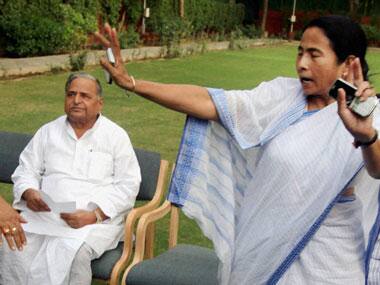
In a country where women continue to face horrific crimes, the public response of political leaders matters immensely. It shapes not just discourse but also confidence in governance and justice. Unfortunately, West Bengal Chief Minister Mamata Banerjee’s recent comments on the rape of a medical student from Odisha reveal a troubling pattern — one that places blame not on the perpetrators, but on the victims themselves. This pattern is especially disconcerting given Banerjee’s own identity as a woman and as a powerful leader in a deeply patriarchal society. Victim shaming seems to be Indian politics’ nemesis.
The remarks came after a second-year MBBS student was gangraped near her private medical college in Bengal. Speaking to the media, Banerjee questioned why the victim student had stepped out of the hostel at 12.30 am, suggested that private institutions should not allow girl students to be out late at night, and emphasized personal safety over state accountability. These comments sparked immediate backlash from the Opposition and women’s rights activists, who accused the Chief Minister of effectively blaming the victim and deflecting from her government’s failure to ensure law and order.
While Banerjee did assert that the government had a “zero tolerance” policy toward crimes against women and promised strict action against the perpetrators — three of whom were arrested — her emphasis on the timing of the victim’s outing and her veiled suggestion that the private institution bore responsibility shows a problematic mindset.
The backlash was swift. CPI(M) leader Sujan Chakraborty reminded the public that this was not the first time Mamata had made such remarks. In the RG Kar Medical College incident, Banerjee had similarly suggested that women should not be assigned night duty. He rightly noted that such statements reveal the failure of the state to protect women, regardless of the time or place.
More scathing was the response from BJP leaders. Union Minister Sukanta Majumdar lambasted Banerjee, calling her remarks “deplorable” and “shameful,” arguing that they reflect an abdication of her duties as Home Minister and a collapse of law and order in Bengal. He recalled a recent incident where a woman doctor was raped and murdered inside a government medical facility — showing that crime against women is not confined to forests or private campuses.
The bigger question here is not just about this one incident, but about the systemic culture of victim-blaming that continues to persist — and alarmingly, even among women in power. Mamata Banerjee, the first female Chief Minister of West Bengal, is expected to bring a perspective that understands the vulnerability and systemic injustice women face. Instead, her repeated remarks over the years suggest a worldview where women are responsible for their own safety, and where their freedom is conditional upon the hour, place, or circumstance.
This is not just unfortunate; it is dangerous. Victim-blaming by those in power discourages survivors from speaking out, reporting crimes, or seeking justice. It perpetuates the myth that women can avoid being raped if they simply follow “the rules” — don’t go out late, don’t be alone, don’t dress a certain way. This narrative absolves the real criminals: the rapists and the enablers of a system that fails to hold them accountable.
Mamata’s attempt to deflect criticism by pointing to incidents in Odisha, Manipur, and Uttar Pradesh is also problematic. While crimes against women across states should be condemned equally, her “whataboutery” does little to address the failings within her own administration. Worse, it suggests a competition of victimhood rather than a unified stand against gender-based violence. The fact that she pointed out other states’ failures instead of acknowledging her own government’s lapses reflects a troubling lack of introspection.
It is also worth comparing her conduct to that of other political figures who have made misogynistic statements — such as Mulayam Singh Yadav, who infamously said “boys will be boys” in defense of rapists. While such statements were rightly criticized for their regressive and patriarchal tone, Mamata’s words — though perhaps cloaked in the language of “concern” — are no less harmful. The expectations from a woman leader are understandably higher — not just because of her gender, but because of the platform she commands in a state with a history of political violence and social unrest.
A woman in power has the potential to be a transformative force in politics. Mamata Banerjee could have been that force. She has repeatedly shown political resilience, fought against male-dominated party structures, and risen through the ranks to lead a major Indian state. But when it comes to protecting and standing up for the rights of women — especially those in vulnerable situations — her words have fallen short. And words matter.
Leadership during a crisis is not just about taking action, but also about showing empathy, responsibility, and moral clarity. Instead of questioning a victim’s actions or outsourcing accountability to institutions with limited jurisdiction, Mamata Banerjee should have unequivocally condemned the crime, reassured the public that the government takes full responsibility for law and order, and pledged systemic reforms to prevent such atrocities.
What Bengal — and the rest of India — needs is not just stronger policing but stronger leadership on gender justice. It needs leaders who do not treat women’s safety as a conditional privilege but as a basic right. And it especially needs women in power to lead by example, not by perpetuating the same regressive ideas they once fought against.
In the end, it’s not about politics or parties — it’s about the kind of society we want to live in. And when those entrusted with safeguarding that society fail to rise above prejudices — even subtle ones — they do more harm than good.
If Mamata Banerjee cannot shed the mantle of victim-blaming and take full responsibility for women’s safety in her state, her gender becomes an irony rather than a symbol of hope.